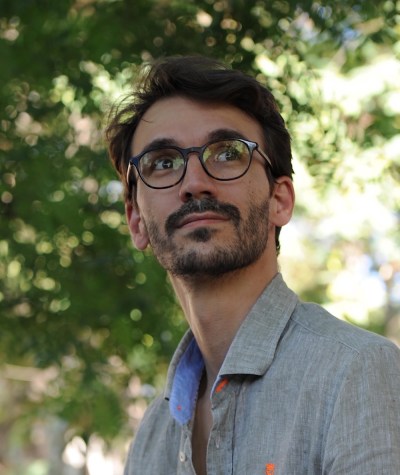
Dr. François Tissot is a Professor of Geochemistry in the Division of Geological and Planetary Sciences at the California Institute of Technology, where he leads the Isotoparium: a state-of-the-art laboratory for high-precision isotope studies he created in 2018 when joining Caltech.
Behind François’ research is the fact that all natural materials, from planets and meteorites to seawater and corals, or even blood and biological tissues, have a unique isotopic composition, shaped by their history and the processes that affected them. In his laboratory, François and his group thus study the isotopic composition of natural materials to unveil their histories, which are sometimes simple, often complex, and always rich and fascinating. Notable contributions include: pioneering work establishing uranium isotopes as robust tracers of oxygen levels in the ancient ocean; the unambiguous detection of 247Cm in the early solar system, suggesting that all heavy elements are synthesized by a unique stellar process; and bringing evidence that Earth’s mainly formed from dry and rocky building blocks, with water being delivered late in Earth’s accretion history. Recently, François’ group started applying using isotope geochemistry techniques to biomedical problematics such as cancer evolution or monitoring of bone mass balance in humans. Following the Eaton Fire, they immediately investigated and reported on the heavy metal pollution released by the fire.
François is the recipient of numerous awards and accolades. In 2015, he received the Nininger Meteorite Award for his thesis work establishing the abundance of the heaviest natural isotope present in the early Solar System, In 2021, François was named a Fellow of the David and Lucille Packard Foundation – a prestigious award offered to “highly creative early-career scientists and engineers” – for his work on the early Solar System evolution. The same year he also became a Heritage Medical Research Institute Investigator. In 2022, François received a prestigious NSF CAREER award, which “supports early-career faculty who have the potential to serve as academic role models in research and education”.
Segment
Listen
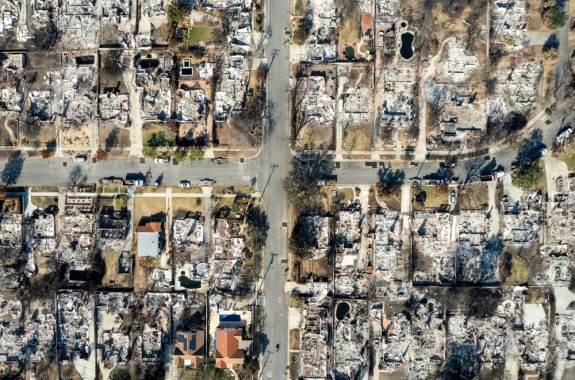
Tracking The Toxic Fallout Of The LA Fires
Urban fires can release all kinds of chemicals. One year after fires hit Los Angeles, scientists are trying to understand the toxic fallout.