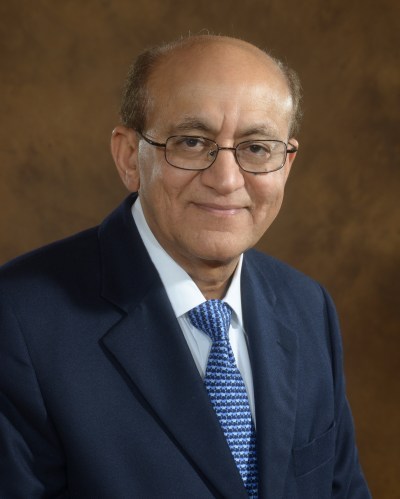
Dr. Rakesh K. Jain is the Andrew Werk Cook Professor of Radiation Oncology (Tumor Biology) at Harvard Medical School, and Director of the Edwin L. Steele Laboratories at Massachusetts General Hospital.
Dr. Jain is widely known for revealing how the abnormal the tumor microenvironment (soil) fuels the growth and metastasis of cancer cells (seed) and how it confers resistance to the delivery and efficacy of various treatments; developing innovative strategies to “normalize” the microenvironment; and then translating these strategies from his laboratory to cancer patients in 40+ clinical trials – in collaboration with his clinical colleagues and pharma/biotech. He is most celebrated for proposing a new treatment principle – normalization of the tissue vasculature – for treatment of cancer and non-cancerous diseases characterized by abnormal vessels that afflict more than 500 million people worldwide. This concept underpins the approval of the first medical treatment for the NF2 schwannoma – a disease that leads to hearing loss (2014), the FDA approvals of 7 different combinations of anti-VEGF drugs with immune checkpoint blockers for lung, liver, kidney and endometrial cancers in US since 2018, and development of a new type bispecific antibodies and CAR-T cells that increase the efficacy of immunotherapy while simultaneously normalizing blood vessels.
Dr. Jain has the rare distinction of being a member of all three US National Academies: National Academies of Medicine, Engineering and Sciences – as well as the National Academy of Inventors and the American Academy of Arts and Sciences.
He is a recipient of nearly 100 awards, including the Outstanding Investigator Award twice from the National Cancer Institute (NCI), and Breast Cancer Research Innovator Award from the Department of Defense (DoD), Guggenheim Fellowship, Humboldt Senior Scientist Prize, Albert Szent-Gyorgyi Prize from the National Foundation of Cancer Research, Science of Oncology Award from the American Society of Clinical Oncology (ASCO), Lifetime Achievement in Cancer Research Award from the American Association for Cancer Research (AACR) (here).
Most notably, he received the 2013 US National Medal of Science at a White House ceremony from President Obama, “For pioneering research at the interface of engineering and oncology, including tumor microenvironment, drug delivery, and imaging; and for discovering groundbreaking principles guiding the development and novel use of drugs for cancer and non-cancerous diseases.”
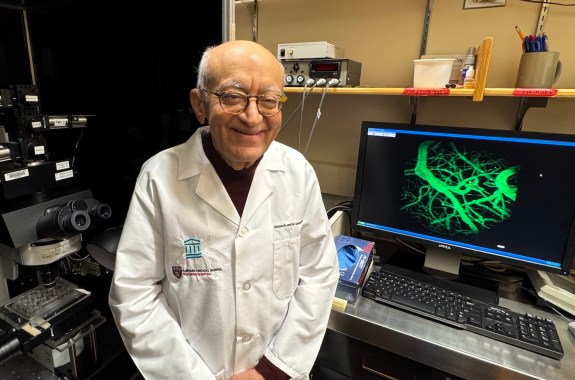
Segment
Listen
How A Fringe Idea Led To Lifesaving Cancer Treatments
Over the past century, most cancer research has focused on the tumor itself. Rakesh Jain focused on the tumor’s environment instead.