What’s Lost When We Trade Play For Metrics And Optimization
For C. Thi Nguyen, rock climbing brought joy and satisfaction—until he started chasing scores and focusing on “leveling up.”
The following is an excerpt from The Score: How to Stop Playing Somebody Else’s Game by C. Thi Nguyen.
When you purchase products through the Bookshop.org link on this page, Science Friday earns a small commission which helps support our journalism.
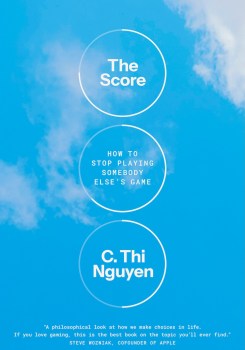
The Score: How to Stop Playing Somebody Else's Game
Rock climbing saved me.
I was in a miserable season of my life—staying up late every night, trying to dredge more work out of myself. I was anxious, consumed with self‑loathing. I needed something to change.
A friend suggested that I try rock climbing, that it was a “techni‑ cal balance sport” for people who loved solving puzzles. This seemed utterly ridiculous to me. Rock climbing was for thrill‑seeking adven‑ ture bros. Rock climbing was muscling your way up a wall while you rage‑screamed. And I was a clumsy nerd.
It took me about half an hour in my university’s ratty little climb‑ ing gym to see that I’d been completely wrong.
I’d been failing, over and over again, on one specific move. I was supposed to reach over to a hold way up left; every time I’d go for it, I’d lose my balance and fall. I was ready to give up; I was just too weak. But then another climber explained the proper technique: I could kick out my leg all the way to the right, as a counterbalance, and then the rest of my body would just float up to the left, to the next hold. It felt amazing; my whole body was suddenly a fluid, coordinated thing. I felt, maybe for the first time in my life, like I was moving elegantly.
My friend was right, it turns out. Climbing isn’t just about adren‑ aline and brawn. It’s problem‑solving. It’s staring down a set of impossibly tiny holds and inventing intricate sequences of careful movements to make it through. Climbing is solving physics puzzles with your body, in the alphabet of yoga.
I’ve played games my whole life. Games offer me the joy of com‑ plete absorption in performing one clear task in a precise, well-defined world. They banish the nauseating complexity of ordinary life. They give me the refuge of clear rules and clear goals. In their restrictions, there is freedom.
Up until that point, I’d only played mental games: chess, poker, computer strategy games. I hated my body, which was a sludgy and uncooperative thing. But climbing asked me to devote the whole of my attention to the precise relationship between my body and the rock. Sometimes a climb would demand that I carefully balance my‑ self on my tippy‑toes on a tiny dime’s edge of rock, and then carefully ease my center of gravity over. Sometimes a climb asked me to drive myself up with an explosive twist of my hips. Climbing demanded a deep understanding of how the parts of my body connected, of how a movement flowed through me.
I met Sherwood at that ratty university climbing gym. He was a beautifully perverse climber. He loved nothing more than to get stuck in some awful, contorted position on the rock—one leg over his shoulder, the other leg trapped under an elbow. He’d groan and curse, rocking back and forth in a tangle—and then suddenly find a way through in an ecstatic burst of motion. He had cultivated a climbing style that gave him precisely his desired ratio of joy to masochism.
We were climbing in Joshua Tree National Park one weekend—climbing real rock, working on tricky, delicate problems. I’d been climbing for a couple of years by then, and I was trying to break through to the next level.
Every established rock climb has a difficulty grade attached—a rating derived from community consensus. For the dominant rock‑ climbing culture, this difficulty rating basically serves as a scoring system. Your primary score is the difficulty rating of the hardest climbs you can do. The climb I was trying was the next level up of difficulty from anything I’d climbed before. I wanted that next number so badly; I wanted that level‑up. And the more desperately I wanted it, the grosser my climbing got. Sherwood saw my desperate flailing, shook his head, and said, “Man, you gotta just savor the movement.”
We were climbing for different reasons. I wanted to get to the top any way I could—anything that would count as a victory, that would give me that next number. Sherwood would climb a route, get to the top, frown, and mutter, “Well, OK, but that was pretty ugly,” and then keep climbing it over and over again until the movement felt beauti‑ ful to him. His comment—that I had to savor the movement—got stuck in my head over the next few months. It changed my whole relationship to climbing. I started to pay more attention to the sweet joy of the movement—to lavish loving attention on the microscopic adjustments, the explosive hip twists. At night, I would dream about how it felt.
A lot of the time, we don’t know the real reason we’re doing something. I had been telling myself that climbing was making me fitter, and that I was learning some skills. But in retrospect, what I actually loved was how it felt to be climbing. It was an experience of my own grace, a rare taste of loveliness flowing through my bones and fin‑ gers. And it was the fact that my life suddenly had rowdy road trips and drunk bonfires in it. I came back from climbing weekends cheerful, refreshed. Climbing made me feel complete.
And here’s the strangest thing: What I truly loved was a feeling, a loving involvement with the difficulty of the physical world, that went far beyond the simple goals of climbing. But I also couldn’t have found that feeling without that scoring system. The game of climb‑ ing has a very specific definition of success: You have succeeded if you get to the top. And the scoring system also tells you, over the course of a climbing life, that you should be trying to climb ever‑ more difficult climbs. This gave me a focus. It shaped a very specific kind of activity; without that goal, I would never have paid enough attention to my body, never would have refined my movement enough, to discover a pure joy in movement.
Given just a rock wall, there’s no particular reason for a modern, tool‑using human to try to move up a particular line of tiny holds using nothing but their hands and feet. But climbing is a game that tells you what to do; it forces you to take one hard pathway up the rock, and it tells you that it will count as a success only if you follow the rules—if you climb the rock using only your hands and feet on the rock itself. And it tells you to keep trying harder and harder climbs. This structure forced me to tune in to how I was moving. It keyed me into a new form of beauty. It gave me a richer form of freedom than I had anywhere else in my life. It showed me the way to a new kind of agency.
I’m a philosophy professor now. There is, in my profession, a single list of all the major philosophy departments, ranked by prestige. There is another list of all the philosophy journals you could publish in, also ranked by prestige. These are the scoring systems of philosophy.
Nobody is forcing people to use these systems. They’re just a pair of websites, each compiled by a small group of professionals, based on some annual surveys. In the end, they’re just a summary of a few people’s subjective impressions of status. We could have just as well decided to ignore them; they have no official authority. But that’s not what happened. Most professional philosophers pay intense, close, and regular attention to these lists. Most of us know exactly how we’re doing on the rankings.
I didn’t care about those rankings when I first fell in love with philosophy. I didn’t even know about them. I got into the field because I was obsessed with some big, weird old questions. I wanted to under‑ stand the meaning of life, and where it came from. I wanted to know if there was any kind of objective morality. I wanted to know if beauty was real, if art actually mattered, or if it was all just a con. And I wanted to know why we trusted ourselves—our ability to rea‑ son, our moral instincts.
I loved the conversations I was having with other people, trying to figure these things out: late nights out with other philosophy ma‑ jors, gleefully shouting at each other and scribbling logic diagrams on napkins. My parents wanted me to be a doctor or a lawyer or a programmer, something real. But I couldn’t give up on these huge questions. My parents thought I was throwing away my chance at a safe and productive career.
I went to graduate school in philosophy precisely because I loved those wild, unmanageable questions. Then the stupidest thing hap‑ pened. I met those rankings and they got under my skin. But the questions I loved weren’t what got you into those highly ranked jour‑ nals and departments. If you wanted to do well on the rankings, you had to write small, precise articles on fairly arcane technical ques‑ tions. So, over the years, I stopped chasing the questions I cared about. I spent all my energy trying to climb those rankings. And all my joy in philosophy started draining away.
I don’t think I would have cared nearly so much about status without the brutal clarity of the rankings. Before the rankings, I certainly wanted some respect, but only from very specific people: the particular philosophers I thought were cool. Before the rankings, my desires were grounded in my own sense of what mattered. But that wasn’t what was in the rankings. The rankings represent the summarized views of other people—people who had been designated as supposed authorities by some other supposed authorities. I didn’t actually trust anybody involved with the ranking process. But the fact that all their opinions had been aggregated into a single, clear ranking—a ranking that everybody knew about—made them powerful. The rankings compressed a mess of human opinions into a single neat score. That clarity sucked me into caring about something I’d never cared about before: the average respect of the whole profession. The political philosopher Thomas Hobbes thought what ultimately mattered in politics was power. The rightful ruler is whoever has the power to control other people’s actions. But for Hobbes, the true source of power wasn’t strength or military might. He believed that ultimate power comes from the ability to control language and define terms—especially the terms of success. The power over defini‑ tions is stronger than military or economic power. Because if you can define what good and evil mean for people, if you can control what success and failure mean for them, then you can control them from the inside.
Games wake us up to a life of play; metrics divide us down into grueling optimization. And sometimes, we let some external, institutional systems—rankings, metrics, and measures—set our desires and goals. Let’s give this phenomenon a name. Call it value capture. Value capture happens when:
If you want a portable version, try this: Value capture occurs when you get your values from some external source and let them rule you without adapting them.
Value capture happens when a restaurant stops caring about
making good food and starts caring about maximizing its Yelp ratings. It happens when students stop caring about education and start caring about their GPA. It happens when scientists stop caring about finding truth and start caring about getting the biggest grants. It even happens in religion. A pastor recently told me that his church had become completely obsessed with baptism rates. The higher‑ups had established an internal leaderboard in which the pastors competed on monthly baptism rates, and it was starting to dominate everybody’s attention. He’d found himself caring less about the long‑term spiritual development of his flock and focusing more on trying to deliver popular sermons that would up his baptism rates and move him up that leaderboard.
In value capture, you’re outsourcing your values to an institution.
Instead of setting your values in the light of your own particular experiences, instead of adjusting them to your particular personality, you’re letting distant bureaucratic forces set them for you.
Maybe this wouldn’t matter if the institutional metrics got it exactly right—if they truly captured what is valuable in the world. But that almost never happens. Metrics are shaped by institutional forces. They are subject to demands for fast, efficient data collection at scale, to demands of fitting into spreadsheets and action reports. Institutional metrics are part of a system that abstracts away from personal difference and local detail and identifies some thin, measurable detail. And what’s easily measurable is rarely the same as what’s really valuable.
An excerpt from THE SCORE, published by Penguin Press, an imprint of Penguin Random House. Copyright © 2026 by Christopher Thi Nguyen.
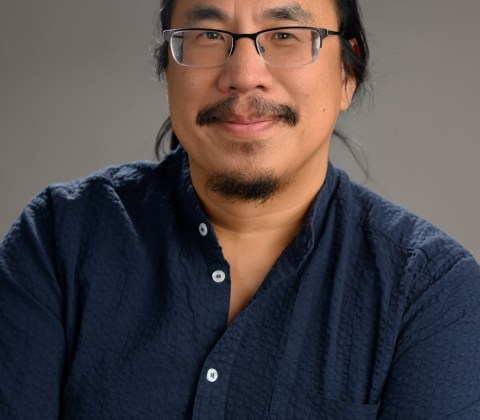
Dr. C. Thi Nguyen is a philosophy professor at the University of Utah in Salt Lake City. He’s the author of The Score: How to Stop Playing Somebody Else’s Game.