Grade Level
6 - 8
minutes
15 min - 1 hr
subject
Life Science
stem practices
Obtaining, Evaluating, and Communicating Information
Activity Type:
biodiversity and adaptation, discussion questions
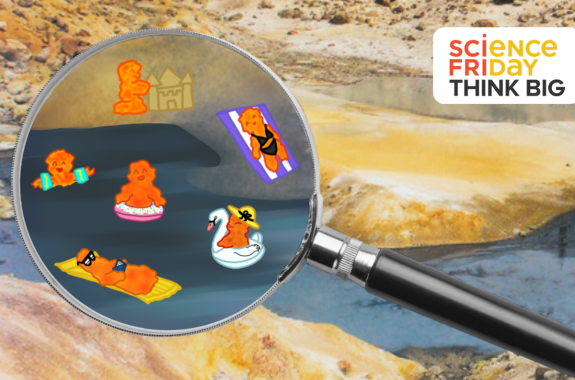
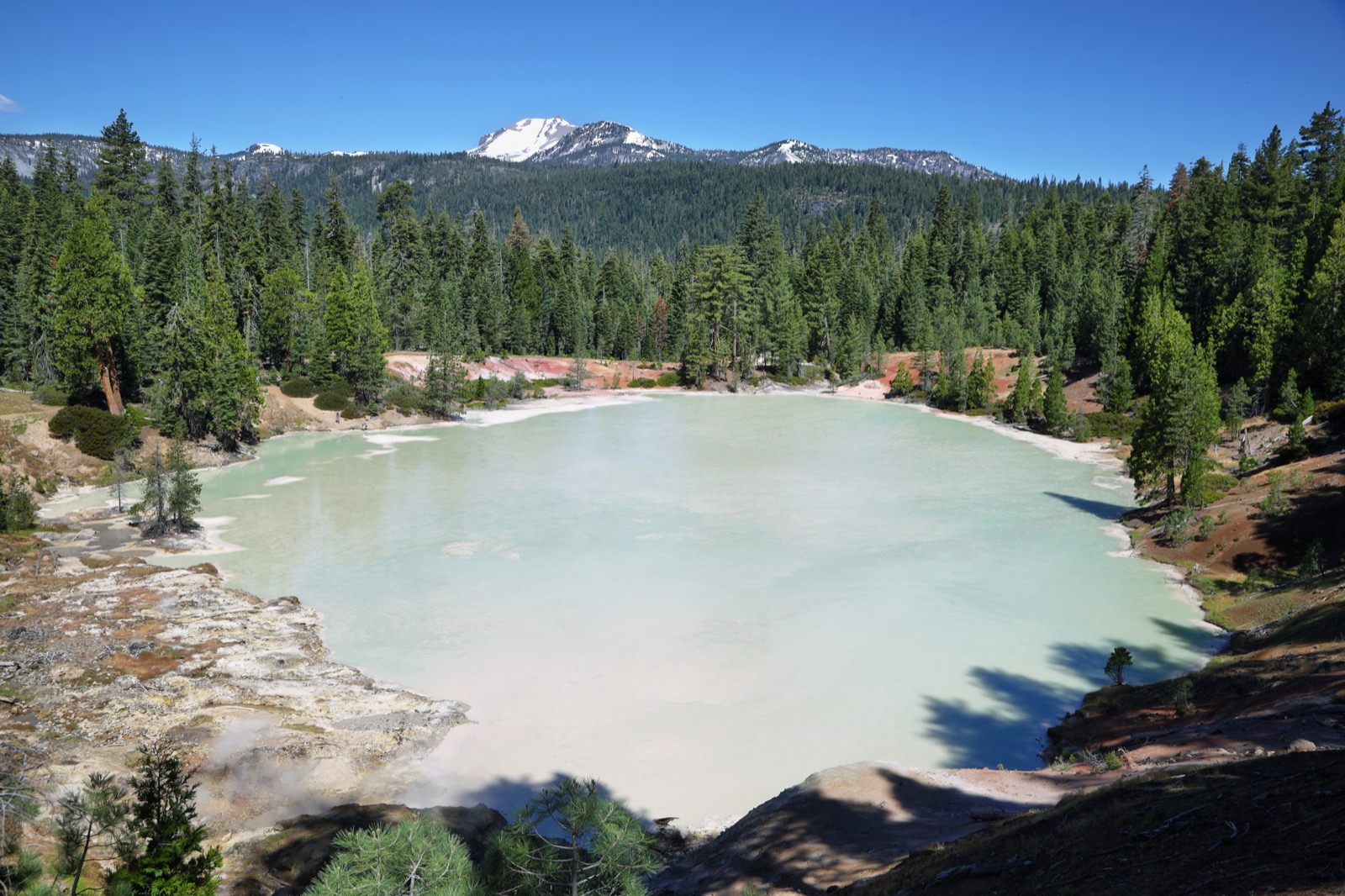
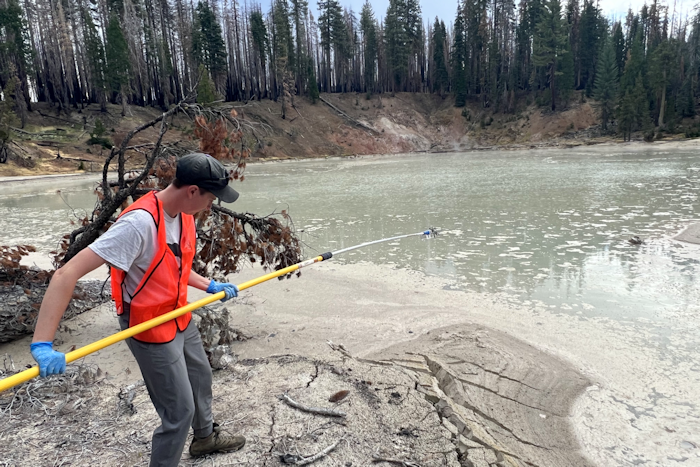
California’s Lassen Volcanic National Park is famous for its geothermal wonders, including four volcanoes and Boiling Springs Lake, where the acidic water bubbles with energy. Nearby, in a “boring” stream, Syracuse University researchers Angela Oliverio and Beryl Rappaport made a surprising discovery: the Incendiamoeba cascadensis, or fire amoeba. Read on to learn why this “hot” organism is causing such a “heat wave” in the scientific community! (A little thermal energy humor for you.)
‘Fire Amoeba’ Likes It Hot, And A Faraway Lava Planet
Key ideas
While humans often need to live in climates that are just right—not too hot, not too cold—extremophiles (extremo means extreme and philes means lovers) are organisms that thrive in environments where others would die, like the stream at Lassen Volcanic National Park. By surviving intense heat, freezing cold, radioactivity, or high acidity (pH 0-7), extremophiles are redefining the scientific understanding of how life adapts to the harshest conditions.
The fire amoeba is a eukaryote. What’s that, you may ask? This expansive biological group includes plants, animals, fungi, and unicellular (one-celled) life forms, like amoebas. Unlike prokaryotes, eukaryotes have a nucleus (a control center), DNA chromosomes, and membrane-bound organelles. The fire amoeba is an extremophile that can survive in water up to 63℃ (about 145℉), a new record for a eukaryotic cell!
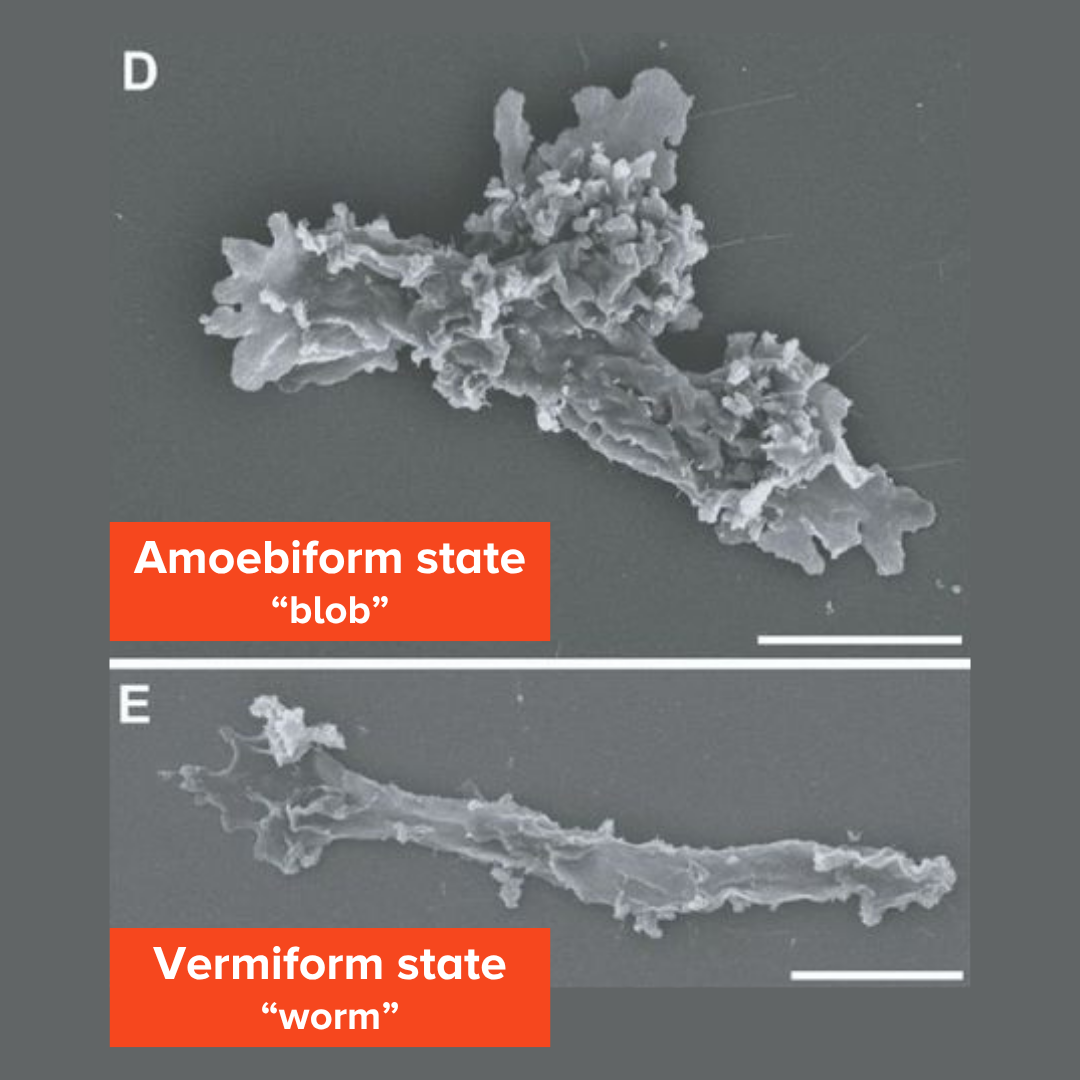
But how does this extraordinary organism do it? Under a microscope, the researchers noticed that the fire amoebas could swiftly change their physical structure in response to temperature. They can shapeshift from long and skinny, like a worm, to a classic blob, like… well… a blob. When things get too hot, it changes to its worm-like shape and wriggles away from the heat. When temperatures cool, it returns to its blob shape.
But that isn’t the only way the fire amoeba defends itself against intense heat. They were also observed making a cyst, or hard outer shell, to protect them when conditions are too hot. When shielded this way, the fire amoeba can tolerate temperatures up to 70℃ (158℉). For more than 50 years, scientists thought eukaryotic life could not survive temperatures above 60℃, but the fire amoeba broke all those rules. It certainly does love extremes!
Think Big!
After you’ve watched the video, think about these questions:
- While humans usually require favorable climates to live, some people live in places that seem uninhabitable, such as Las Vegas in the scorching Nevada desert or the frigid northern reaches of Canada. What are some ways people have adapted to live in such climates?
- The discovery of the fire amoeba is an example of life living in unexpected conditions, but it isn’t the only extremophile. Extremophiles have been found living in hydrothermal vents at the bottom of the ocean, in the sub-zero temperatures of the Antarctic, and even in space, exposed to radiation from the sun. What forms might life take in other extreme environments?
- Fire amoeba are shape shifters and change their form to survive, from long, skinny worm-like shapes to irregular blobs. If you could shape-shift, what form would you take to escape extreme heat? How about extreme cold? Why did you choose those shapes?
Meet the scientist
Dr. Angela Oliverio is a biology professor at Syracuse University. She studies tiny living things, like bacteria and amoebas, to see how they grow and change together over time. This helps us understand how different tiny organisms interact and adapt to survive in their environments. Angela is also a computational biologist. That means she uses powerful computers and math to solve biological puzzles. By using computer programs to look at DNA, she can study thousands of different microbes all at once to see how they work together in places like water, soil, or even a sourdough bread starter.
Keep Learning!
- Water bears, a.k.a. tardigrades, can withstand boiling, freezing, and the vacuum of space. Learn more about them with the video “Behold the Mighty Water Bear.”
- Speaking of tardigrades, these indestructible organisms also live on the moon. A lunar lander crash in April 2019 accidentally spilled thousands of the creatures!
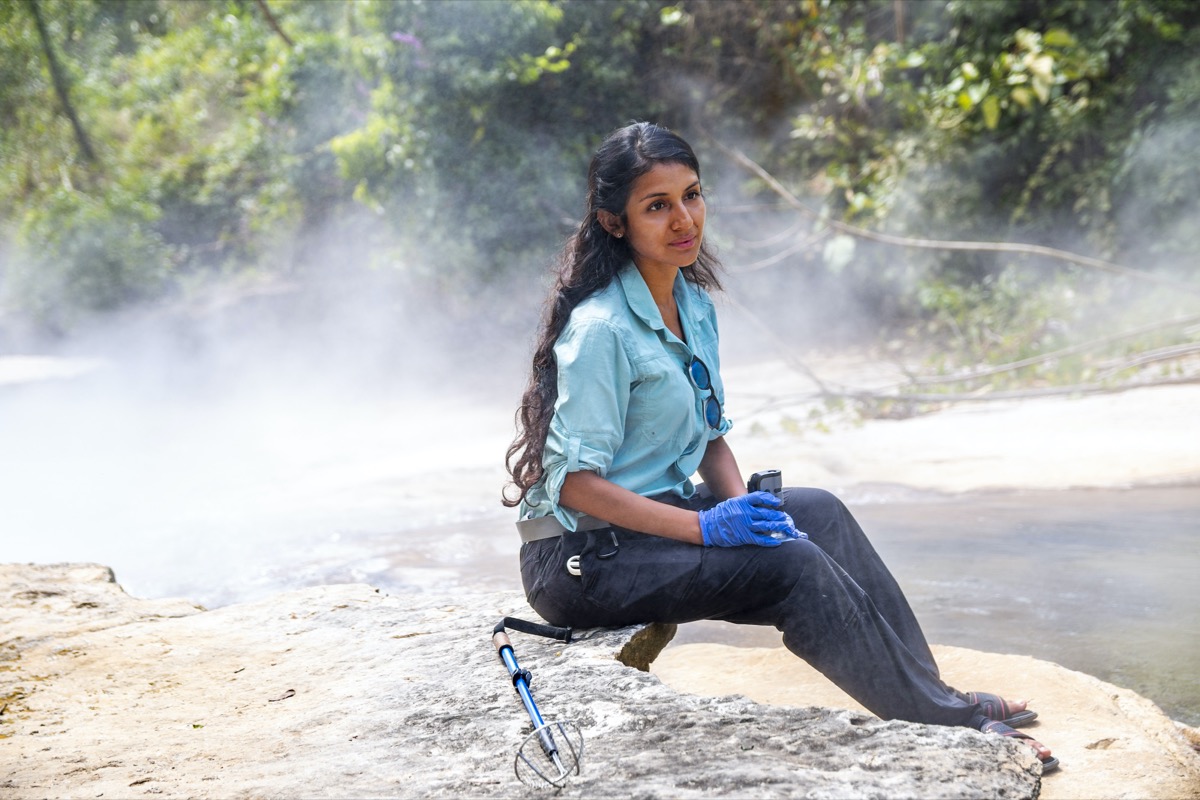
- Lassen Volcanic National Park isn’t the only home to boiling rivers and lakes that teem with life. Discover biochemist Rosa Vásquez Espinoza, who is exploring the Peruvian Boiling River as she looks for microbes.
NGSS Standards
- LS1.A: Structure and Function – All living things are made up of cells, which are the smallest unit that can be said to be alive. An organism may consist of one single cell (unicellular) or many different numbers and types of cells (multicellular).
- LS1.D: Information Processing – Each sense receptor responds to different inputs (electromagnetic, mechanical, chemical), transmitting them as signals that travel along nerve cells to the brain.
- LS4.C: Adaptation – Adaptation by natural selection acting over generations is one important process by which species change over time in response to changes in environmental conditions.
Credits:
Lesson by Svea Andersen
Developmental editing by Sandy Roberts
Copyediting by Erica Williams
Digital production by Sandy Roberts
Featured artwork for the activity by Fai Kosciolek
Video by Sukee Bennet
Host Flora Lichtman
Producers Charles Bergquist
Educator's Toolbox
Meet the Writer
About Svea Anderson
Svea Anderson is a twenty-year veteran educator who embraces challenges and consistently seeks opportunities for new learning.