How ‘problem bears’ became test engineers’ allies
In “Kobuk the Destroyer,” a bear finds an unlikely job using the destructive flair that took him out of the wild to begin with.
The following is an excerpt from “Kobuk the Destroyer: And Other Tales from the Wild, Unseen World of Test Engineering” by Alex Davies.
When you purchase products through the Bookshop.org link on this page, Science Friday earns a small commission which helps support our journalism.
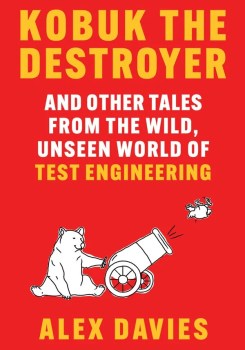
Kobuk the Destroyer: And Other Tales from the Wild, Unseen World of Test Engineering
Like many who spend their lives inflicting pain, Kobuk the Destroyer suffered tragedy in his youth. Before earning his name, he was a grizzly cub in the Alaska interior, living with his mother and two siblings. When the cubs were six months old, his mother and brother were killed by a rancher who found them preying on his free-range chickens. Too young to survive on their own, the two surviving bears were granted a life of peace in West Yellowstone, Montana, at the Grizzly & Wolf Discovery Center, a sanctuary for animals who have long endured misfortune at human hands. Named for rivers in British Columbia and Alaska, respectively, the female cub became Nakina, and the male Kobuk.
Kobuk’s mother was a textbook “problem bear,” one who learned that hanging around humans is an easy way to score tasty meals. It’s a lesson that typically leads to troublesome encounters, relocation for the bears, and euthanasia for repeat offenders. The best way to forestall this problem is to stop bears from seeing human food as an easy meal, which means stopping them from getting it in the first place. To that end, the Interagency Grizzly Bear Committee (IGBC)— a consortium of federal and state agencies that works to protect grizzly populations and habitats— created the bear-resistant products testing program. This process verifies whether any given cooler, composter, trash can, or camping food canister is likely to foil a hungry bear, and it relies on real bears to try the case.
The Grizzly & Wolf Discovery Center provides a home for bears like Kobuk and Nakina, but it also conducts the testing that underpins the IGBC’s standards. This involves filling those containers with delicious treats, putting them in the bears’ habitat, and seeing what happens. This is how Kobuk became Kobuk the Destroyer.
The center’s products testing regime started in 2001, when the IGBC became dissatisfied with its original method for deeming something bear-resistant. It used to drop a weight from a set height onto the product or try to puncture it with a spiked weight that simulated a tooth. The weights could mimic a bear’s might or the force of its jaws, but they featured none of the animal’s ingenuity. “They finally realized that the mechanical method wasn’t a true test,” says Randy Gravatt, who ran the testing program at the center from its inception until 2024. Realizing they needed something closer to reality, the IGBC partnered with the center, turning its problem bears into problem-solving bears.
Each test follows a specific protocol. A worker fills the product with various tasty treats—fish, peanut butter, honey, dog biscuits—places it in the habitat, and lets a bear out. To earn its certification, the product must withstand one hour of “bear contact time,” a metric that includes biting, clawing, pounding, rolling, flipping, compressing, chewing, and scratching, but not licking. Coolers fail if the bear makes a hole or gap bigger than a quarter inch; trash cans can give up to an inch. The center films all the action and reviews it before determining a pass or fail.
When they go to work, the bears flash their creativity and intelligence. They use a variety of attacks: flipping things over, pulling at their corners, gouging them with their claws. One go-to is the “CPR technique”: standing on hind legs and using the front paws to pump up and down on the product. And they seem to sense weakness, Gravatt says. “When a bear feels a flexing, when they feel movement in a product, when they bite into a cooler and their teeth sink in, it’s almost as if a light bulb goes off and they go, ‘Wow, I think I can get in this thing.’”
The six bears currently living at the center are all good testers, Gravatt says, but none compares to the Destroyer. “Kobuk would get into—not everything, but pretty darn close,” Gravatt says. “He was one of the smartest bears.”
It was the manufacturers, the folks whose best efforts were thwarted by Kobuk’s cunning and clawing, who gave him his sobriquet. In one highlight reel moment, Kobuk faced a garbage can design with the opener latch under a piece of metal, where human fingers can go but bear paws can’t. Kobuk realized he could get his claws in there, then twist his entire body around to push them in far enough to work the lever and pop the top. “He was just able to figure things out,” Gravatt says. Kobuk was a destroyer of human ego more than anything.
Foiled manufacturers have grounds for gripes about this process. The outcome of any given test can be dictated by how one or two specific bears think, feel, and act in the moment. The center can’t guarantee that the behavior of a grizzly reflects that of a different bear species. Its grizzlies are more experienced at cracking human engineering than their wild counterparts, which could make the test unnecessarily difficult. On the other hand, using just these few bears risks limiting the number of ideas they’ll have for getting to the human food. In 2009, campers in the Adirondacks reported a series of incidents in which their certified food canisters (tested by bears in California) were popped open. The culprit was YellowYellow, a shy, female 125-pound black bear who figured out the locking mechanism. “She was a very unique bear—just what natural selection is really all about,” said Jamie Hogan, the creator of the BearVault canisters that suffered what Gravatt calls “field failure.”
Yet this testing is the best approach we have for keeping bears out of human stuff and safe from human repercussions. And it’s just the kind of test—with its creativity, importance, and inherent contradictions—that I wrote this book to explore.
Excerpted from Kobuk the Destroyer: And Other Tales from the Wild, Unseen World of Test Engineering. Copyright (c) 2026 by Alex Davies. Used with permission of the publisher, W. W. Norton & Company, Inc. All rights reserved.
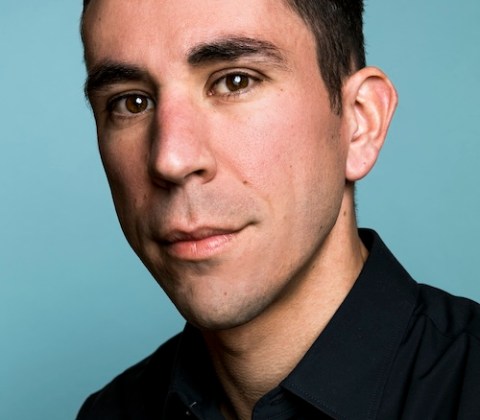
Alex Davies is a technology writer, author of “Driven: The Race to Create the Autonomous Car”, and a former editor at Wired, The Athletic, and Business Insider. He lives in New York’s Hudson Valley.