How on-screen cephalopods went from monsters to teachers
Cephalopod characters have shown up in movies for over a century. But as our understanding of them has changed, so have their on-screen roles.
This is an article from our newsletter “Science Goes To The Movies.” To get stories about the science of popular movies and TV in your inbox, subscribe here.
 When I was around 6 years old, my parents made a huge mistake: They hired a babysitter named Ursula. As a regular viewer of Disney’s “The Little Mermaid,” I was unwilling to spend an evening in the company of an octopodian sea witch, even if she was cleverly disguised as a kind, two-legged suburban teen. I screamed so hard I threw up, and my parents cut their date short and came home.
I’m not the first to be viscerally moved by an on-screen cephalopod. These magnificent animals have gripped audiences since 1916, when a 30-foot puppet octopus named Fatima literally gripped a pearl diver in her “quivering tentacles” in “20,000 Leagues Under the Sea.” But as our understanding of cephalopods has evolved, we’ve tended to cast them in different kinds of roles: as monsters, as villains, and, more recently, as teachers or helpers. Here are some of their most memorable star turns.
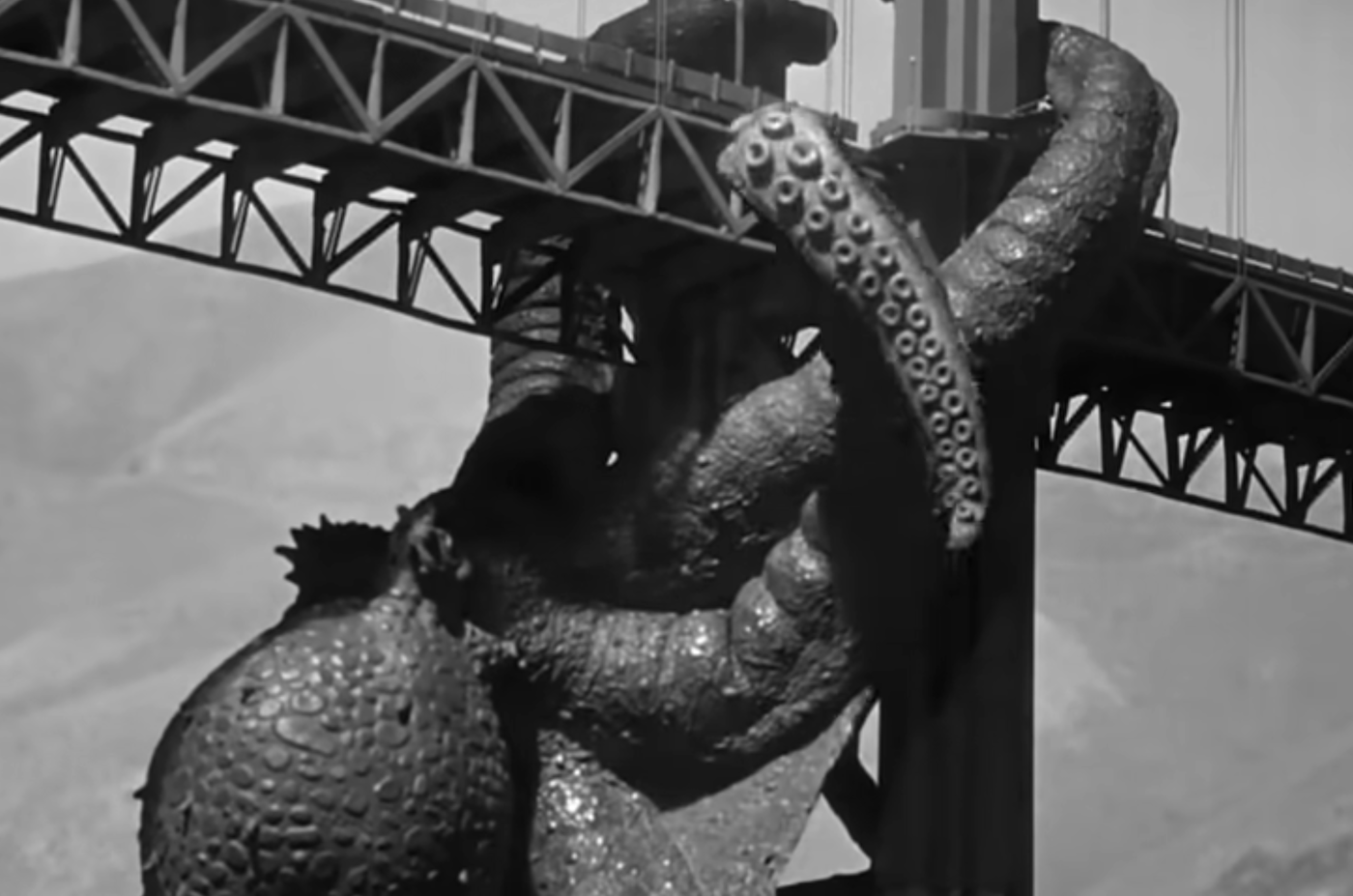
In the 1950s, a wave of cephalopod research excited public interest in these fascinating animals, as scientists began to investigate their abilities. However, it was still hard to raise them in labs, which made sustained study difficult. Movies leaned into this mystery, generally portraying them as horrifying beasts.
Like many early cinematic cephs, the star of “It Came from Beneath the Sea” was meant to inspire terror while giving special effects maestros a chance to show off. In this creature classic, nuclear tests in the Pacific Ocean irradiate an octopus, who then takes out his frustration on a submarine, a freighter, and eventually the Golden Gate Bridge. Stop-motion artist Ray Harryhausen did his best, spending hours studying octopuses at the Long Beach Aquarium—although he was unable to achieve total accuracy because he was only given enough budget to animate six arms.
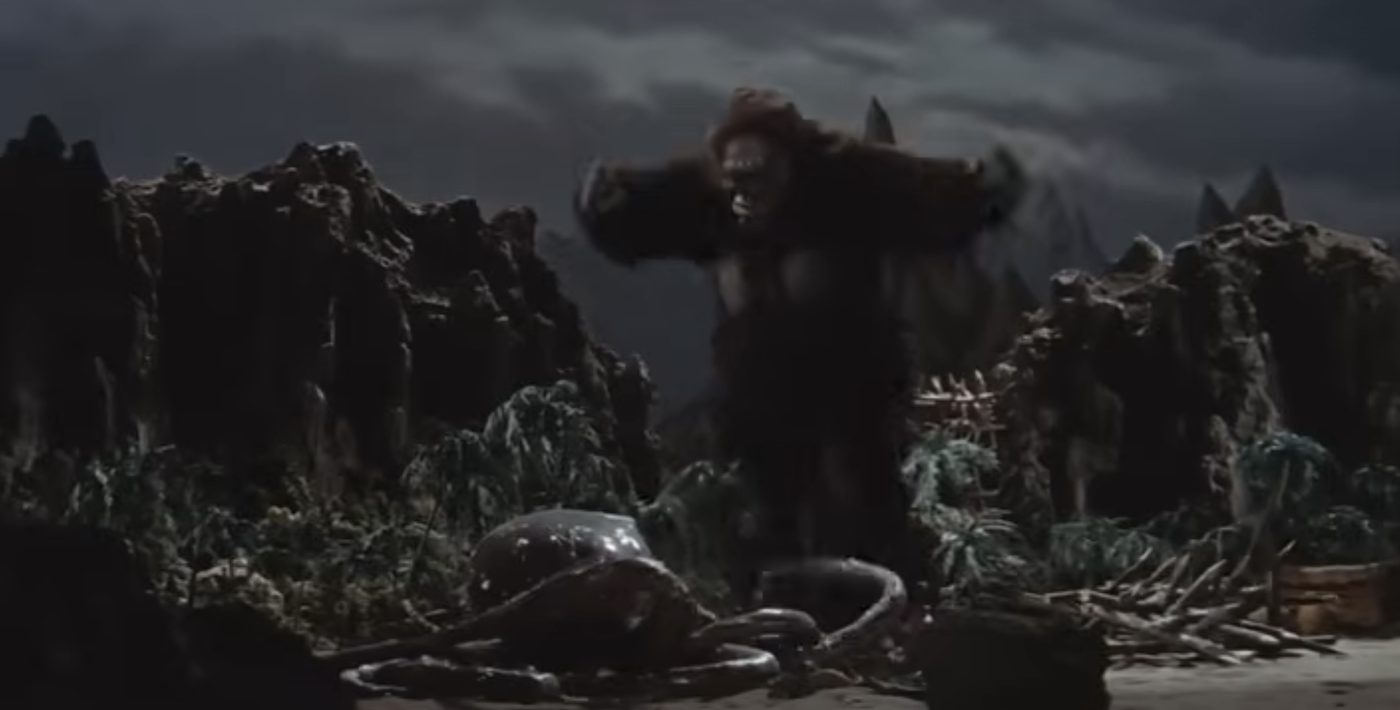
Before his promised battle with Godzilla, everyone’s favorite rageful ape warms up by facing off against a bus-sized octopus that fans call Oodako (Japanese for… three guesses… “large octopus”).
Oodako rampages squelchily through an island village before King Kong scares him off with a couple of tossed boulders. (Maybe he knew that octopuses throw stuff at each other when they’re annoyed.) According to film historian Ray Morton, Oodako was portrayed by four live octopuses, one of which the director later ate for dinner. Who’s the monster now?
Other monstrous cephalopods: Killer octopus (“Bride of the Monster,” 1955); Giant nautilus (“Mysterious Island,” 1961); Dianoga/garbage squid (“Star Wars: A New Hope,” 1977)
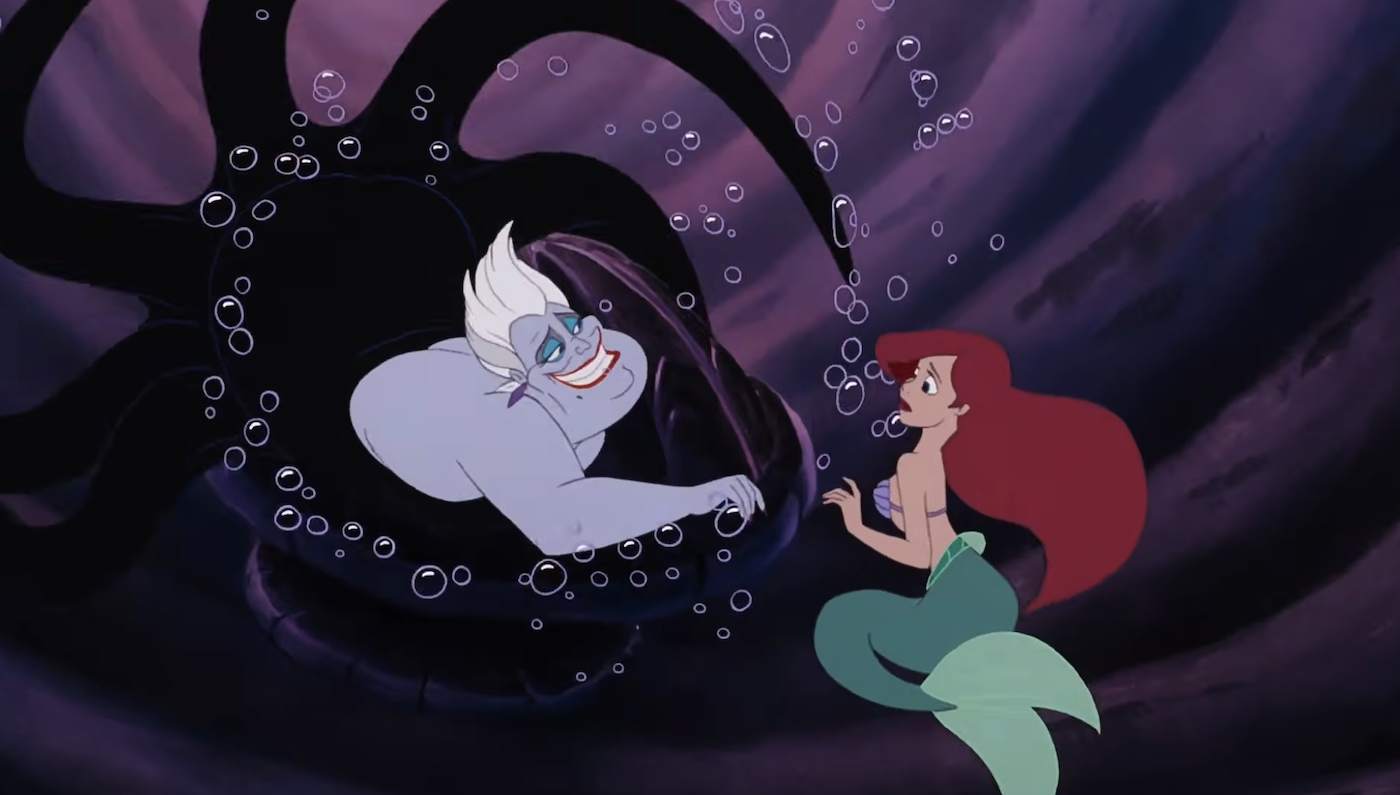
In the 1980s and 1990s, researchers began to understand that octopuses have their own individual personalities and can mimic other creatures. (The same traits have since been discovered in other cephalopods, including squids and cuttlefish.) In turn, the silver screen welcomed more complex ceph characters—but they were often portrayed as duplicitous and sinister. When mermaid Ariel swims off in a huff to see Ursula the sea witch, desperate for someone who will indulge her landlubbing dreams, Sebastian the crab tries to stop her. “No!” he yells. “She’s a demon! She’s a monster!”
In reality, Ursula is something more exciting: a villain! Ursula steals the souls of gullible mermaids with the help of her hench-eels, Flotsam and Jetsam. Though they originally considered basing Ursula on a manta ray or a fish, animators made her part octopus because they found the animals’ movements “seductive and yet scary,” director Ron Clements said.

Many cephalopods exhibit distributed intelligence: Although they have brains, their arms make certain decisions on their own, bypassing central control. In “Spider-Man 2,” scientist Otto Octavius invents a set of wearable mechanical tentacles that then take over his brain. They turn him into the power-mad Doctor Octopus and make the questionable autonomous decisions to rob a bank, attack a subway car, and kidnap Mary Jane. Even in a film that valorizes another eight-legged creature (the spider), the octopus is the bad guy.
Other villainous cephalopods: James Bond antagonist Octopussy (“Octopussy,” 1983); Davy Jones (“Pirates of the Caribbean: Dead Man’s Chest,” 2003); Dave the octopus (“Penguins of Madagascar,” 2014)
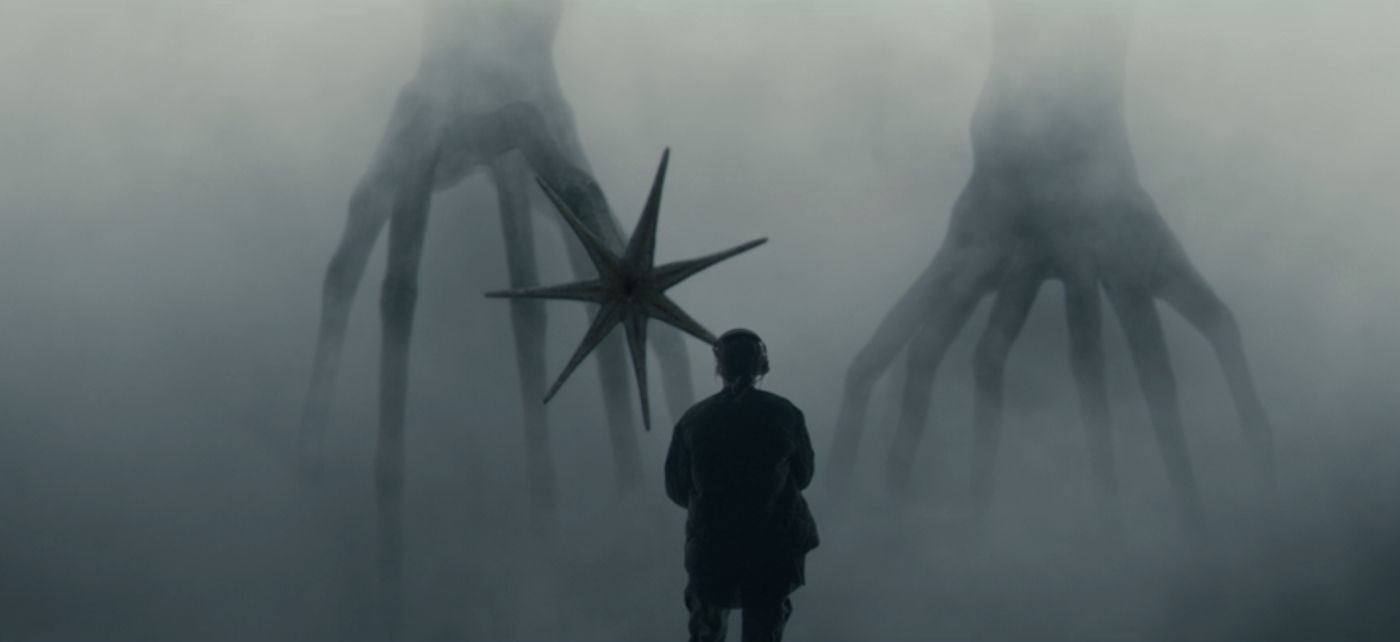
In the past two decades, our understanding of cephalopods has progressed even further. We’ve learned that these animals can use tools, including mirrors, and can recognize individual humans.
Recently, films have begun asking what these animals can teach us. In “Arrival”—which stars a pair of ceph-inspired “heptapod” aliens nicknamed Abbott and Costello—humans originally panic at these strange creatures, and read hostility into their presence and communications. But as linguist Louise Banks eventually figures out, the aliens just want to share some of their freaky, boundary-pushing knowledge with us. You’ll have to watch to learn exactly what.
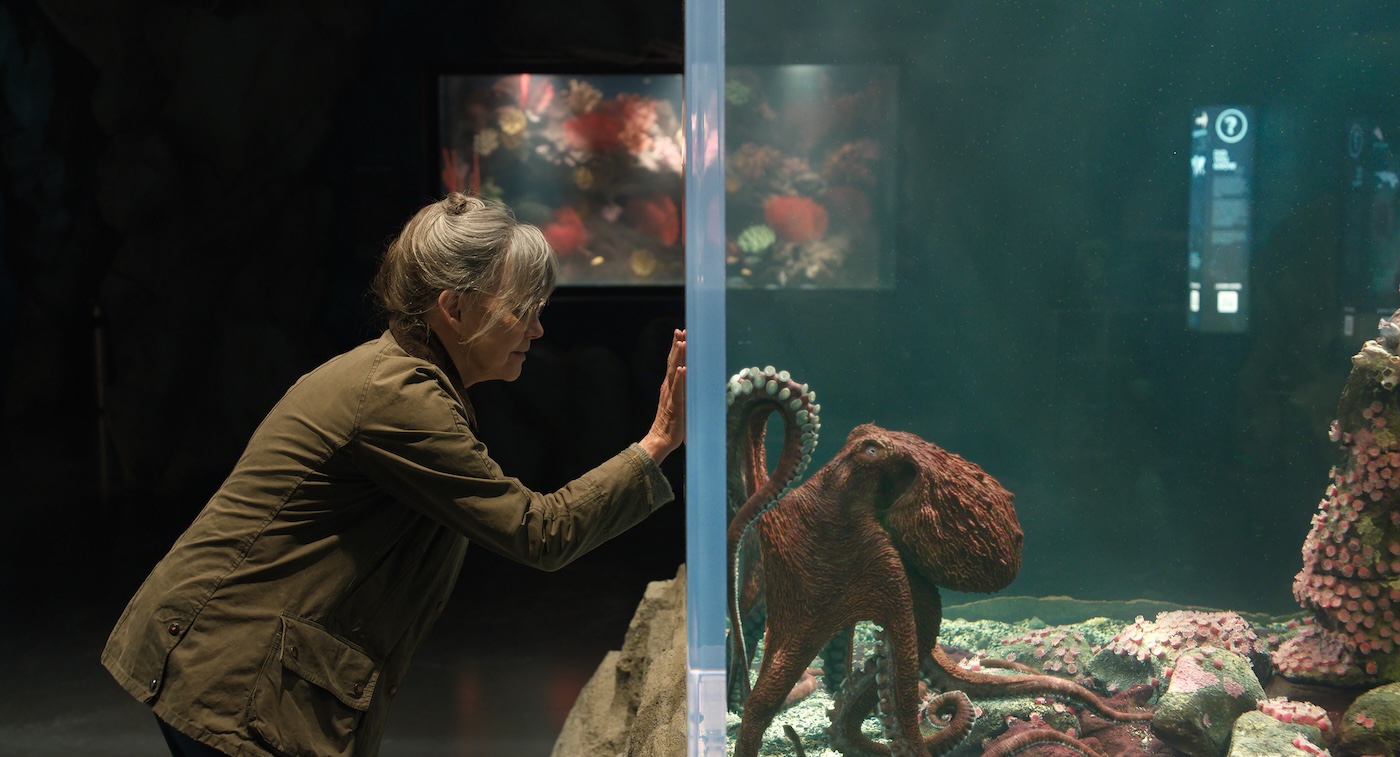
“Remarkably Bright Creatures” serves as a kind of mirror history of human-cephalopod relations—it follows the same trajectory we’ve seen play out in human films, but from a ceph’s perspective. The movie’s narrator and main character, a giant Pacific octopus named Marcellus, first sees most humans as monstrous brutes. Over the course of the movie, he grows to respect them, touched by their individuality and even helping two of them solve a mystery. By the end, he grudgingly describes us as “remarkably bright creatures.” How far we’ve come.
Other helpful cephalopods: American Museum of Natural History giant squid (“The Squid and the Whale,” 2005); Common octopus (“My Octopus Teacher,” 2020); Tsyong warrior squids (“Avatar: Fire and Ash,” 2025)

Cara Giaimo is a science journalist who loves writing about our fellow species. You can find her work in the New York Times, WIRED, The Plant, and elsewhere. Cara lives in Somerville, MA, above sea level.