The Miniforest Movement Gains Ground In The U.S.
A 50-year-old planting method from Japan is jump-starting native forest ecosystems in small plots, from schoolyards to parking lots.

Illustration by Molly Magnell, for Science Friday
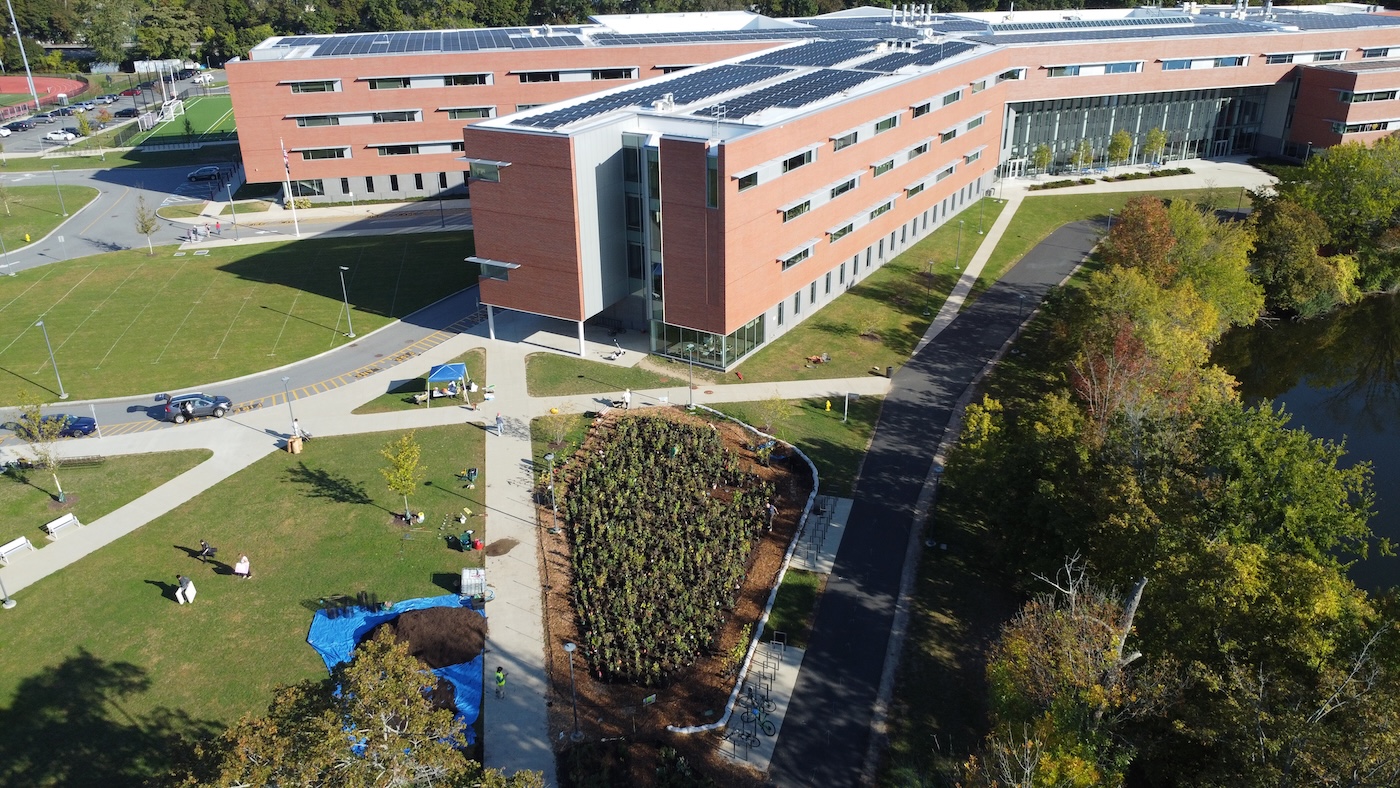
A gray dogwood seedling, no bigger than a few twigs, lived in a pot on my porch last summer. My family sheltered and watered it and then, in October, we joined hundreds of fellow volunteers in tucking it and more than 1,100 other trees and shrubs into a 3,000-square-foot plot in front of our town’s public high school. Together these plants have the potential to become a forest in microcosm within my lifetime, thanks to a method created by late Japanese botanist Akira Miyawaki.
The nascent grove in my town, Belmont, is one of at least 20 Miyawaki-style plantings in Massachusetts and dozens more across the United States, most started in the past five years. While they’re just catching on here, there are thousands across the world. The oldest are in Japan, where Miyawaki developed his method in the 1970s. Before he died in 2021, Miyawaki led planting at more than 2,500 sites in Japan and 150 more internationally. A weed ecologist by training, he aimed to rapidly restore degraded patches of land to the resilient native forest ecosystems they’d likely host if humans had left them undisturbed all along.
In Belmont, an intergenerational committee of residents worked with Alexandra Ionescu, associate director of regenerative projects for the nonprofit Biodiversity for a Livable Climate, advised by botanist Walter Kittredge. The involvement of local volunteers is right out of Miyawaki’s playbook.
“He would do planting ceremonies,” says Ionescu. “He would take each plant, and the community had to say its name … It was about restoring relationships between humans and non-humans.”
Kittredge says he’s hooked on the party-like atmosphere of planting days. “The camaraderie and the helpfulness,” he says, “everybody pitching in and coordinating, seeing young kids getting involved with their parents … it’s just such a high.”
The goal of the Miyawaki method is to create mature forest ecosystems within decades, rather than the century or more that such a transformation would take without human intervention. In the early stages of natural forest formation, scrappy pioneer plants give way to progressively more shade-tolerant, slower-growing and longer-lived arrivals, until conditions are right for the lofty “climax species” that rule mature forests indefinitely. Miyawaki’s innovation was to skip the prologue. A carefully selected mix of climax species and supporting players are started in nurseries, then put into rigorously prepared soil. Dense planting encourages the rapid establishment of a protective canopy and a humid, enclosed interior. A tenet of the method is that after three years of watering, mulching, and weeding, the young forest can and should sustain itself without human maintenance.
The first such plantings in the US were led by Miyawaki in 2014 on industrial sites in Indiana and Kentucky. Around that time, his ideas began drawing interest outside his field. Several Miyawaki-inspired organizations—including Afforestt, whose auto-engineer founder delivered a widely viewed TED Talk in 2014, and SUGi, launched in 2019 by a creative brand strategist—began to popularize and spread the method.
The new generation of “miniforests” pop up everywhere from schoolyards to urban parks to parking lots. Typically ranging from 1,000 to 10,000 square feet (smaller than Miyawaki’s originals), they’ve made headlines with the appealing idea that ecological transformation can occur in the footprint of a tennis court.
According to Kittredge, in conventional restoration ecology, plants are spaced wider apart, covering more ground at less expense. In urban and suburban areas, however, “compactness is an advantage,” he says. “And in terms of maintenance, here’s something that’s small enough you can actually fence the whole thing in and water the whole thing together.”
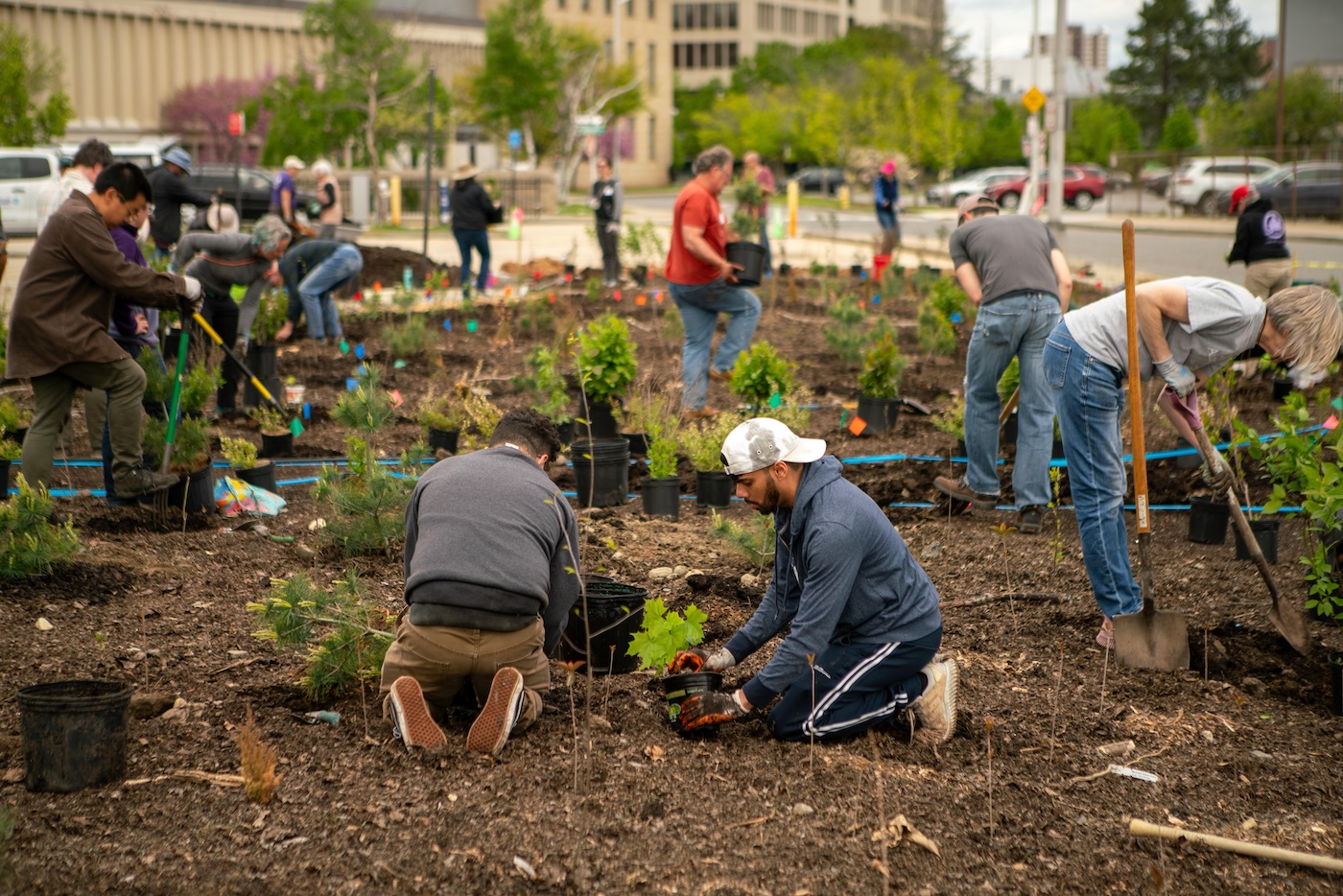
Hannah Lewis, author of Mini-Forest Revolution: Using the Miyawaki Method to Rapidly Rewild the World, has helped to lead two Miyawaki projects, one in France and another near her home in Minnesota.
“I think what’s cool about the miniforests is not necessarily the fact that they’re mini, but the fact that they’re forests,” she says.
In her book, Lewis characterizes forests by their multilayered composition (overstory, understory, shrubs, herbaceous plants), in contrast to the monoculture of street trees or timber plantations. Forests provide a long list of ecological benefits: They sequester carbon and cool the land and air around them. They make soil more permeable and therefore capable of absorbing more rainwater. They can reduce erosion and buffer human settlements against noise, pollution, and storms. And they help reknit the frayed web of local biodiversity by providing a habitat for insects and small animals, as well as fungi and microorganisms, all interacting to their mutual advantage.
“All of those benefits come from forests—any kind of forest,” Lewis says. “The healthier the forest, the better. The bigger the forest, the better. The mini part is the accessibility part. I’m one little person or one little school, and I’m going to do my part.”
Moreover, she says, “We’re trying to do it in a human timescale so that those benefits can manifest.”
Once aspiring Miyawaki forest-makers secure a location and funding, they must analyze their soil and make it hospitable by mixing in compost, leaves, and other organic materials. Then comes the critical step of choosing which species to invite to the party.
The term “potential natural vegetation” (PNV) refers to the community of plants likely to dominate a particular location in the absence of human influence. “The Miyawaki method was to go out in the local forest and see what grew there and mimic that,” says Kittredge. Teams lacking nearby examples of PNV must become sleuths: scouring native plant databases, consulting local ecologists and keepers of Indigenous knowledge, even examining artwork from earlier eras.
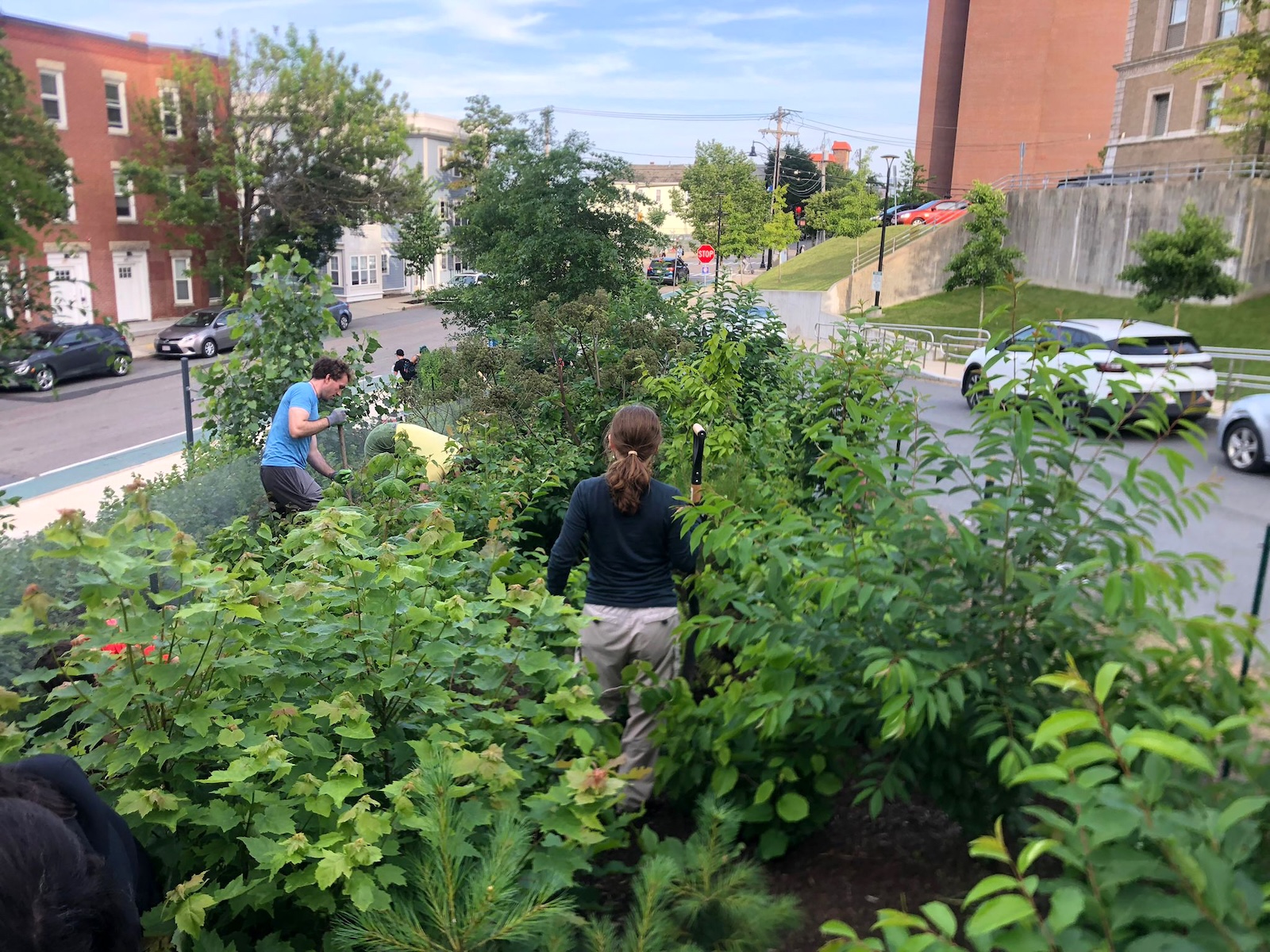
Striking the right balance can be tricky. In Minnesota, Lewis says her team’s attempt to shade sensitive baby sugar maples with a few faster-growing bigtooth aspens worked a little too well. “I knew that I wasn’t supposed to plant pioneer trees,” she admits, “but I did, and now I totally understand why they’re not a good fit.”
The oldest Miyawaki miniforest in New England, planted in 2021 at Danehy Park in Cambridge, Massachusetts, faced a similar situation when drought enabled a quick-spreading shrub called staghorn sumac to crowd out other plants. Despite Miyawaki’s precept to cap maintenance at three years, the forest’s caretakers decided last year to protect species diversity by removing some sumac and adding new mulch and trees.
“You’re trying to observe and be adapted to the context,” says Ionescu, whose organization partnered on the project with SUGi and the City of Cambridge. “You shouldn’t micromanage the forest, but there are ways you can steward.”
As these examples show, users of Miyawaki’s template often modify it, whether by error or necessity.
In a 2024 keynote at Yokohama National University, American ecologist Dr. Elgene O. Box emphasized that Miyawaki originally developed his method for the humid southern regions of Japan. He displayed a photograph of an evergreen broadleaf forest Miyawaki planted 50 years ago on the Japanese island of Kyushu, now standing tall and lush. “You can see it has a nice structure, it has a nice forest interior,” Box observed, later noting, “We’re studying these oldest forests now to understand what the problems will be in later stages.”
Box described the varied contexts in which the method has since been applied, each with its own challenges: deciduous forests that lose their canopy of leaves each year; tropical zones where shorter-lived species tend to reproduce far from their parent trees; arid regions where trees tap groundwater faster than it’s replenished.
“Reports and data are needed very much for these other situations,” Box said, “because most of them are very new.”
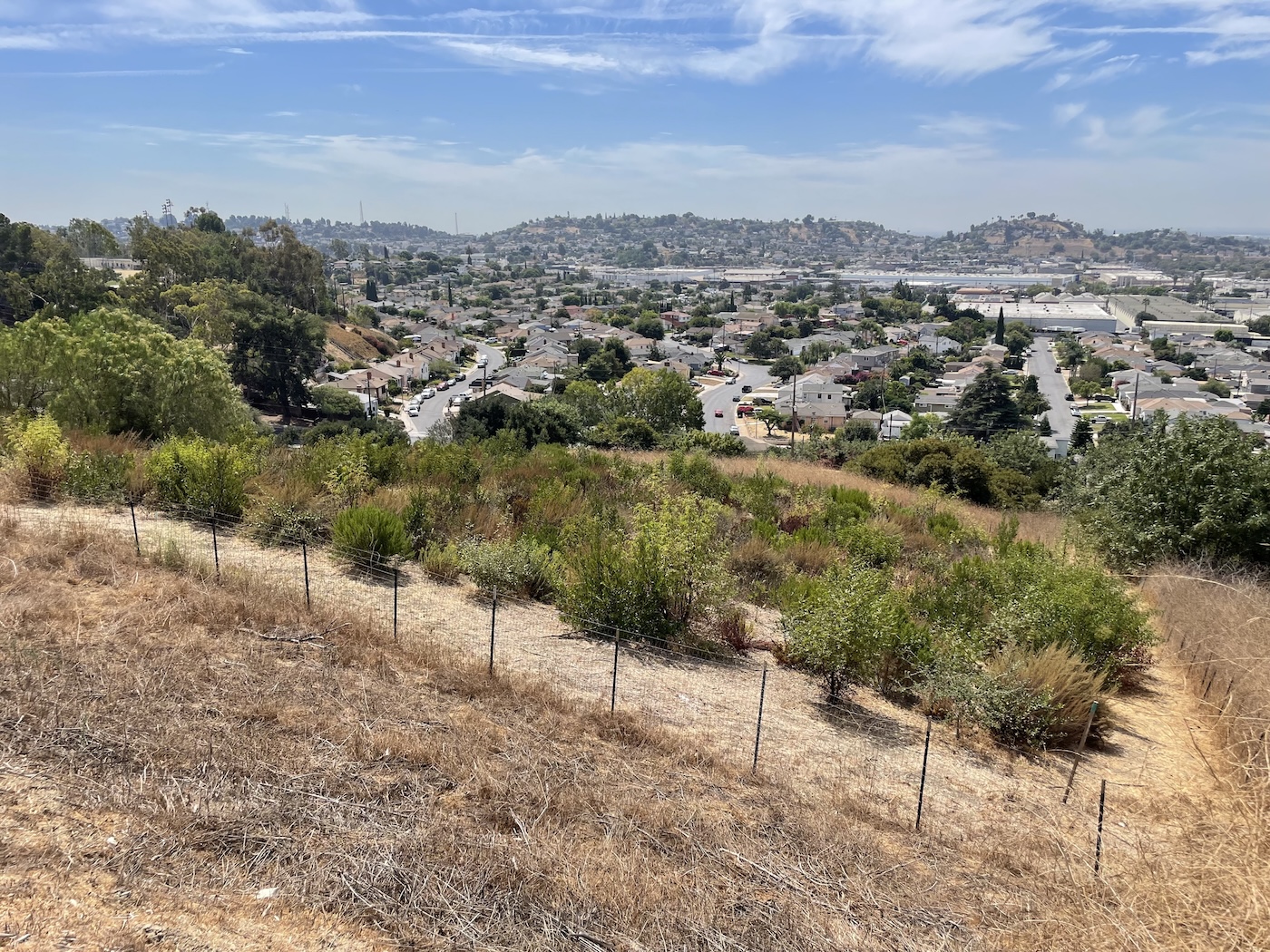
A few recent studies support the hope that Miyawaki miniforests could have a positive ecological impact—such as improved soil—within a few years. But monitoring forests over the long term is labor intensive. Some scientists, including those at European nonprofit Earthwatch and Wageningen University & Research in the Netherlands, have turned to the public for help with data collection. At Los Angeles’s Loyola Marymount University, researchers have created their own smartphone app to make community science easier and more accurate, deploying it in the nearby 10,000-square-foot Ascot Hills Micro-Forest.
Meanwhile, a paper based on two Italian case studies asserted last year that using tiny forests as outdoor classrooms is “by far the most important function.” Forest-based education, its authors write, builds “naturalistic intelligence” in young children and provides advanced students a training ground for scientific inquiry.
Though more research is needed on the longevity and benefits of miniforests, their personal appeal is undeniable. I sense it each time I check on that baby dogwood my family fostered. I can’t wait to watch it stretch toward the sun alongside neighboring plants whose names I’m just learning—shagbark hickory, black tupelo, speckled alder.
Kittredge labels what I’m feeling: a sense of ownership. “I planted some of this; this is my forest too,” is how he puts it. “It’s everybody’s forest and it’s my forest.”
Nicole Estvanik Taylor is a writer and editor based in the Boston area. Her past roles include serving as content director of the MIT Alumni Association and managing editor of American Theatre magazine.