Grade Level
6 - 8
minutes
15 min - 1 hr
subject
Life Science
stem practices
Obtaining, Evaluating, and Communicating Information
Activity Type:
discussion questions
Known as “Humans’ best friend,” dogs are the first domesticated animals, but when did the domestication of these creatures begin? And when did dogs start to diversify into the breeds we know today? Bioarchaeologist Carly Ameen joins Science Friday to discuss her research on how modern dogs were bred from ancient wolves.
Key Ideas
Eurasian gray wolves were the first animals to be domesticated, a process that began about 30,000 to 50,000 years ago when wolves slowly went from a wild existence to one dependent on humans. Today, scientists like Dr. Ameen are studying the prehistoric skulls of canids (dogs and relatives) to determine when wolves began to diversify into the various dog breeds we know today.
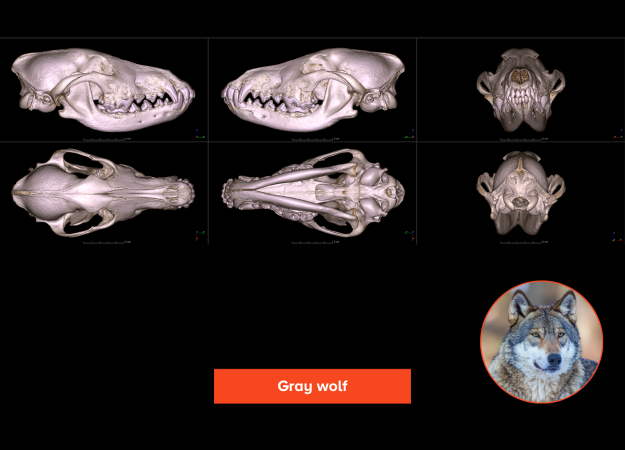
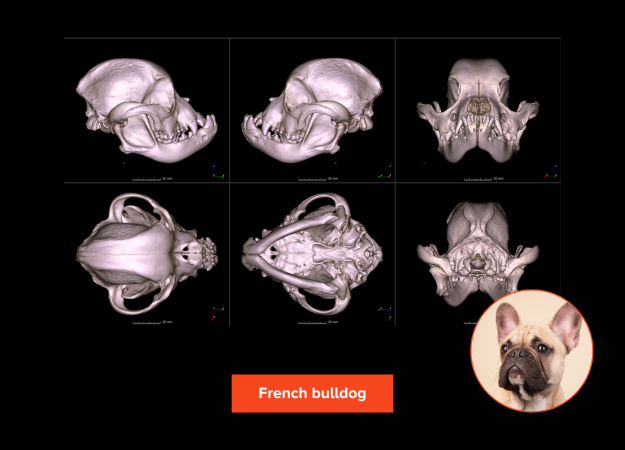
But what is a dog breed, and how are breeds defined? Breeds are a way of grouping dogs with consistent, observable characteristics that they can inherit. Selective breeding is when people choose the characteristics they like in animals and mate them, hoping to pass those traits on to the next generation. We can see evidence of changes in characteristics over time by looking at differences in skull structure.
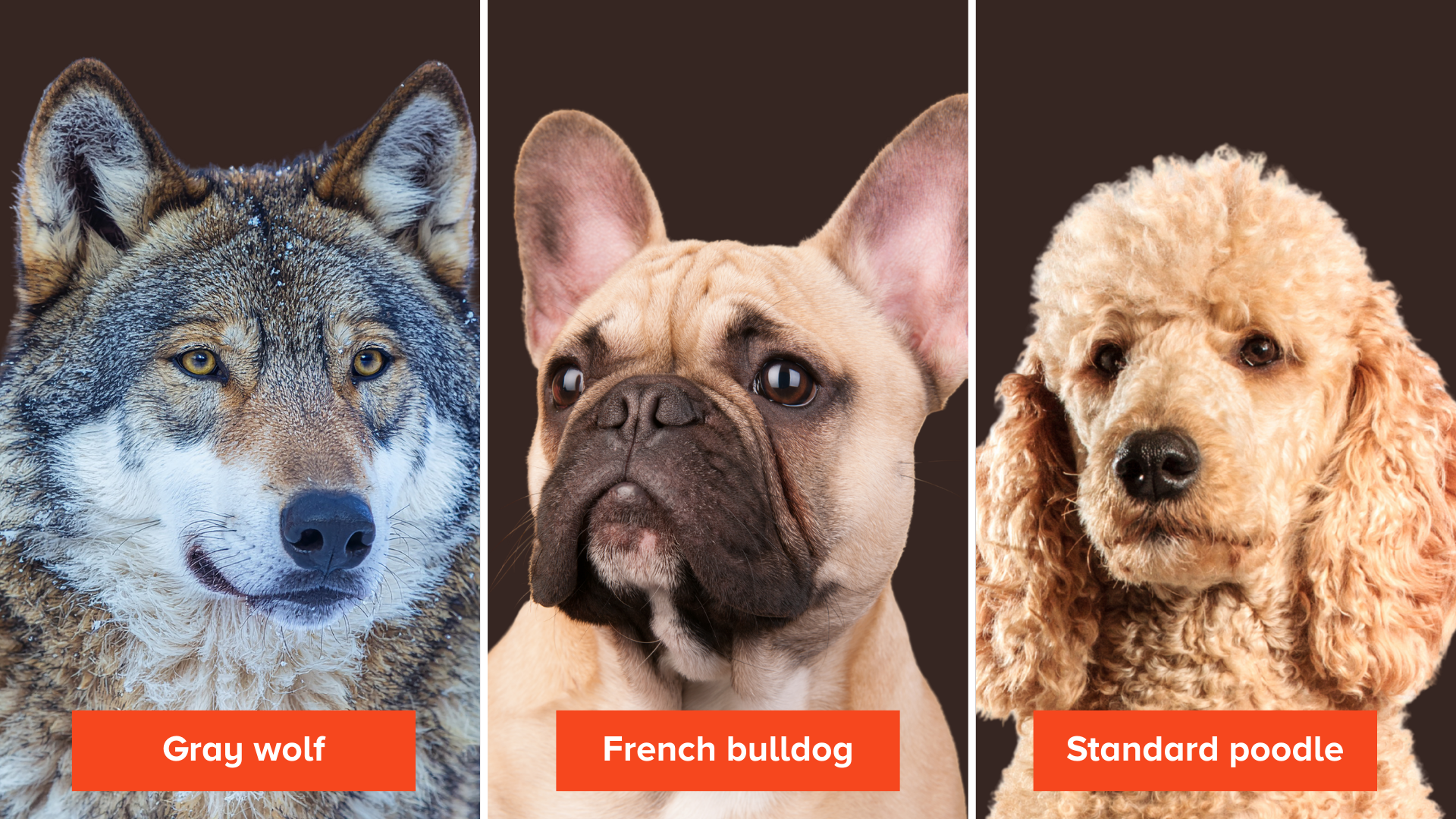
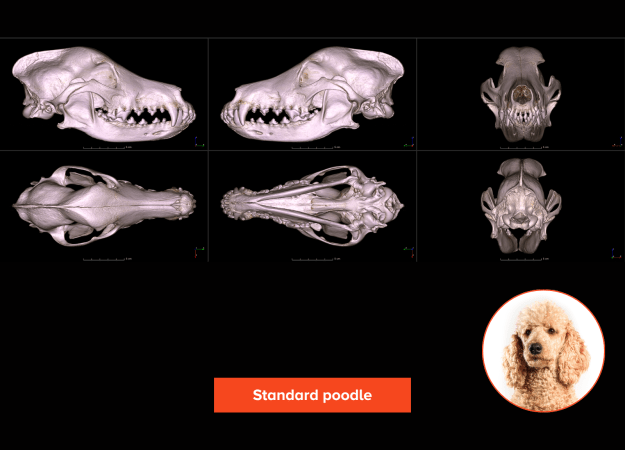
For example, the French bulldog is a small dog with an underbite (a protruding lower jaw), small ears, and a pushed-in nose. What characteristics would you use to describe a breed like a standard poodle (below)? Try to focus on its head shape. Like the French bulldog, its ancestor is the gray wolf.
Dr. Ameen’s research shows that changes in skull shape began as far back as 10,000 to 11,000 years ago! Wolf skulls suddenly started to transform from long, slender shapes into “boxy” shapes with a wider space for the brain and shorter noses. And from there, diversification sped up, creating a wide range of sizes and shapes in canid skulls. When Dr. Ameen examined skulls from 8,000 to 9,000 years ago—just 2,000 years later—she saw evidence of almost half of modern dog breeds.
Think Big!
After you’ve watched the video about Dr. Carly Ameen’s research, think about the following questions:
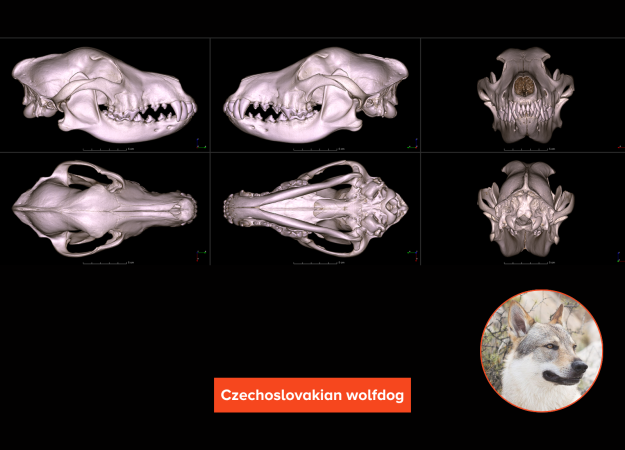
- Look at the skull images below. What observations can you make about the skulls? What do you notice? What do you wonder?
- What other characteristics, besides skull structures, could be observed to determine the differences between dog breeds?
- Labradoodles (a cross between labrador retrievers and poodles) were initially bred for people who have allergies to pet dander. If you were to imagine creating a unique dog breed by combining the traits of two existing breeds, which breeds would you choose and what qualities do you think they would bring together?
Meet The Scientist
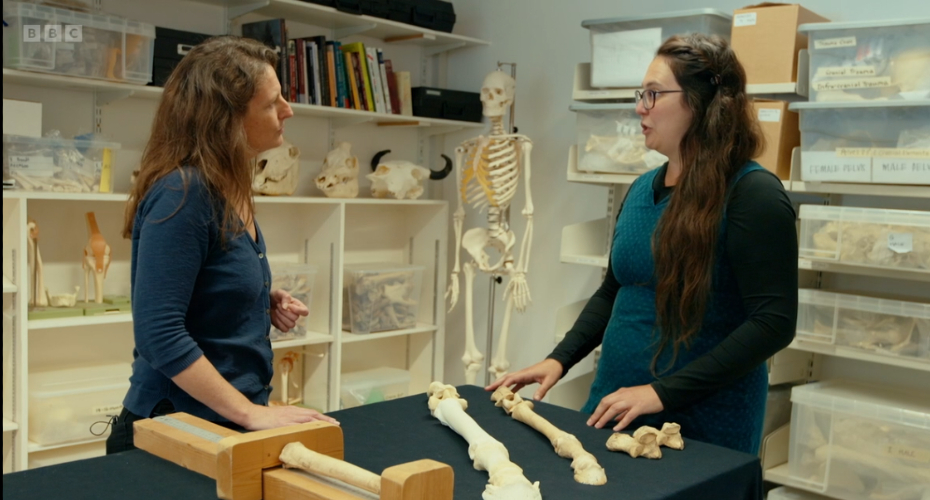
Dr. Carly Ameen is a bioarcheologist and lecturer at the University of Exeter in the UK.
A bioarchaeologist is a scientist who combines biology, the study of life, with archaeology, the study of human history through artifacts, or objects. By examining bones and skeletal remains from ancient sites, a bioarchaeologist reconstructs the lives and characteristics of past human populations.
NGSS Standards
- LS1.B: Growth and Development of Organisms – MS-LS1-5 – Construct a scientific explanation based on evidence for how environmental and genetic factors influence the growth of organisms.
- LS3.A: Inheritance of Traits – MS-LS4-3 – Analyze displays of pictorial data to compare patterns of similarities in the embryological development across multiple species to identify relationships not evident in the fully formed anatomy.
- LS3.B: Variation of Traits – MS-LS3-1 – Develop and use a model to describe why structural changes to genes (mutations) located on chromosomes may affect proteins and may result in harmful, beneficial, or neutral effects to the structure and function of the organism.
Educator's Toolbox
Meet the Writer
About Svea Anderson
Svea Anderson is a twenty-year veteran educator who never hesitates to step out of her comfort zone and try something new. She enjoys a challenge and never passes up an opportunity to learn something new.