
Have you ever found yourself awake long past bedtime, caught up in a video game, captivated by a TV series, or lost within the pages of a good library book? We all have those nights when we don’t hit the recommended 8 to 10 hours of sleep. How do you feel the next morning? Do you find yourself yawning all afternoon?
Many people associate yawning with exhaustion or boredom. But researchers may have discovered that yawning could be beneficial. A yawn may actually help flush your brain clean.
How yawning might help clear dirty fluid from the brain
Key ideas
Sometimes you can’t resist a sudden, wide-mouthed yawn (usually at the worst moment, when a teacher is looking at you). This involuntary deep inhalation, or breath, is shared by nearly all vertebrates—organisms with a backbone. They also all have a clear cerebrospinal fluid, or CSF. It acts like a cushion to protect the brain and the spinal cord from damage. If we didn’t have the CSF, our brains would bang from one side of the skull to the other when we move. Ouch! The other function of the CSF is to transport nutrients into the brain and waste away from it. When the brain breaks down food to make energy, it also makes metabolic by-products that need to be disposed of.
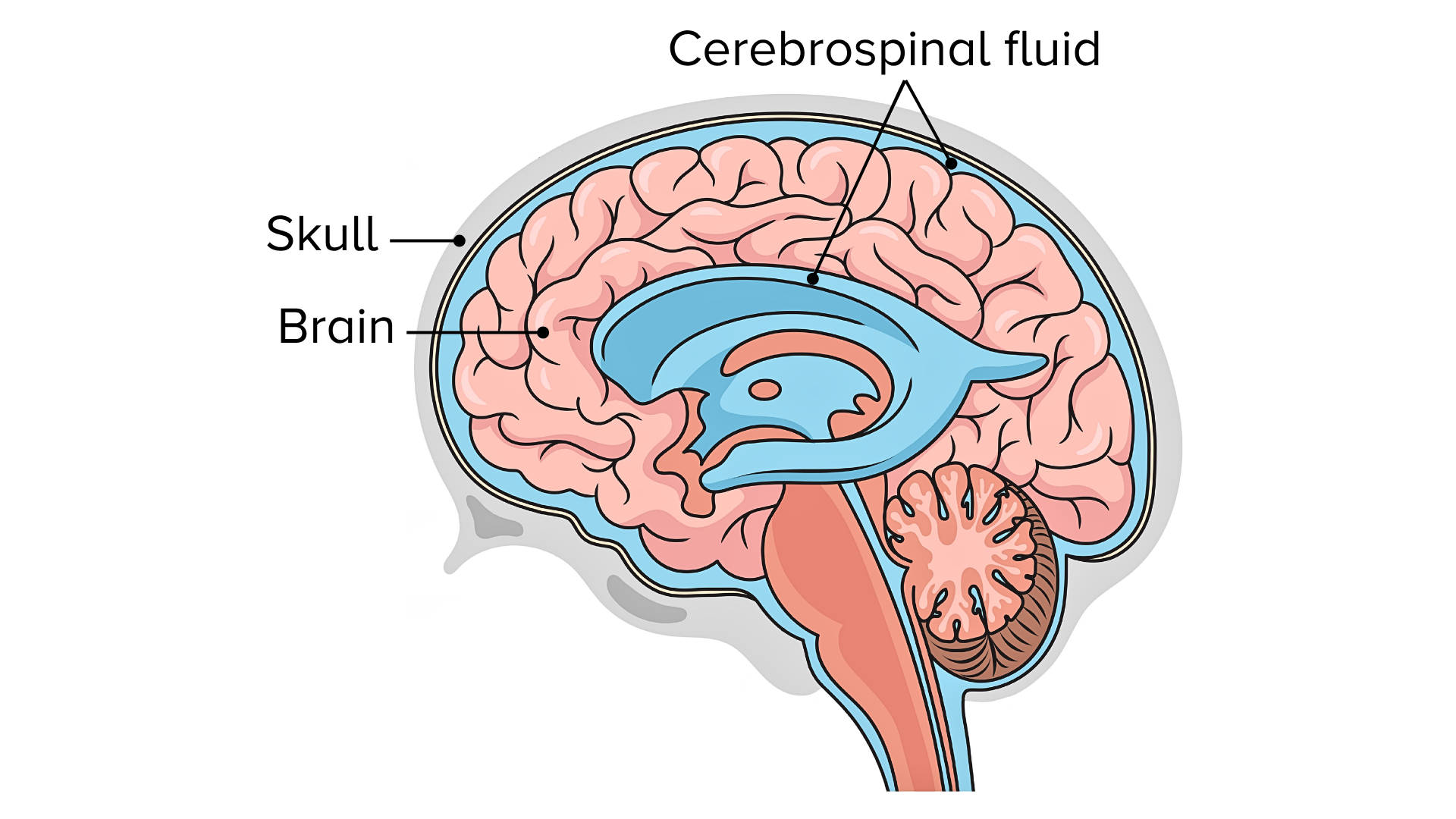
Researchers at the University of New South Wales in Sydney, Australia, recently discovered that yawning may help clear the dirty fluid from the brain. And in an exciting twist, this scientific investigation was sparked by a curious student interested in yawning!
Imagine a household washing machine. After you load your dirty clothes into the washer and turn it on, the machine fills with clean water. That water passes through the fabric, eventually flushing away the dirt. At the end of the cycle, the dirty water drains from the washer, leaving the clothes clean.
Something similar happens within your skull every time you yawn. Normally, the blood entering your skull and the waste-removing CSF liquid travel along opposite pathways. However, when you experience a deep, wide-mouthed yawn, suddenly the CSF and blood flow align, moving together in the same direction and increasing the overall flow of waste out of the brain. It’s a bit like a rinse cycle for your mind!
Scientists are continuing to investigate whether yawning could offer clues about the brain and neurodegenerative conditions, such as Alzheimer’s disease. In the meantime, make sure you get that optimal 8 to 10 hours of sleep for teenagers, and don’t fight the urge to yawn!
Think Big!
After you’ve watched the video, answer these questions:
- Have you heard that yawning is contagious? Have you ever seen a friend yawn and wanted to do the same? Why do you think that is?
- What do you notice about yourself if you don’t get enough sleep? Make a list of ways your memory, emotions, or body reacts when you are sleepy. Compare your list with at least one other person. What differences or similarities do you notice?
- The body’s waste disposal system is part of the lymphatic system. The removal of by-products from the brain by CSF is part of that system. What other organs or organ systems in your body produce waste? How do you think those wastes are removed?
Meet the scientist
Lynne Bilston is a professor at the University of New South Wales. She’s a biomechanical engineer who studies how soft tissues, like muscles, respond to physical stress or injury. Professor Bilston specializes in cerebrospinal fluid flow in the brain and spinal cord as well as certain respiratory disorders, like sleep apnea. In addition, she has used her knowledge to design ways to protect children during car accidents, especially children with disabilities who can’t use standard safety seats.

Keep learning!
Sleeping before learning is critical to ensure your brain is fully prepared to absorb new information. Teenagers need 8 to 10 hours of sleep nightly. Sleep helps your hippocampus, the part of your brain where information is gathered and stored, get ready to soak up knowledge. When you don’t get enough sleep, it affects your brain’s efficiency and slows your reaction time. That slowdown makes it significantly easier to forget important information. To make matters worse, a lack of rest reduces your attention span, making it difficult to concentrate on key information when it matters most.
Learn more about the importance of sleep, how your mind creates memories, and why sleeping is vital for maintaining a healthy brain with Science Friday’s fun Hack Your Brain activities.
NGSS Standards
- LS1.A: Structure and Function – In multicellular organisms, the body is a system of multiple interacting subsystems. These subsystems are groups of cells that work together to form tissues and organs that are specialized for particular body functions.
Credits:
Lesson by Svea Andersen
Developmental editing by Sandy Roberts
Copyediting by Erica Williams
Digital production by Sandy Roberts
Featured artwork for the activity by Fai Kosciolek
Video by Sukee Bennet
Host Flora Lichtman
Producer Dee Peterschmidt
Get new activities delivered to your inbox every month with Science Friday Educate newsletter!
Educator's Toolbox
Meet the Writer
About Svea Anderson
Svea Anderson is a twenty-year veteran educator who embraces challenges and consistently seeks opportunities for new learning.