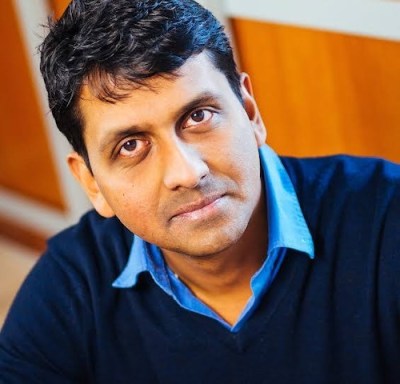
Dr. Vinod Vaikuntanathan is the Ford Foundation Professor of Engineering in the EECS department at MIT, a principal investigator at MIT CSAIL, and the chief cryptographer at Duality Technologies. He earned his BTech degree from the Indian Institute of Technology Madras in 2003, and his SM and PhD degrees from MIT in 2005 and 2009, respectively. After a postdoctoral stint at IBM Research, a year as a researcher at Microsoft, and two years as a faculty member at the University of Toronto, Vinod joined the faculty of MIT EECS in September 2013.
Vinod’s research is on the foundations of cryptography and its applications to theoretical computer science at large. He is known for his work on fully homomorphic encryption, a powerful cryptographic primitive that enables complex computations on encrypted data, as well as lattice-based cryptography, which lays down a new mathematical foundation for cryptography in the post-quantum world.
Vinod now devotes all of his time to AI safety. Together with Shafi Goldwasser and Adam Tauman Kalai, he founded the Institute for Responsible Superintelligence (RESI.org). Drawing on cryptography’s success in making internet transactions more secure, RESI brings together computer scientists, mathematicians, economists, and lawyers to pursue breakthroughs in AI and superintelligence that are safe by design.
Vinod’s work has been recognized with the Harold E. Edgerton Faculty Award (2018), the Godel Prize (2022), and a Guggenheim Fellowship (2026). He was also named a MacVicar Faculty Fellow in 2024 for exceptional teaching and mentoring.
Segment
Listen
Everyone is calling for safer AI. So what does that mean?
Concerns about AI safety are growing. Two researchers explain what “alignment” means, and what questions remain.