Subscribe to Science Friday
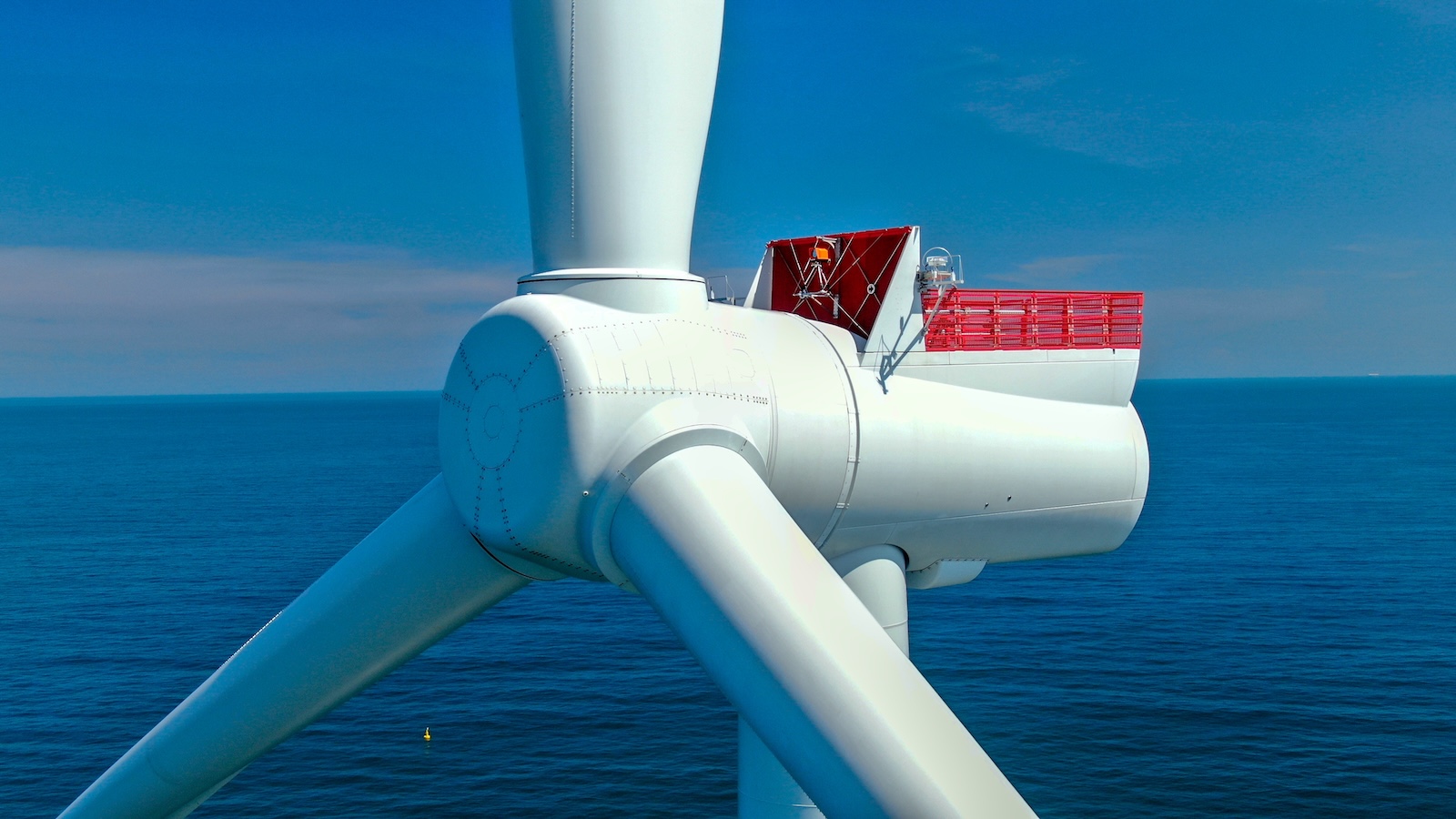
This week, several court cases took up the issue of offshore wind farms—and whether the federal government could order a halt to all such projects under construction. Climate and energy reporter Casey Crownhart joins Host Ira Flatow for an update on the legal action around offshore wind, and other energy and tech news, including new battery technologies, next-generation nuclear reactors, and an early test of beaming power down to Earth from aloft.
Donate To Science Friday
Invest in quality science journalism by making a donation to Science Friday.
Segment Guests
Casey Crownhart
Casey Crownhart is a senior climate and energy reporter for MIT Technology Review. She is based in New York, New York.
Segment Transcript
IRA FLATOW: This is Science Friday. I’m Ira Flatow. A bit later in the hour, a conversation about the state of federal science funding and new work on the mysteries of Roman concrete. But first, this week, after President Trump canceled major wind farm projects, he’s being challenged in court to bring them back. Joining me now for an update on the pushback and other tech and energy news is the energetic Casey Crownhart, senior climate and energy reporter at MIT Technology Review. Welcome back, Casey.
CASEY CROWNHART: Thanks so much, always so good to be here.
IRA FLATOW: All right, a pushback in wind farm cancelations, what’s going on here?
CASEY CROWNHART: Yeah, it’s been a really tough year in general. I mean, already, but also 2025 for offshore wind in the US. So in late December, the Trump administration issued a stop work order for all five wind farms that are currently under development in the US, basically saying, hey, we need to pause. They cited national security concerns and very quickly we saw the companies push back file lawsuits. And now at the beginning of the year, we’re starting to see the results of some of those. And so far, two different judges have overturned those stop work orders, so those projects have been able to resume work.
IRA FLATOW: And where are they?
CASEY CROWNHART: One is called Revolution Wind, that’s off the coast of Rhode Island, and the other is off the coast of New York. So all of these projects are along the US East Coast, which could really use some help with additional electricity demand and supply right now.
IRA FLATOW: And we’re waiting to hear on what three others?
CASEY CROWNHART: There’s one other lawsuit that we’re currently still waiting to hear on. And then there are two other projects that are still affected. So, in total, these are all five projects that we’re currently under development, two now can resume their work.
CASEY CROWNHART: They can just go right now, as we speak. No appeals coming up that are stopping them?
CASEY CROWNHART: I’m sure the legal battles are not going to stop, but, yes, the projects are able to continue, which is really important because some of these projects’ developers say they’re under really tight timelines. For example, the project in New York, they had this very specific vessel that they needed to complete this work. And they were saying, hey, if we don’t get this done, this boat is booked and we’re going to be totally out of luck and this project will not come online as expected.
IRA FLATOW: All right, let’s move on to other administration activity. There was news this week about an EPA rule– a rule change that could have some big consequences.
CASEY CROWNHART: Yeah, this is a little bit wonky, but it could have really significant impacts. So for decades, the EPA has basically assigned dollar value to the lives saved and the health problems avoided because of regulations they put in place. So they want to put limits on pollution, like little particles that can get into your lungs or volatile organic compounds, and that can have a cost for industry to be able to meet those new regulations. But, on the flip side, we know that avoiding those pollutants can really be helpful for human health. And so for a long time, the administration has tried to put numbers to this. Now we know that the Trump administration plans to stop tallying those gains in that way.
IRA FLATOW: So if you’re not looking at the cost of these health effects, what’s going to be going into the calculations then regarding things like rules about these particulates?
CASEY CROWNHART: Yeah, so in terms of dollar values, they’ll only be considering the numbers around the cost to industry for these kind of limits. The administration does say that they will continue to consider the health benefits. But a lot of experts are concerned that by removing this kind of putting numbers to things, it’ll be easier to pull back and repeal limits on pollutants from things like coal-fired power plants and oil refineries and steel mills and the like.
IRA FLATOW: Yeah, I know you’ve been working for a while on big package for Technology Review on top technologies to watch this year, so please share your list with us.
CASEY CROWNHART: Yes so this is a big project we do every year. We’ve been working on the 2026 edition since July and, this week, we finally announced this year’s list. So I can do a speed round if we want.
IRA FLATOW: Go with your top picks.
CASEY CROWNHART: OK, yeah. So I’m a little biased as one of the folks on the climate team. The kind of climate-related items on the list this year are next generation nuclear, so these new takes on nuclear power plants that we’re starting to see.
IRA FLATOW: Different nuclear technologies?
CASEY CROWNHART: Yeah, so I think we’re starting to see some real progress for these alternative approaches. So most nuclear power plants today that are in operation around the world follow a similar blueprint. They’re really massive, they cost billions of dollars to build, use a similar fuel, and a similar way of cooling their reactors.
Now we’re seeing companies really get close to building and bringing online reactors that are smaller, use alternative fuels, use novel cooling systems, which could make reactors able to come online faster. It could make them safer. It could eventually make nuclear power cheaper. So it’s all really interesting.
IRA FLATOW: Is this just a little startup we’re talking about that you’re working on or the big established companies here too?
CASEY CROWNHART: I would say there’s a mix. We’re seeing startups like Kairos Power in the US. But then also some of the big, big companies are getting involved in these kind of projects too. And there’s a lot, a lot going on in China with their national nuclear company working on these kind of alternative reactors.
IRA FLATOW: Yeah, isn’t there a word that Meta is getting involved with nuclear fuel or something?
CASEY CROWNHART: This is such a big trend that I’ve been following for the last year. All of the big tech companies are doing investments or in some way supporting nuclear power. There’s this sense that nuclear could be a really good fit for the rising electricity demands of data centers. And so we’ve seen Microsoft do a power purchase agreement to help bring back online the reactor at Three Mile Island and just, yes, in the last week or so, a new kind of entry, a new kind of interesting deal with Meta financing nuclear fuel for one of the startups. They’re going to help pay for the fuel that this company will need for its reactor.
IRA FLATOW: Having peeked at your list of top technologies already, because this is what I do, I mean, I saw one that’s very interesting and that I’m very overwhelmed with these days. We’re talking about new kinds of batteries and you’re talking about sodium-based batteries?
CASEY CROWNHART: Yes, we put sodium ion batteries on the list this year. This is something that, again, I’ve been following for a few years now, but it really feels like it’s coming to this technology’s moment. So the idea here is that the lithium ion batteries that are in electric vehicles today– also phones, computers, arrays on the grid– they’re really great at what they do, but there’s only so much lithium. It’s been– we’ve seen volatile lithium prices and so that’s just one of the reasons why there’s interest in alternatives, like sodium-based batteries. And so these are based on a more abundant material. They could, in theory, be cheaper in the future. And so we’re starting to see companies really start to make these for electric vehicles, for grid storage arrays, a lot, a lot of activity, again, in China that is really interesting to follow.
IRA FLATOW: Is there a downside at all to sodium based batteries?
CASEY CROWNHART: They can’t get as much energy in the same package as lithium ion batteries. So that means, for now– what that functionally means is that if you put a same size and shape of battery in a vehicle, you would have a more limited range with a sodium-based battery. But for some applications and for some people, that trade-off might be worth it to have a cheaper battery that maybe doesn’t quite have the same range.
IRA FLATOW: Yeah, or a battery that backs up a city or municipal supply, where you can make a lot of them on the ground.
CASEY CROWNHART: Exactly, exactly.
IRA FLATOW: All right, speaking of batteries, one new solid state battery was an unexpected hit at the Consumer Electronics Show in Vegas. And that’s a tiny little company claiming it did what no one else has been able to do, creating an almost perfect solid state battery that would charge in five minutes, runs in cold weather, can’t burst into flame. Some people are calling it the Holy Grail of batteries. Skeptics are waiting to get their hands on it to see what’s inside. Do you know more about this?
CASEY CROWNHART: Yeah, this was one of the really interesting things to come out of CES this year. So, like you mentioned, this company called Donut Lab basically announced this battery that sounds too good to be true. The company says that it has a high-energy density, so that means a longer range for an electric vehicle. There’s no lithium. There’s no liquid electrolyte. Like you said, it can charge in five minutes. It can last for 100,000 cycles, which basically means it could run for over 100 years. Works in cold weather, it works in hot weather. It’s all very exciting sounding. I mean, I think for a long time people have been very, very interested in this idea of a solid state battery which is really energy dense, can charge really quickly, and there’s been so many companies, so many researchers really chasing this idea.
IRA FLATOW: And it sort of breaks the rules of how you make a battery. I mean, when I heard this, I thought, uh-oh, it’s cold fusion all over again. But on the other hand, they say they have products that they’re making with it.
CASEY CROWNHART: Yeah the company claims that it’s putting these into electric motorcycles, electric two-wheelers this quarter, so very, very soon. But from what I’ve heard from experts and just chatter online, I think there’s a lot of skepticism because the company is saying very little about what this battery is, what’s in it. There’s no– as far as I know– no third party testing results to show what this battery can do. So so far, we’re mostly hearing from the company executives that are saying a lot of these claims, but I guess we’ll have to find out very soon whether or not there is anything here. I’m really interested to hear more.
IRA FLATOW: I am too. OK, let’s wind up with a theme we see sometimes in science fiction, is power beam down to Earth somehow from space, maybe from some kind of orbiting power station? But you have actual news about an early test of that idea?
CASEY CROWNHART: Yes, really interesting, funky story this week. So this Virginia-based startup called overview energy, they just emerged from stealth at the end of the year. They say that they just completed an early test for the system. They’re really interested in this solar in space. So the idea is that you could put solar panels up in space, where they could catch sunlight all the time, beam that energy down to Earth.
So what this company did in this early test is they had a plane that was flying at 5,000 meters and they showed that they were able to beam energy from that plane. It was just a battery. There were no solar panels in this test. They were able to beam that energy down onto a ground-based receiver. So it’s an interesting early demonstration of this power delivery system.
IRA FLATOW: Well, how– does it use microwaves, laser beams? How does it beam the energy down?
CASEY CROWNHART: Great question. Yeah, a lot of research in this field is looking at microwaves. This company is doing things a little bit different. They’re beaming it down as near-infrared waves because microwaves can be in the same spectrum as things that are used for 5G cell networks. So this company is looking at less dense– the infrared waves– like you said, kind of science fictiony.
IRA FLATOW: We’ll keep an eye out for a lot of stuff that sounds science. fictiony today. Casey, thank you for taking time to be with us today.
CASEY CROWNHART: Of course, thank you so much, always great to be here.
IRA FLATOW: Always great to have you. Casey Crownhart, senior climate and energy reporter at MIT Technology Review.
Copyright © 2026 Science Friday Initiative. All rights reserved. Science Friday transcripts are produced on a tight deadline by 3Play Media. Fidelity to the original aired/published audio or video file might vary, and text might be updated or amended in the future. For the authoritative record of Science Friday’s programming, please visit the original aired/published recording. For terms of use and more information, visit our policies pages at http://www.sciencefriday.com/about/policies/
Meet the Producers and Host
About Charles Bergquist
As Science Friday’s director and senior producer, Charles Bergquist channels the chaos of a live production studio into something sounding like a radio program. Favorite topics include planetary sciences, chemistry, materials, and shiny things with blinking lights.
About Ira Flatow
Ira Flatow is the founder and host of Science Friday. His green thumb has revived many an office plant at death’s door.