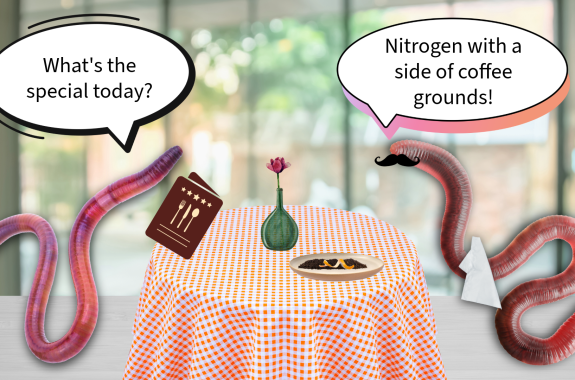
Did you know that worms can turn your leftovers into soil? It might not look like much, but a pile of food scraps, paper, and dirt can be something incredibly valuable. In nature, nothing goes to waste. Instead, organisms like microbes, fungi, and worms break down dead material and recycle it back into the ecosystem.
Scientists call this process decomposition. When humans help manage it, by creating the right mix of materials, moisture, and air, it becomes composting, or what scientists call purposeful decomposition.
One way to compost is by using worms. This is called vermicomposting, and it’s like having a team of tiny recyclers working for you.
How does composting work?
For composting to work well, it needs balance. Food scraps are rich in nitrogen and are often called “greens” while materials like paper and cardboard provide carbon or “browns.” When combined with the right moisture and airflow, decomposition speeds up.
Without that balance, a compost pile can become smelly or slow to break down. When the conditions are right, it becomes a powerful system for recycling nutrients.
“Compost isn’t just rotting food—you’re creating the right conditions for microbes and other organisms to break things down and turn them into new life.” —Cassandra Marketos, compost expert
Green stuff, brown stuff: Secrets to a great compost pile
How do worms help make compost?
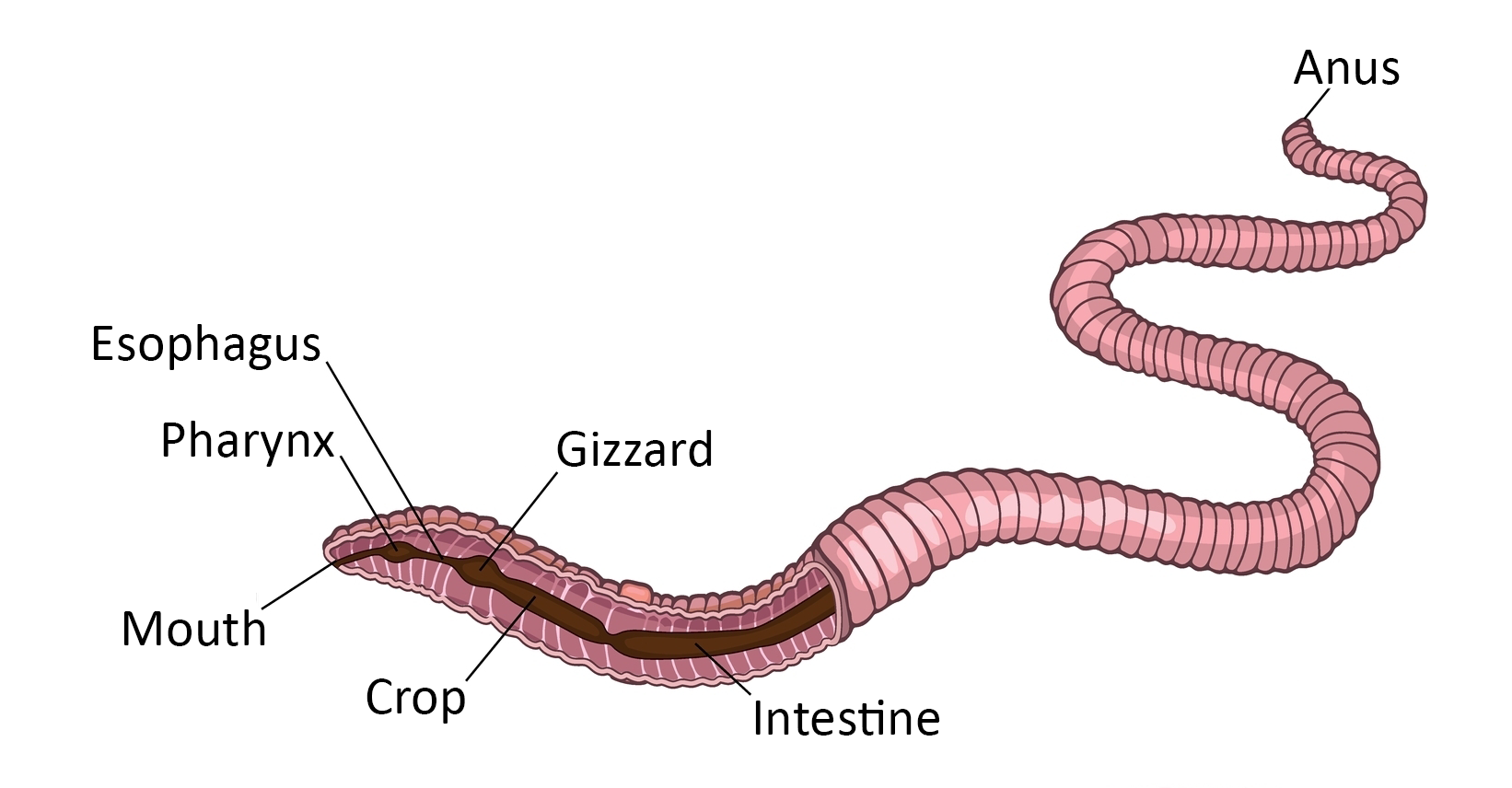
Earthworms are one of nature’s recyclers—or decomposers. As worms move through food scraps and bedding, they chew and grind organic material into smaller pieces using a muscular part of their digestive system called a gizzard. Inside the worm’s body, microbes continue breaking the material down even further.
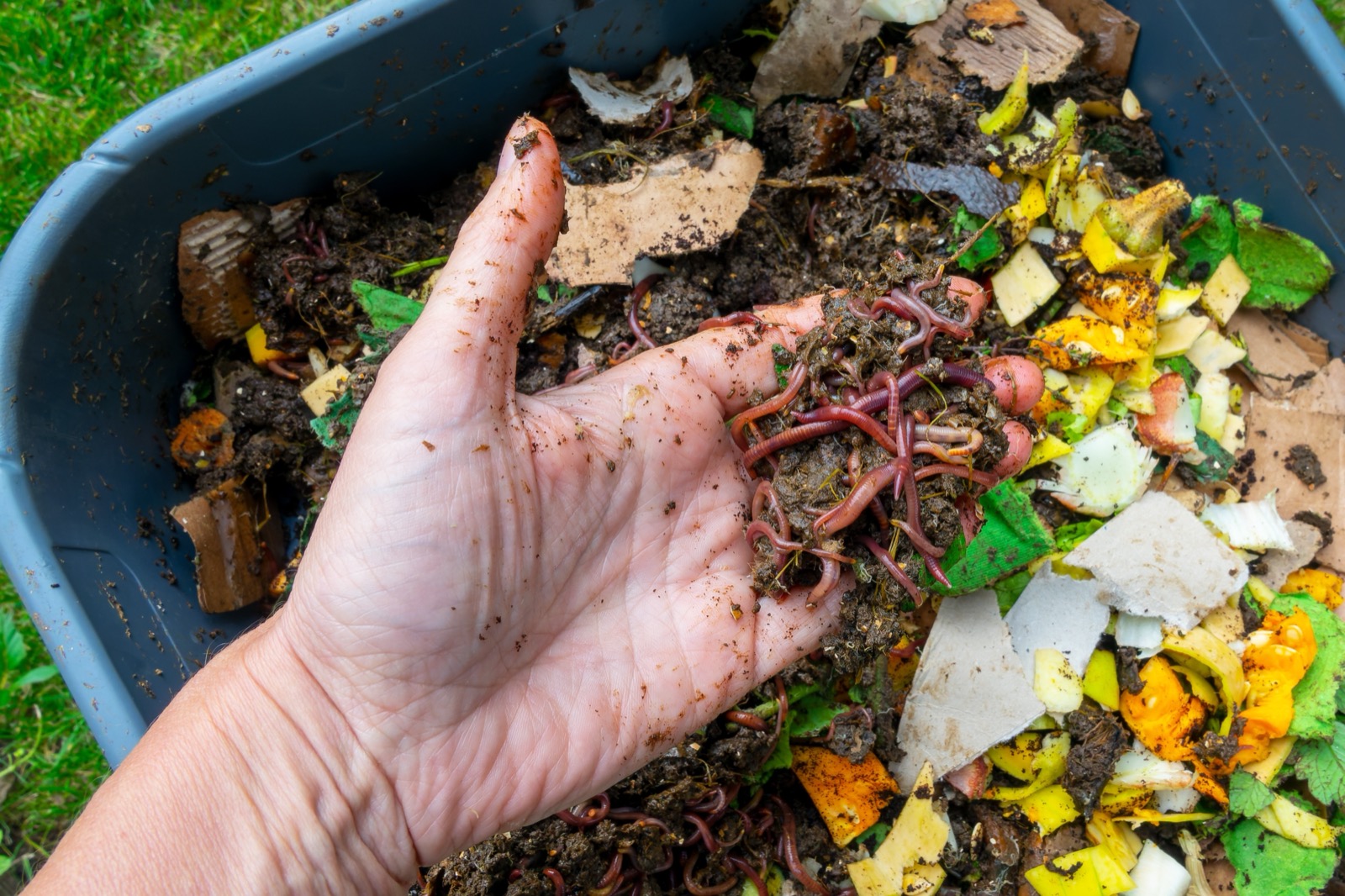
What comes out the other end, called worm castings, is rich in nutrients that plants can use to grow. Worms also help mix and aerate compost as they tunnel through it, allowing oxygen to reach microbes that need air to survive. Together, worms and microbes speed up decomposition and help turn food waste into dark, crumbly compost.
Try This!
Build your own worm farm and observe decomposition in action.
Materials
- Container: 5 to 10 gallon bin, cardboard box, wooden crate, or other bin with a lid to keep light out and moisture in. Using a drill, awl, or screwdriver, carefully make 20 to 30 1/8 inch to 1/4 inch holes in the top for ventilation.
⚠️ Ask for the help of a trusted adult if you have not used such tools before. - Catch tray: A shallow waterproof tray or container large enough for the worm bin to sit inside. This will protect surfaces from excess moisture or leaks.
- Red wiggler worms (Eisenia fetida) (preferred): You can get these online or at a bait shop, or you can dig for them yourself (try worm grunting!). Around 1/4 pound of worms will do the trick.
- Bedding: Shredded cardboard, newspaper, or paper to make a loose 4–6 inch layer
- Small amounts of fruit and vegetable scraps, whole grains, or bread. You will need 1/4 cup of food every 2 to 3 days. Plan to feed and observe your worms for at least one to three weeks.
⚠️ Avoid adding meat, dairy, greasy scraps, plastic, or chemically treated materials.
💡Grains or bread can attract pests, grow mold, and ferment, so only use them occasionally and in small amounts. Make sure they are damp when you add them to the compost. Do not use ground flours. - Spray bottle or small cup of water
- Scoop of soil or finished compost (optional)
- Gloves (optional)
- Scale (optional)
- Compost, kitchen, or meat thermometer (optional)
- Worm Bin Observation Worksheet or your own notebook
Procedure
- Place your bin in a cool, shaded location away from direct sunlight. Worms like dark, damp environments and can overheat or dry out quickly. A garage, basement, classroom corner, covered porch, or shady outdoor area works well.
- Add your bedding materials (cardboard, shredded newspaper, etc.) and some water. The bedding should feel moist, like a wrung-out sponge. A good ratio is 2 parts dry material to 1 part water.
- If using, add a small scoop of soil or finished compost. This introduces microbes and tiny stones called grit that help worms break down food.
- Gently place your worms into the bedding and allow them to burrow into it.
- Add small amounts of fruit and vegetable scraps, around 1/4 cup every 2 to 3 days. If you can, weigh the scraps before adding them to the bin and keep a record on the Worm Bin Observation Worksheet or in your notebook. This way you will know how much food scraps your worms broke down into compost.
- Cover the food scraps with another layer of bedding to help control smells and to keep the moisture balanced.
- If needed, lightly spray the bedding with a small amount of water if it looks dry. But do not overdo it! In most cases, the water from kitchen scraps is enough. If you accidentally add too much water, add additional dry bedding to absorb the excess.
- Observe! Regularly record changes in texture, smell, and moisture. Record how quickly food scraps and bedding break down. It can take one to three weeks for the worms to settle in, and up to two months for worms to fully establish and start producing noticeable castings. Eventually you will get baby worms and may need to move some outdoors or make a second compost bin, perhaps for a friend!
- BONUS: As microbes break down organic material, they release energy in the form of heat. Temperature changes can help scientists understand how active decomposition is inside the bin. If desired, use a thermometer to measure the temperature inside your worm bin right after you set it up and then weekly.
⚠️ After using your thermometer in your compost bin, wash it well with soapy water, wipe it with 70% rubbing alcohol, and dry it completely before using it elsewhere!
Questions to ask
- Which types of food scraps broke down the fastest? Why do you think that was?
- Did your worms seem to prefer certain foods over others?
- Why is moisture balance important in a compost bin?
- Did the moisture level of your worm bin change as the scraps decomposed? If you used a thermometer, did the temperature change? Did you notice any patterns?
- How do you think composting might be helpful to your community?
Can you compost in your area? Yes! If you don’t have space for a compost pile or worm bin, community composting programs let people collect their food scraps and bring them to a shared location to be turned into compost.
Why does decomposition matter?
Decomposition is one of nature’s most important recycling systems. Without decomposers like worms, fungi, and microbes, the nutrients in dead plants and animals might never return to the soil. Composting helps recycle those nutrients so that new plants can grow.
Composting also reduces the amount of food that is sent to landfills, where the organic material can release greenhouse gases as it breaks down without oxygen. This is bad because these gases trap heat in the Earth’s atmosphere and contribute to climate change.
Scientists study decomposition to better understand ecosystems, soil health, agriculture, and even climate change. By observing a worm bin, you are watching one small part of Earth’s recycling system in action.
Keep learning
- Read “Worms Eat My Garbage, 35th Anniversary Edition” by Mary Appelhof and Joanne Olszewski.
- Check out this guide for student leaders and teachers to get composting started at your school from Cornell University.
- Listen to “Green stuff, brown stuff: Secrets to a great compost pile” from Science Friday or read the book “Compost after Reading.”
- Watch a video on worm grunting to learn how to lure a worm to the surface of the soil.
NGSS standards
- LS1.A: Structure and Function
– MS: All living things are made up of cells, which is the smallest unit that can be said to be alive. Organisms, including worms and microbes, carry out life processes that help ecosystems function.
– HS: Systems of specialized cells within organisms help them perform the essential functions of life, including digestion and decomposition. - LS2.A: Interdependent Relationships in Ecosystems
– MS: Organisms and populations of organisms depend on environmental interactions with both living and nonliving things.
– HS: Ecosystems have carrying capacities resulting from the availability of living and nonliving resources and interactions among organisms. - LS2.B: Cycle of Matter and Energy Transfer in Ecosystem
– MS: Food webs describe how matter and energy are transferred among producers, consumers, and decomposers within ecosystems.
– HS: Plants, animals, microbes, and decomposers all contribute to the cycling of matter and flow of energy within ecosystems. - LS4.D: Biodiversity and Humans
– MS: Changes in biodiversity can influence humans’ resources, such as food, energy, and medicines, as well as ecosystem services that humans rely on—for example, water purification and recycling.
– HS: Humans depend on the living world for the resources and other benefits provided by biodiversity.
Get great educational resources for your classroom, home, and beyond to your inbox each month.
Credits:
Lesson by Cybele Tamulonis
Copyediting by Erica Williams
Developmental editing by Sandy Roberts
Digital production by Sandy Roberts
Educator's Toolbox
Meet the Writer
About Cybele Tamulonis
Cybele Tamulonis is a writer, apiarist, and entomology enthusiast.