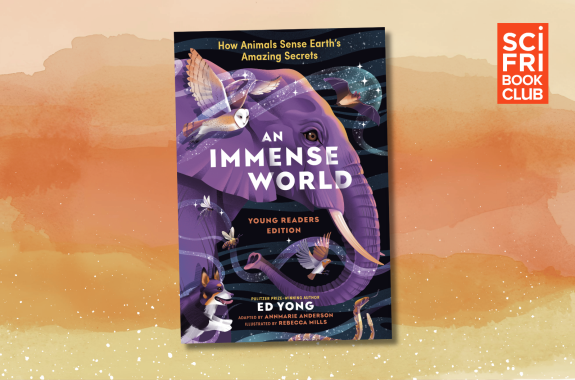
In January of 2024, the SciFri Book Club read “An Immense World” by Ed Yong. Luckily, there is also a young readers edition, so you can explore these incredible sensory worlds as well! In this book, you’ll discover how animals of all shapes and sizes may sense only a small part of the vast world around us, but do so in unique and fascinating ways. As Yong introduces the array of remarkable abilities that animals have, he also asks you to think about how animals rely on their senses to survive, and invites you to reflect on how humans can affect those senses, for better or for worse.
In this guide, you’ll find summaries of the book’s materials, discussion questions, and more. Use the handout to organize your thoughts.
About the book
In “An Immense World Young Readers Edition: How Animals Sense Earth’s Amazing Secrets,” science writer Ed Yong explores the weird and wonderful ways that animals experience the world through their senses. While humans rely on sight, hearing, smell, touch, and taste, there are many animals whose senses are far more powerful, or even completely different, from our own. From ants that follow invisible chemical trails to birds that see colors humans cannot to dolphins that echolocate in murky waters, each species experiences the world in wildly different ways.
As Yong explains, every animal lives within its own umwelt, or sensory bubble, which is shaped by the information it can pick up with its own unique set of senses. Every species, including humans, only experiences a sliver of the world around them, but by learning about remarkable animal senses, you are invited to imagine what the world might look like from countless perspectives. It may get you thinking about how human activity can affect the sensory worlds of the animals we share the planet with.
“Each of us—and each creature on Earth—is enclosed in a unique sensory bubble. Each of us perceives just a tiny sliver of an immense world.” —Ed Yong
Discussion questions
Introduction: An Incredible Voyage
The book begins by asking you to imagine standing in a gym with many animals: an elephant, a mouse, a robin, a rattlesnake, an owl, a bat, a spider, and a mosquito. Even though you are all in the same place, each of you experiences the world in a different way. Jakob von Uexküll, a zoologist, called this an umwelt, the part of the world that an individual can sense and experience.
What sense do you think you would use most to understand what is happening in the gym? Why? Which animal in the gym might notice something that you can’t?
Chapter 1: Leaking Sacks of Chemicals
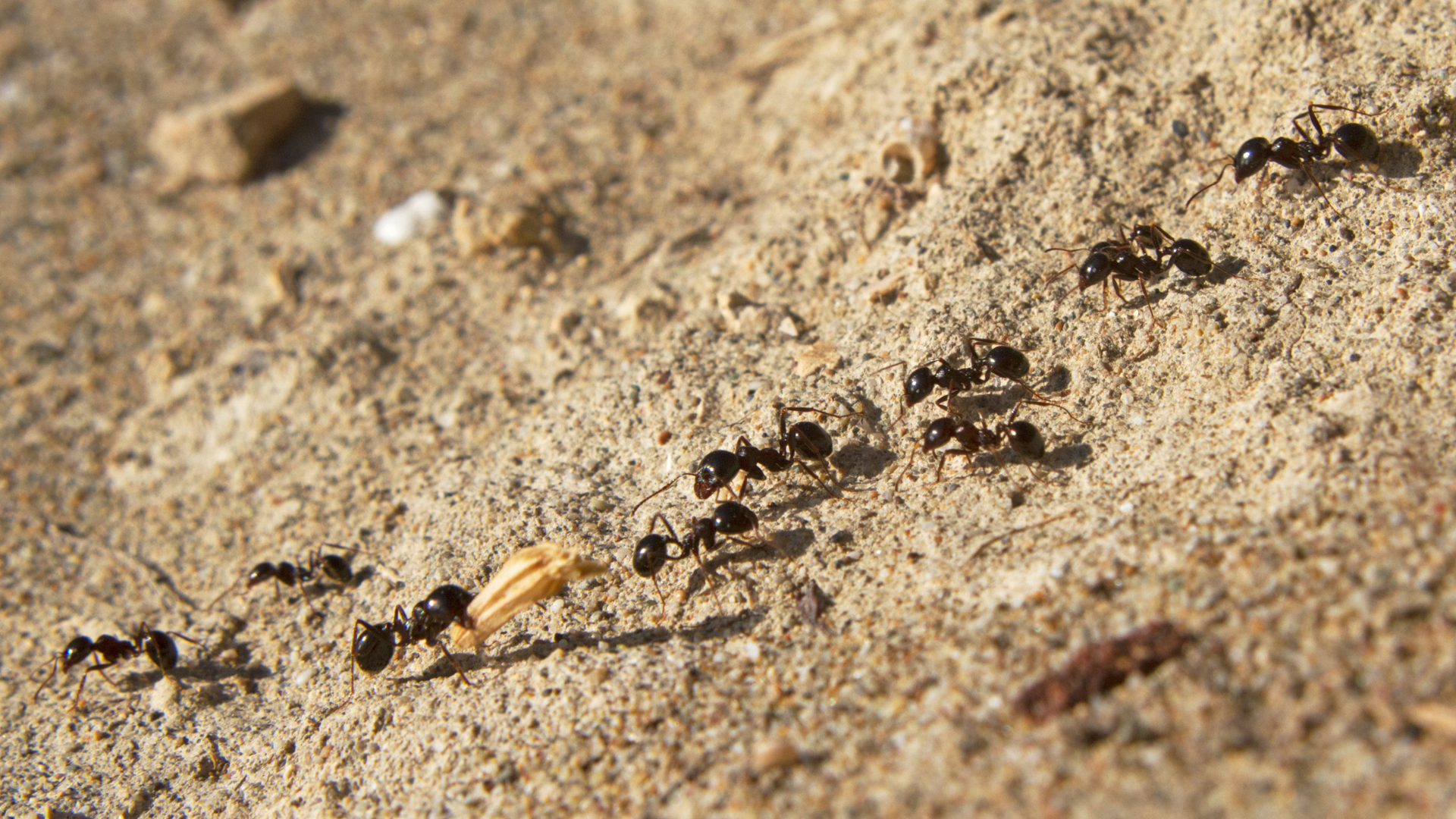
Ants use invisible chemical signals called pheromones to communicate with one another. In Section 2 of Chapter 1, Yong describes an experiment where scientists changed ants so they could no longer smell these pheromones. As a result, the ants became confused.
What does this experiment tell us about how important smell is for ant societies?
Chapter 2: Endless Ways of Seeing
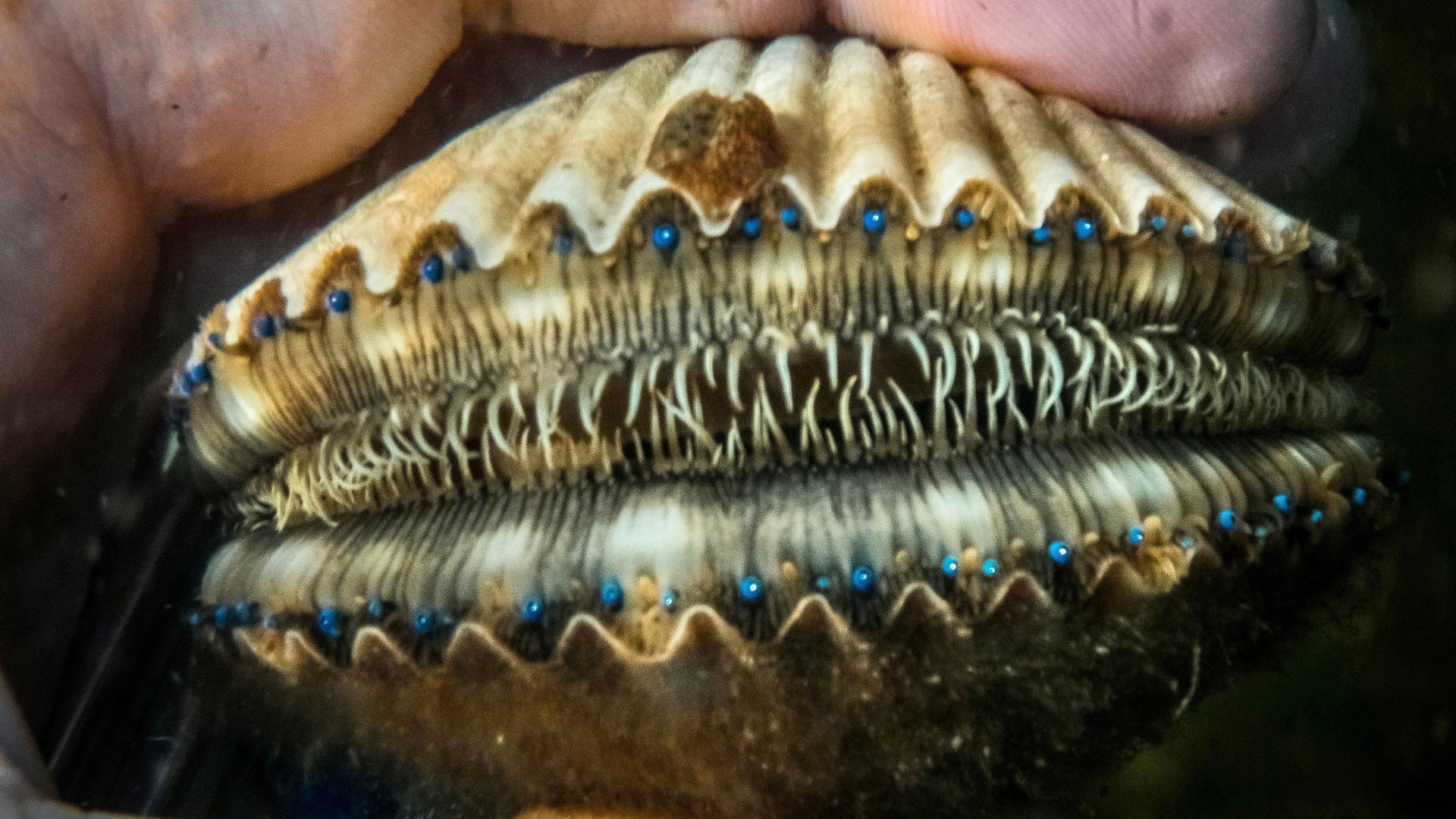
Throughout Chapter 2, we learn that animals can see the world in many different ways. For example, scallops can detect movement with hundreds of tiny eyes, cows can see almost all the way around their bodies, and the giant squid can spot faint flashes of light deep in the dark ocean.
If you could try seeing the world the way any animal from this chapter does, which would you choose and why?
Chapter 3: Rurple, Grurple, Yurple
In Section 2 of Chapter 3, Yong explains that most birds are tetrachromats, while humans are trichromats. This means birds have four types of cone cells in their eyes, while humans have three. Because of this, birds can see colors that humans cannot. Some of these invisible colors appear in bird feathers, flower petals, and elsewhere in the natural world.
Why do you think it might be useful for a bird to see these additional colors?
Chapter 4: The Unwanted Sense
In Chapter 4, Yong explains that scientists study how animals respond to painful experiences. In some experiments, fish stayed away from places where they had received a mild shock, even if it meant they would miss out on food. Additionally, hermit crabs were more likely to abandon their favorite shells after receiving a mild shock.
Think about a time when you hurt yourself, like touching something hot or falling down. Did it change how you acted afterward? How might pain help animals learn to avoid danger in similar ways?
Chapter 5: So Cool
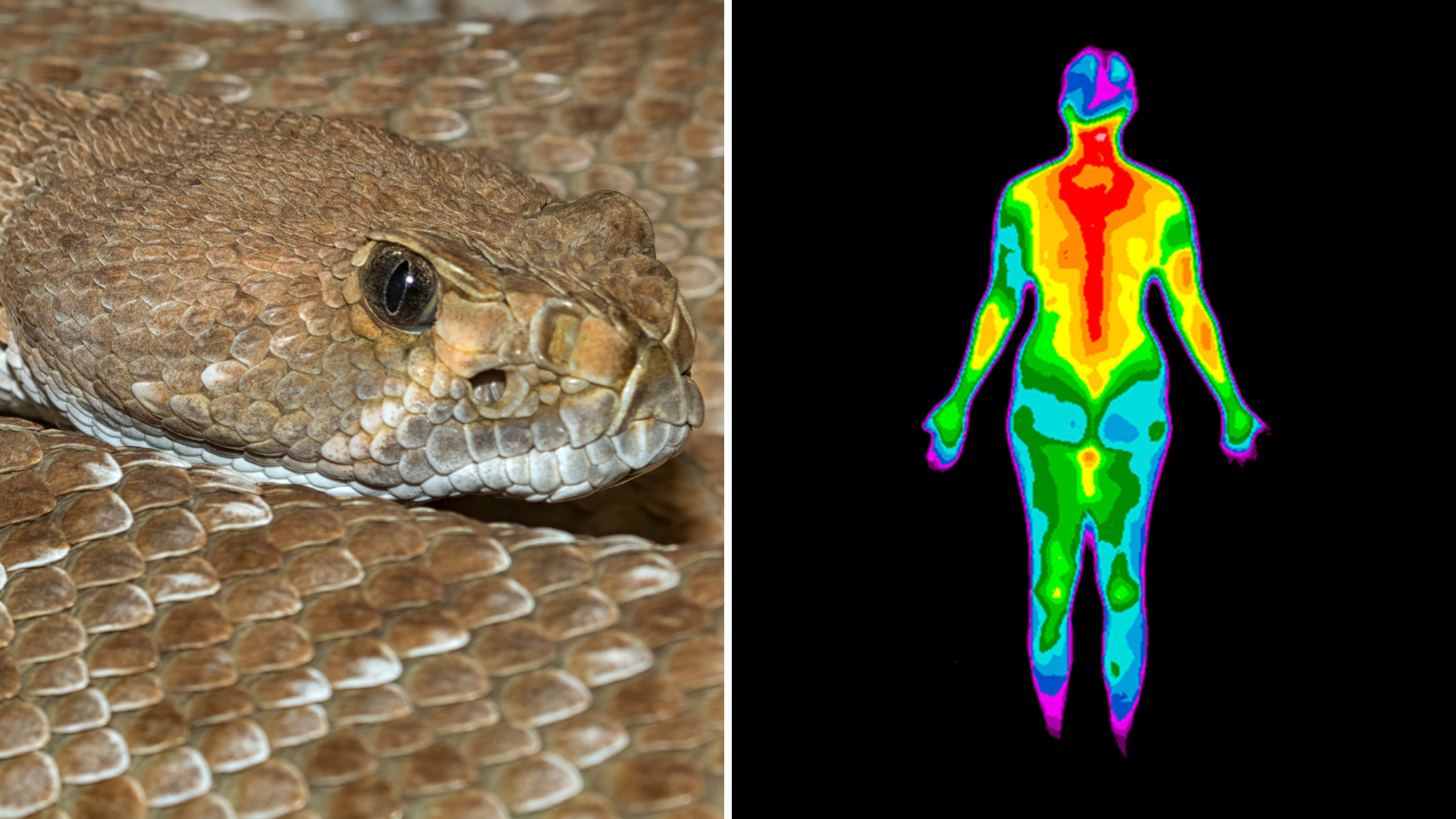
In Section 3 of Chapter 5, Yong details his encounter with Margaret, the red diamond rattlesnake that he discovered in the Californian sagebrush. Yong points out that Margaret can use a pair of small pits just behind her nostrils to detect infrared radiation coming from his warm face and body, and says that he must look like a shining beacon against the cool morning sky.
Did Yong’s encounter with Margaret change how you think about snakes? If so, how?
Chapter 6: A Rough Sense
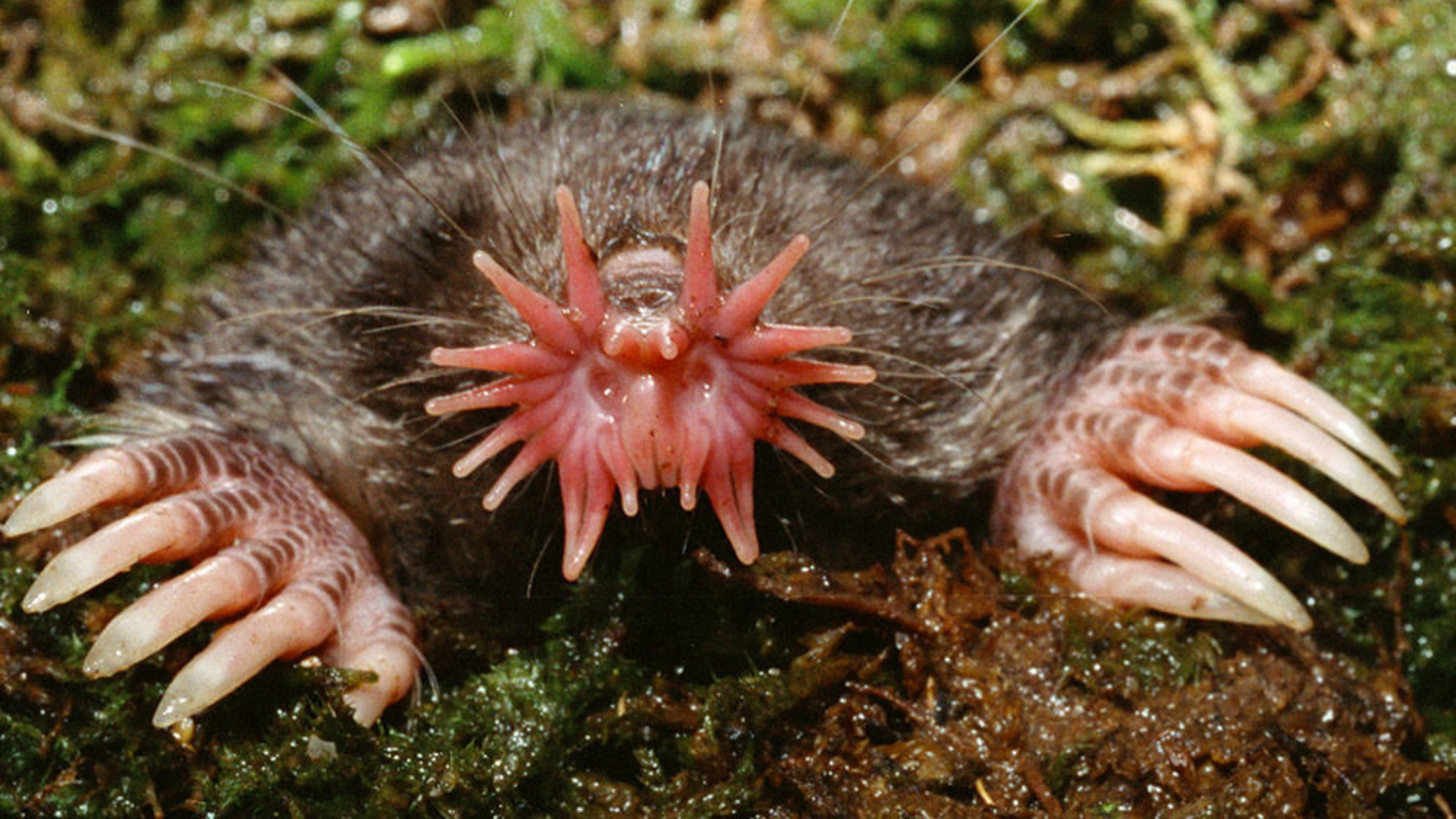
The star-nosed mole can tell the difference between soil and a worm almost instantly using the sensitive tentacles, also known as rays, on its nose. Yong begins Chapter 6 by asking you to close your eyes and navigate the world by feeling everything with your hands, like the mole.
How might moving through your home be different if you had to find your way using only touch, with your eyes closed? What challenges would you face? What might you notice with your eyes closed that you wouldn’t if you were relying on your eyes? If you are blind or have low vision, how have you adapted your environment or your behaviors to navigate the world?
Chapter 7: The Rippling Ground
In Chapter 7, Yong talks about the vibrational world beneath our feet. Vibrations are tiny shakes or movements that you can feel, like the way a guitar string trembles when you pluck it or how a floor shakes when someone is stomping nearby. Earthworms rush to the surface when they detect what could be the vibrations of a digging mole, hundreds of treehoppers gather on a single plant to “talk” to one another through vibrations, and spiders can adjust their web like an instrument.
Why might sensing vibrations be a helpful way for an animal to detect danger? If you suddenly gained the ability to sense vibrations like a spider, what kinds of things do you think you might notice with your new senses that you might have missed before?
Chapter 8: All Ears
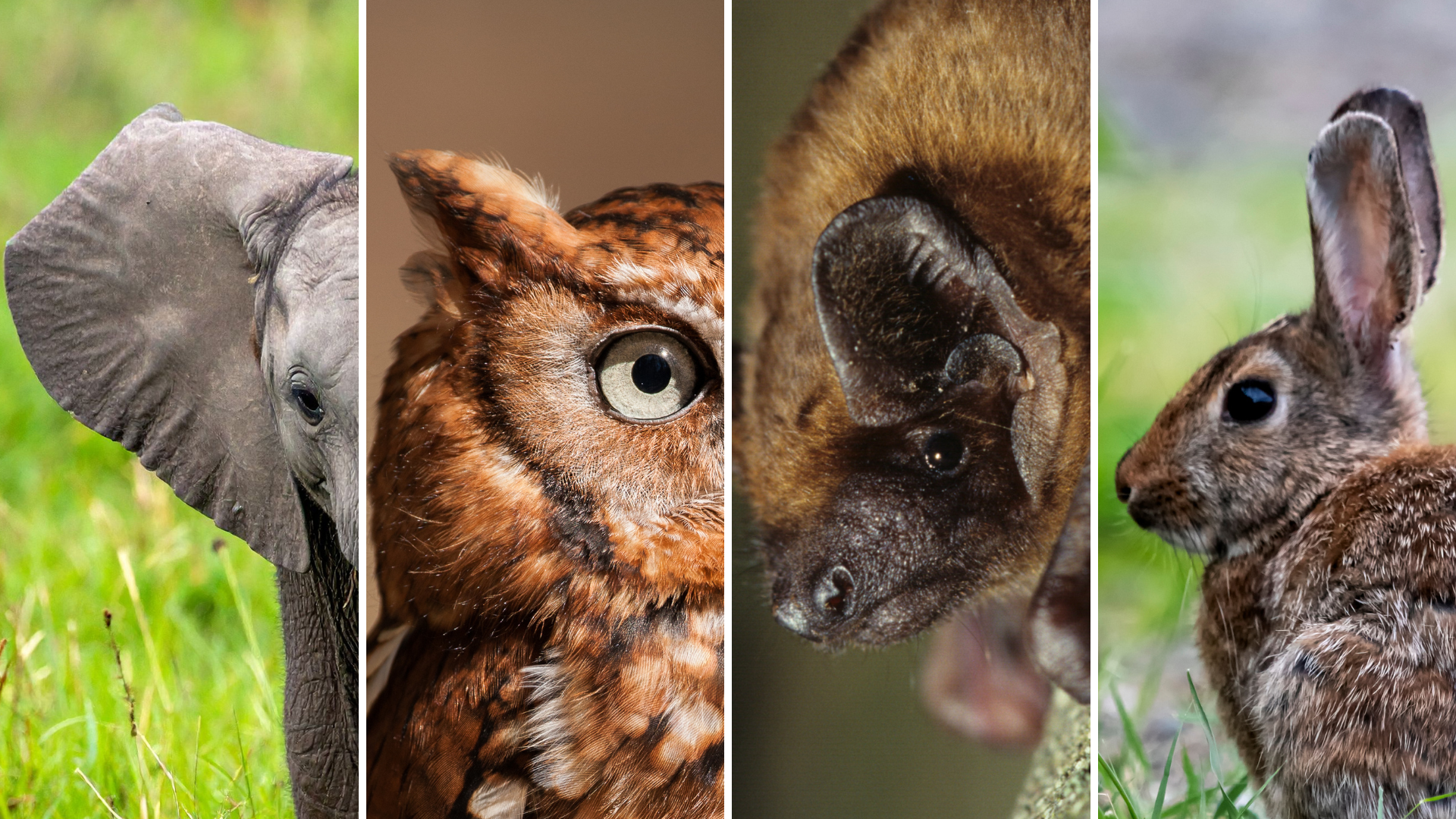
Ears are the tool that you use to hear sound, and in Chapter 8, Yong introduces you to a lot of incredible animal ears, from the owl’s ears to the elephant’s ears.
What animal ear did you find most amazing? Which animal ear from this chapter would you most like to try? What kinds of sounds do you think you might hear with it?
Chapter 9: A Silent World Shouts Back
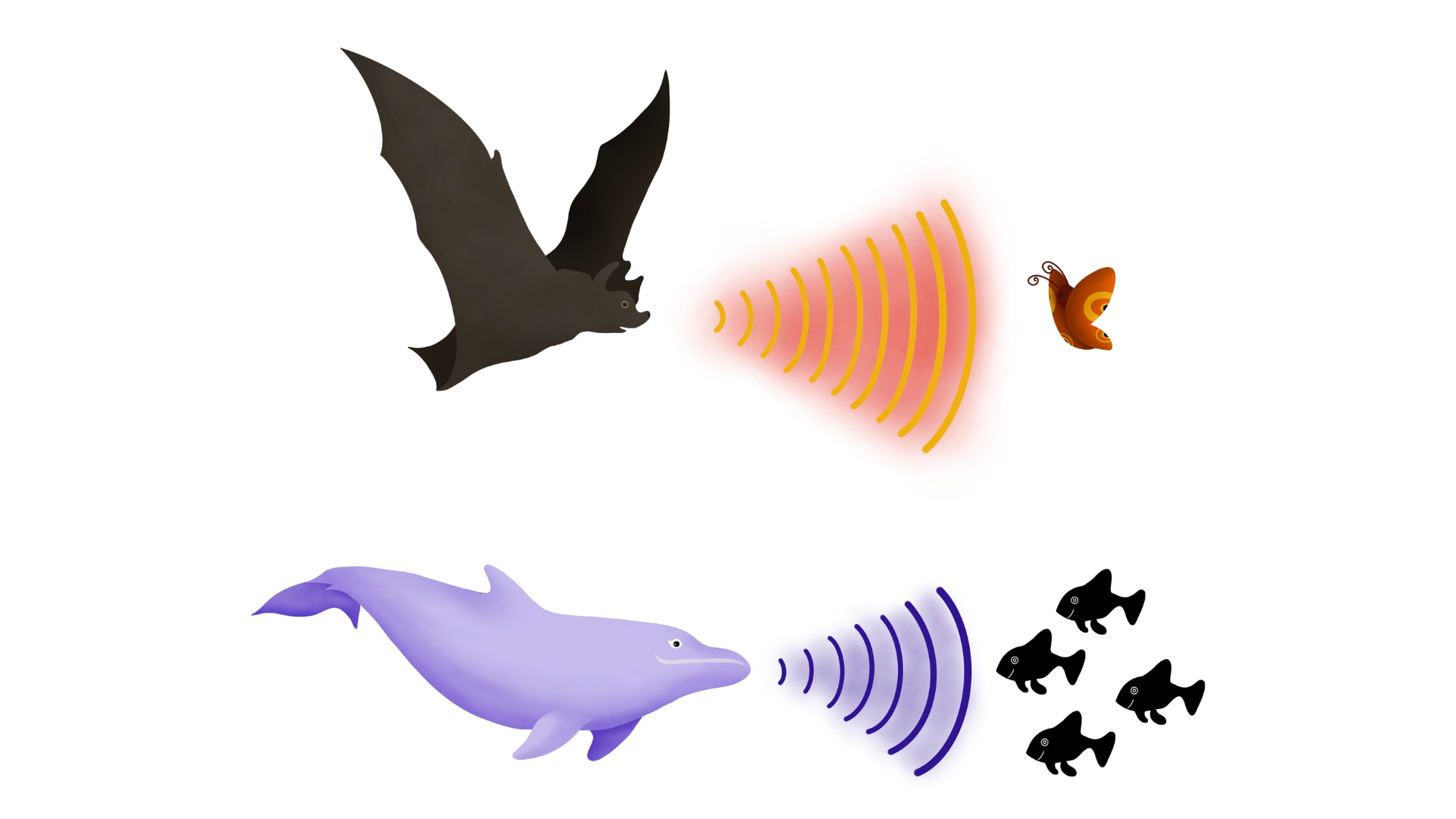
In Chapter 9, Yong introduces you to two wildly different mammals that both use echolocation: bats and dolphins. In both cases, the animals send out sounds and then listen for echoes that bounce back to understand their surroundings.
Why might echolocation be especially helpful for bats, which often fly in darkness, and dolphins, which move through murky or deep water?
Chapter 10: Living Batteries and Compasses
Electroreception and magnetoreception are two senses that humans do not have, or at least do not experience strongly. Electroreception helps animals like sharks and platypuses use electrical signals to locate prey, while magnetoreception allows animals like birds to sense Earth’s magnetic field. These senses may sound rather strange because humans don’t experience them strongly, if at all!
Which of these two senses would you rather have, electroreception or magnetoreception, and why?
Chapter 11: Every Sense at Once
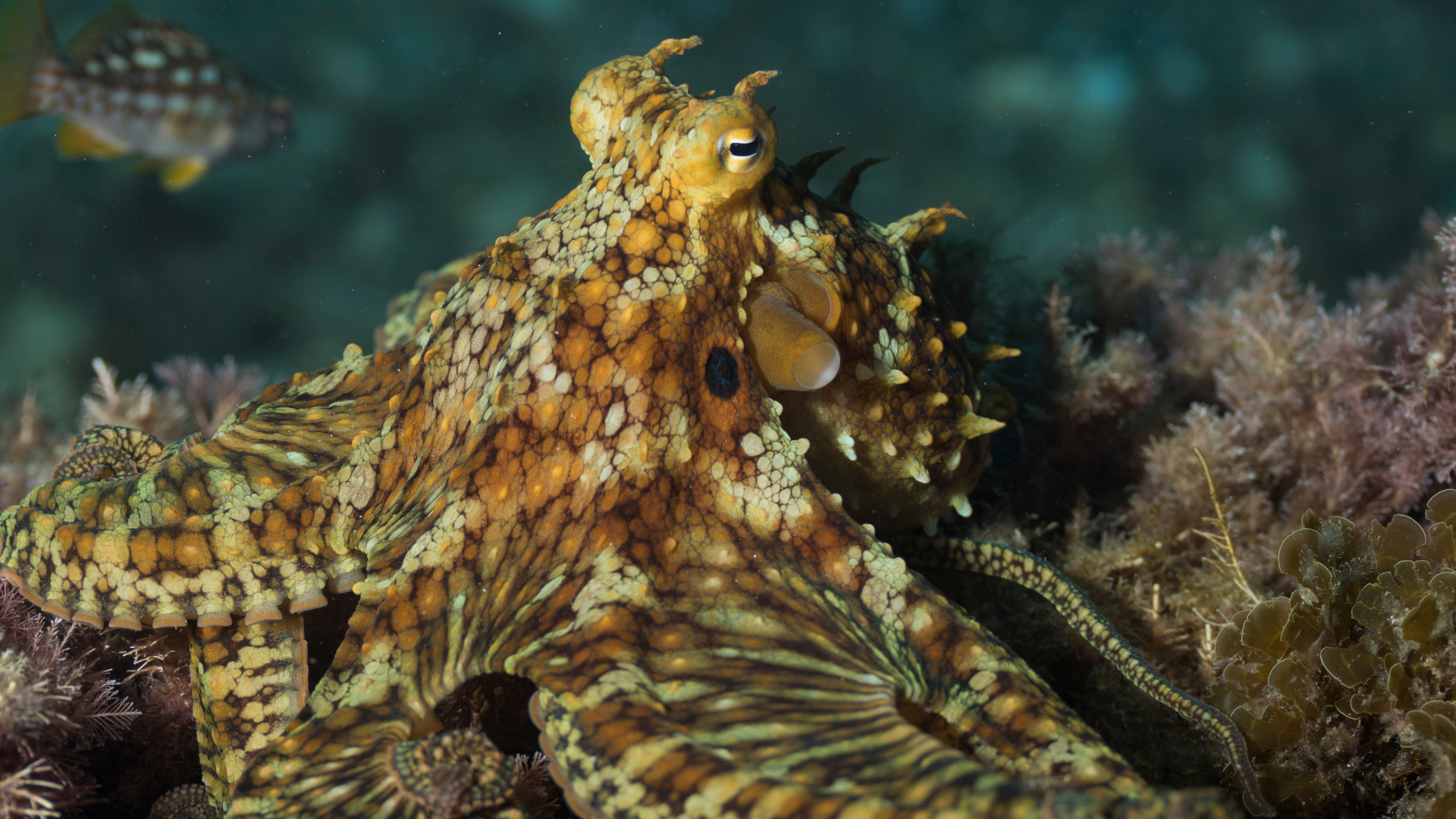
In Chapter 11, Yong introduces Ra, the octopus. Up to this point in the book, you have been exploring senses one at a time. Now, Yong asks you to consider senses as part of a unified whole. For example, Ra can explore his surroundings with hundreds of suckers on his arms that can both feel and taste.
What are some ways that your own senses can work together to help you explore the world around you?
Chapter 12: Save the Quiet, Preserve the Dark
In Chapter 12, Yong explains that human activities, bright lights, loud noises, and chemical pollution can interfere with the senses of the animals we share the planet with. These animals rely on their senses to find food, avoid danger, and communicate with others.
What are some ways people could change their behavior to make the world easier for animals to live in? What is something you could do in your own neighborhood?

Additional resources
- In Chapter 11 of “An Immense World,” Yong talks about synesthesia, a condition where different senses become unexpectedly connected. Learn more about it with the Science Friday story “The Color of Music.”
- In the bite-sized video, “The Remarkable Senses of Animals,” BBC Earth discusses the amazing senses of animals like elephants and zebras, and their incredible ability to sense distant rainfall!
- Were you curious about Daniel Kronauer’s experiments with ants that Yong discussed in Chapter 2? Read, “How an Ant’s Nose Knows” to learn more! Or discover his work to understand ant genetics with “How do ants crown a queen?“
About the author

Ed Yong is a science journalist and bestselling author who loves exploring the hidden worlds around us. He writes about animals, nature, and the surprising ways living things experience the world in which we live.
He is the author of “An Immense World,” which explores how animals sense their surroundings, and “I Contain Multitudes,” a book about the tiny microbes that live in and around us. “An Immense World” has won major awards, including the Carnegie Medal for Excellence in Nonfiction.
Yong has written for magazines like The Atlantic, National Geographic, and The New York Times, helping readers understand complex science in clear and exciting ways. During the COVID-19 pandemic, his reporting earned him the Pulitzer Prize for Explanatory Reporting.
He lives in Oakland, California, with his wife, science communicator Liz Neeley, and their corgi, Typo.
NGSS Standards
- LS1.A: Structure and Function – A central feature of life is that organisms grow, reproduce, and die. They have characteristic structures (anatomy and morphology), functions (molecular-scale processes to organism-level physiology), and behaviors (neurobiology and, for some animal species, psychology).
– 4-LS1-1: Construct an argument that plants and animals have internal and external structures that function to support survival, growth, behavior, and reproduction.
– MS-LS1-3: Use an argument supported by evidence for how the body is a system of interacting subsystems composed of groups of cells. - LS1.D: Information Processing – An organism’s ability to sense and respond to its environment enhances its chance of surviving and reproducing.
– 4-LS1-2: Use a model to describe that animals receive different types of information through their senses, process the information in their brain, and respond to the information in different ways.
– MS-LS1-8: Gather and synthesize information that sensory receptors respond to stimuli by sending messages to the brain for immediate behavior or storage as memories.
Sign up for our educational newsletters
Get great educational resources for your classroom, home, and beyond to your inbox each month.
K-12 Education Beyond The Classroom
Credits:
Lesson by Taylor Walders
Developmental editing by Sandy Roberts
Copyediting by Erica Williams
Digital production by Sandy Roberts
Educator's Toolbox
Meet the Writer
About Taylor Walders
Taylor Walders (they/them) is a science communicator based in New York.