‘Matrescence’ and how motherhood changes identity
In “A Mother’s Brain,” a neuroscientist investigates how motherhood changes people’s identities, starting with mothers’ own accounts.
The following is an excerpt from “A Mother’s Brain: The New Science of the Neuro-Maternal Revolution” by Susana Carmona.
When you purchase products through the Bookshop.org link on this page, Science Friday earns a small commission which helps support our journalism.
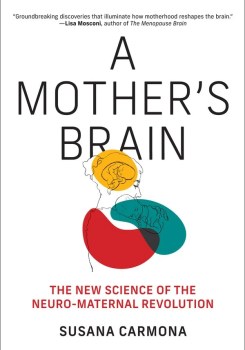
A Mother's Brain: The New Science of the Neuro-Maternal Revolution
When you become a mother, time—the meter of our lives, though it’s so quiet and constant that we hardly notice its tick—splits into two categories: Before and After. Motherhood transforms you. It changes how you see and think of yourself. It shifts your beliefs, your values, your goals, your likes and dislikes, everything that tells you who you are. Motherhood can shake you to your foundation. It can create a new and different you.
My friends and I at eighteen fantasized about becoming mothers, but it never occurred to me that a changed identity was part of the equation. As time went by, I saw the women around me undergoing a metamorphosis as they had children, and I found it disconcerting. I might as well admit that it made me uncomfortable and that at times I wanted to reject it. I kept thinking, “Why can’t anyone just stay the same?” Of course, I understood that the practicalities and logistics of childcare required my friends to adjust their daily routines, but I didn’t see why their tastes, priorities, and affinities had to change, too. It wasn’t just that I didn’t get what I was seeing: I didn’t even have a word for it in my vocabulary.
When I began imagining what it would be like to become a mother, my story didn’t involve transforming as the women around me did. But as more and more of them had children, I became increasingly aware that the change I saw in them didn’t happen to just certain women. It affected all of them to varying degrees, and it wasn’t going to skip me. Once I accepted that, I became enormously curious about the still-unnamable process they were going through. I got into the habit of asking if they thought motherhood had changed them, and I was surprised to see how relieved they were at the question and my willingness to listen to their answers. It was as if they could unburden themselves of a secret, a maternal taboo that they had previously discussed only with other mothers.
When I got pregnant, the idea of turning into a new person gave me vertigo. I was afraid I’d never be myself again. Now that phrase strikes me as ridiculous and much too dramatic. I assumed that I’d have a self to return to, as if I’d gone back to my old self after adolescence— as if it were normal for a sixteen-year- old to ask herself to hold onto her eight- year-old self’s preferences and priorities.
I found out I was pregnant just two years before Nature Neuroscience released a study I’d been working on with several colleagues in 2017, the only one of its kind at the time, investigating pregnancy’s long- term effects on the human brain. Although we hadn’t yet made our data public, we’d analyzed it, and I knew what would happen to me in my own pregnancy. We’d found that pregnancy leaves a profound mark on the brain, which fascinated me as a scientist. As a pregnant woman, though, what I’d learned made me highly ambivalent. On the one hand, I was terrified of the change that awaited me. On the other, though, it calmed me to know that the secret all mothers kept— the secret of transformation—had not just a scientific explanation but also a name: It’s called matrescence.
* * *
“What does motherhood mean to you so far?” “In what ways would you say being a mother has changed you?”
As I mentioned, I’ve made a habit of asking mothers these questions. I’m a neuroscientist, and I love a good brain scan, but, for me, nothing is more valuable than hearing women reflect on their experiences, and I encourage you to talk to the mothers around you, including your own.
From the conversations I’ve had and from my own life, I’ve learned that motherhood isn’t a new role tacked onto an otherwise unchanged identity but a profound shift in our minds and bodies. Put differently, motherhood isn’t an addition; it’s an interaction. It affects all the spheres of our lives, changing us in every one of them. It alters our tastes, our needs, our priorities, our tolerance for frustration, our sensibilities, even our ability to feel for others or act altruistically. It invites us to get to know ourselves anew not only through child- rearing—that is, not only as mothers—but as daughters and women.
My research group Neuromaternal used its Instagram account, @neuro.maternal, to conduct a brief survey in April 2023. We asked mothers to tell us what motherhood had meant for them, and within twenty-four hours more than a thousand had written in. Informal surveys like this one are far from complying with the rigorous standards of scientific publication, yet they help our research enormously. Reading the answers is enriching for us not only because it teaches us what matters to mothers, what’s on their minds, but also because it gives us clues about phenomena that haven’t yet been recognized in scientific literature and that might guide future investigations. If any of you who responded are reading now, thank you. Some of the answers we received were as follows:
“Motherhood has taught me what it means to be truly connected to someone.”
“I feel as if I’ve lost my identity. I can’t quite find the person I’m supposed to have become, or else I don’t know how to see her.”
“It’s changed how I understand myself. My idea of ‘me’ now includes her, my baby.”
“Motherhood has made me more conscious of death. I’m aware now that someday I’ll die, and I won’t be here for her anymore.”
“It’s shown me the purest, truest form of love.”
“Even though I’m always with my baby, it’s meant loneliness and isolation.”
“Motherhood has made me much more empathetic than I used to be. More sensitive, too.”
“Two bodies joining into one; letting everything go; rebirth; learning every day.”
“It let me relocate myself, or redefine myself— as a person and in my relationships with family, colleagues, and friends. It reoriented my priorities. In some ways, it’s meant loneliness, too.”
“Putting my child’s wants and needs before my own, or at least moving mine into the background.”
“Understanding how far society is from what really matters in life.”
“Worrying nonstop. I worry [about] climate change and the society I’m leaving my son.”
“I want to be the best version of myself.”
“I was diagnosed with schizophrenia at twenty- three, and before motherhood, although I was doing well in a clinical sense, I had entirely lost my sense of self. Having a child brought it back. It anchored me to life.”
“When my daughter was born, I got interested in feminism. Now I see everything through a feminist lens.”
“A powerful protective instinct. It’s both physically and mentally exhausting, and emotionally overwhelming in good ways and bad.”
“Being a mother is the best and hardest thing that has ever happened to me. It means questioning myself constantly, taking on a new role in life, understanding that my borders are permeable.”
“Reconciling with myself; loving my body and wanting to take care of it so it keeps me alive as long as she needs me.”
I may as well tell the truth: I get emotional when I read these answers. Many of them resonate with me—and maybe with you—as a mother.
I could devote a chapter to each of these replies, but I’ll have to settle for an overview. All the respondents said motherhood had changed them. A small group described only the good side of the transformation; another small group showed it only at its darkest. But the majority of answers discussed both sides of maternity, demonstrating the ambivalence so many mothers feel. We often sort our lives into good and bad, but motherhood breaks down that system. It’s good and bad. Its intensity means that it jumbles best and worst together, creating a fog of emotion that’s challenging to convey to anyone who isn’t a mother.
Among the most commonly recurring words in the hundreds of answers we received were ones relating to instincts, learning, ambivalence, and changes in priorities and personalities. When we discuss the maternal brain, we’ll return to some of these subjects, but for now let’s spend some time with another word: matrescence.
Excerpted from A Mother’s Brain: The New Science of the Neuro-Maternal Revolution by Susana Carmona, Translated by Lily Meyer. Reprinted with permission from The MIT Press. Copyright 2026.
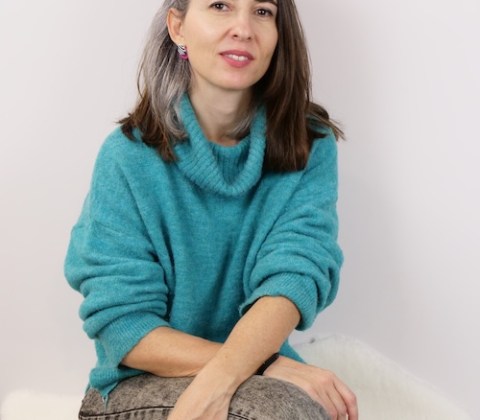
Dr. Susana Carmona is a neuroscientist and author of “A Mother’s Brain: The New Science of the Neuro-Maternal Revolution.” She’s based in Madrid, Spain.