What are ‘sleeping beauties’ in the world of knowledge?
In a new book, artist David Byrne explores how important ideas are forgotten—and then remembered—over time.
The following is an excerpt from “Sleeping Beauties: Why Good Ideas Go Dormant and How They Wake Up” by David Byrne.
When you purchase products through the Bookshop.org link on this page, Science Friday earns a small commission which helps support our journalism.
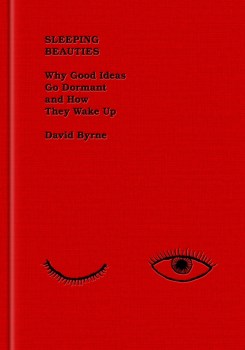
Sleeping Beauties: Why Good Ideas Go Dormant and How They Wake Up
I first saw the term “sleeping beauties” (outside of the folktale or the Disney movie) when I went down a rabbit hole and stumbled on a paper from 2004 called “Sleeping Beauties in Science” by the scientometrics researcher Anthony van Raan at Leiden University. (Scientometrics is the study of the impact and communication of science.) I instantly recognized the phenomenon. He was referring to scientific papers, but this forgetting and then remembering, I knew from my own experience, wasn’t limited to academia. I also thought “sleeping beauties” was a clever name for this all- too- common phenomenon. Apparently there are a lot of them—academics have identified five thousand sleeping beauty papers in the computer science field alone!
What are they exactly? Van Raan lays out three ways of identifying sleeping beauties—at least as they occur in academic science papers:
a) A depth of sleep—the profundity of forgetting. For example, if a paper receives only one citation a year, it is considered to be in a deep sleep. It’s been more or less forgotten.
b) A length of sleep—how long this low citation rate persists.
c) The awakening intensity—how big the surge in citation and eventual influence is after the paper is recognized and awakened.
As I had learned from Tom Zé’s rediscovery, it was clear that this forgetting and reawakening happens in all kinds of fields and endeavors—music, art, literature, every kind of creative profession. These stories, I realized, have a natural fascination—everybody loves rediscovery, a happy ending, and the sense of eventual justice when something worthwhile gets its due.
I had a sense that scientists’ emphasis on using quantifiable means like citations to rate anything’s popularity and influence, including that of sleeping beauties, might be a self- limiting metric. In my own experience, measuring the value and influence of some things (records, books, films, theories, and artworks), using numbers of citations or some equivalent ( ales, reviews, viewership, awards), doesn’t accurately represent a thing’s true worth or importance. Many things can have an outsize influence despite low general recognition. Numbers don’t tell the whole story.
For example, works of art can have a huge impact on other artists and still remain relatively obscure to the wider public. This kind of influence is very hard to measure, so scientists and academics—most often prioritizing all that is quantifiable—would naturally decide not to focus on these kinds of examples, especially in their own fields. So when I went down the rabbit hole and started collecting those stories, I decided to take a broader, more open view as to what constitutes a sleeping beauty.
Van Raan’s 2004 paper I stumbled on makes some interesting points:
Juncheng Wang et al. point out in a 2012 paper called “Why and How Can ‘Sleeping Beauties’ Be Awakened?” that sleeping beauties broadly fall into two categories: those that were almost completely unrecognized to begin with and received few citations in the scientific literature, and the ones that had had some initial success and recognition, but then sank into obscurity until somebody woke them up. I’ve included both types in this book. I admit my favorites are the ones in which the ideas or works are now so well known and respected that it’s amazing they were ever forgotten.
The paucity of initial recognition of the first type is not always because of a lack of trying. Gregor Mendel sent his (eventually) hugely influential paper on inherited traits to as many of the top scientists in the field as he could, including Darwin. He tried. Crickets. The “New World” was “discovered” by the European Leif Erikson around the year 1000. He called it Vinland—it’s presumed he spent time on the coast of Labrador, though some believe he visited farther south as well. News of his voyages made its way into sagas and in the 1300s, Vinland, now known as Markland, was sufficiently well known that it was mentioned by the fourteenth-century Italian friar Galvano Fiamma. As in a game of whispers, some facts changed over time: Fiamma claimed the New World was inhabited by giants. But this information regarding the earlier “discovery” was forgotten, and Columbus, as is well known, thought he’d landed in Asia.
Sleeping beauties, by definition, are not doomed to be lost forever, but they are in a limbo where they remain temporarily overlooked, unrecognized. They still exist, somewhere, sleeping in the tower, waiting to be awoken.
I asked myself why and how this happens. Why isn’t something I think is a wonderful inventive idea automatically broadly popular? My personal taste can’t be that different from everyone else’s. More generally, how could good stuff get forgotten? And why and how did some good things get resurrected? Was it luck or circumstances? What gems—scientific or artistic—might still be missing that we have yet to find out about? How can we find them?
I could feel myself getting sucked in. How many other wonderful things might lie hidden, forgotten, awaiting a day when circumstances bring them back to light?
Before embarking on this book, I decided to first ask what things are not sleeping beauties and eliminate those from consideration. There are works that we know existed, but are gone, lost forever. We know they existed, but they are nowhere to be found. After some complicated figuring, it has been determined that 90 percent of medieval manuscripts have been lost—including narratives related to well- known figures like King Arthur or Siegfried. In some cases, fragments of the texts remain, but for others there is nothing.
These works that we know existed but that’s all we know don’t count as sleeping beauties, in my opinion; for all we know, they will never be found. I can’t resist mentioning a few of them. There are the lost books of Aristotle: Close to one third of his writings are lost! We know they existed, but they have never been discovered. There are lost Shakespeare plays—Love’s Labour’s Won (even the Bard did sequels!) and one called Cardenio, which was based on one of the characters in Don Quixote! There were at least twenty books referred to in the Old Testament that have never been found. For example, the “Gospel of Eve.” We have evidence it existed, but what could it be like!? Would that change everything? And there are at least a dozen missing books that were once in the New Testament. The Maya codices—there were thousands of them . . . almost all were lost or burned by the conquistadors, except for four of them. A combination of religion and colonial hubris justified their destruction. We know they existed, but we don’t know what was on them.
What we revere as deeply influential sacred texts are but fragments of an invisible larger whole. It’s tempting to imagine what might have once been, and how much different those lost sections or texts might be than those that have survived. Did someone intentionally get rid of certain ideas and philosophical insights? Were there ideological or political reasons that might explain why some works have vanished?
There are so many books that have been lost that there is a giant catalog that lists only lost books. A book of books that don’t exist but once did. In the early 1500s, Hernando Colón, the second illegitimate son of Christopher Columbus, made it his life’s work to attempt to create a library of every book in the world—at least fifteen thousand volumes that he picked up during his travels. Colón imagined that this immense collection would contain all available knowledge, all in one place. Possibly, and potentially, were it ever to be realized, a project that could have had a greater impact than his dad’s voyages.
He paid an army of readers to essentially read every book and pamphlet in his library and then distill their contents down to short summaries so that a catalog of this enormous library could then be at the disposal of readers via this book of summaries.
The resulting catalog was called the Libro de los Epítomes. It is more than a foot thick and contains more than two thousand pages. Many of the books in the collection have been lost, but thanks to this catalog we know what they were—a world that is largely lost to us. Two thirds of the eleven thousand books in the catalog now have been lost. At one point, the catalog itself was also lost—but it was recently discovered, in translation, so now we at least know what, in summary, the eleven thousand missing books are and what they were about. Known unknowns.
Before we get carried away with exploring how to rediscover lost and forgotten knowledge, we might ask: Do we really need to know everything? Are there some things we’re better off not knowing? Should some sleeping beauties not be awakened? Is there knowledge that is dangerous for us to know? “One ring that rules them all” sort of thing? Our impulse is to always let the genie out of the bottle—often there is money or power at stake that says, “Go ahead, what could go wrong?” But should we? Is knowledge always a good thing?
There are plenty of instances in which we opt for ignorance. Priests are bound not to reveal what they hear in a confessional, something that encourages a more full and honest confession. One might ask, what if the priest hears about something truly horrific? Should they break the rule then? God’s forgiveness trumps human morality. The idea that professors don’t know whose papers they’re grading and that auditions are often held with the performer obscured to avoid bias are instances where not knowing is considered beneficial.
The philosopher Daniel DeNicola, in his book Understanding Ignorance, points out that intuitively we sense that knowing everything is not only impossible but maybe not even in our best interests.
Have you ever tuned out a gossipy friend because you don’t want to know who said what about whom? Deciding that you’d rather be above the fray is “strategic ignorance”; you embrace it because it will make life better, deploying it when you decide not to read the reviews before seeing a movie, or conduct a hiring process in which the names of the candidates are obscured.
We make these kinds of decisions all the time. I sometimes decide not to read a news article because I know it will just upset me, and I don’t read reviews anymore— getting needlessly worked up is, I have found, counterproductive. An artist recently told me, “I was put on Earth to paint, and if reading the news every day prevents me from doing that, I prefer to be ignorant. That decision might be rational or it might be a rationalization, but the point is sometimes we don’t want to know.
I have often justified my own ignorance. I have mostly made my living as a musician, but I had no formal training. I like to believe that this lack of technical knowledge endowed me and others like me with a kind of freedom. (As time went by, I slowly did absorb a modest amount of knowledge and training, but gradually, according to my own needs.) If you don’t know the way you’re “supposed” to do something, you sometimes inadvertently come up with something new. The counterargument is that you should know the rules before you decide to break them. My response would be yes, but you only have to know a few of them, not all.
The stories in this book are just a sampling. I could have included many more. This book is not an exhaustive catalog but contains enough examples to give some sense that there are recurring patterns.
In organizing these stories, I initially looked at the reasons why they were forgotten. Economics, racism, sexism, biases, classism—the usual suspects. The 2012 paper led by Juncheng Wang, “Why and How Can ‘Sleeping Beauties’ Be Awakened?,” offered more insights. He and his coauthors pointed out that although new scientific information is being produced all the time, the vast majority of what is studied and built upon comes from the past. However, they found that more recent work tends to be privileged over all that past research. It’s assumed that knowledge accumulates, so the more recent material will therefore be better, more accurate, more complete. So there is a built‑in bias that leads to the overlooking of a lot of work.
The scientific community itself can be the agent that puts an idea to sleep. In a study of scientists who later won Nobel prizes, it was found that most of them got resistance to their ideas from the scientific community, and that twenty- four scientists who would eventually win that prize got resistance from scientific journals.
In the Grimms’ tale, it’s the sharp spindle of a spinning wheel that puts Beauty to sleep. The list of metaphorical spindles that put ideas and work to sleep is extensive. Realizing this, I decided that I would not compile an exhaustive encyclopedia of depressing examples of suppression and resistance to new ideas but rather see if patterns might emerge from the people, forces, and contexts that led to their rediscovery. Unearthing and rediscovery should be the focus— we want to uncover more of them, not just know how they got buried. To that end, I decided to see if there were patterns that emerged in the various reasons that sleeping beauties were awakened rather than why they had been ignored.
The reasons sleeping beauties are woken up are sometimes as simple, and often fall into some of the same categories, as the reasons they went to sleep. Similar forces—powerful individuals, economics, technological developments, cultural changes—can both put ideas to sleep and, in another time and context, wake them up. One might ask if knowing these factors that have awakened sleeping beauties in the past might enable one to search for similar factors now that can put us on the scent of unawakened beauties. That became the focus of this book.
Judging by the examples in this book, it became clear to me that once “rediscovered,” these ideas, works, inventions, theories, and technologies can have a huge influence . . . sometimes a greater impact than the works that overshadowed them while they were sleeping. “Hey, look, here’s an economist who wrote about the causes of economic crashes thirty years ago! His ideas make perfect sense! How come we’ve never heard of him?” That would be Hyman Minsky. His papers saw a “discovery,” and thus a sudden surge of readership and citations, after at least thirty years of obscurity. I became curious how and why this rediscovery could happen. (With Minsky it was because a series of stock market crashes revealed his work to be prophetic.) If we can find out how and why they have been resurrected, it might even be possible to locate some of the sleeping beauties that inevitably and invisibly surround us. That, essentially, is the mission of this book.
Excerpted from Sleeping Beauties: Why Good Ideas Go Dormant and How They Wake Up by David Byrne, published by Penguin Press, an imprint of Penguin Publishing Group, a division of Penguin Random House, LLC. Copyright (c) 2026 by David Byrne.
David Bryne is an artist, musician, and the lead singer for Talking Heads.