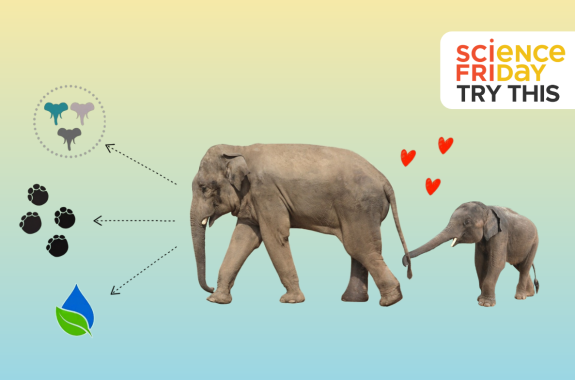
A deep-sea octopus mother once spent four years protecting her eggs. That’s the longest brooding period ever recorded! Poison dart frogs carry their tadpoles on their backs through the rainforest, and elephant calves are cared for by entire family groups. Across the animal kingdom, these caregiving behaviors can give vulnerable young a better chance of being able to grow up and reproduce.
Why do some animals spend so much time and energy caring for their young?
Not all animals care for their offspring. For example, a sea turtle may lay dozens of eggs and never see the hatchlings. Meanwhile, other species invest enormous amounts of time and energy into a single offspring.
The difference comes down to compromise. Every animal has a limited amount of energy. Energy spent guarding eggs cannot be spent finding food. Energy spent feeding offspring cannot be spent producing more offspring.
“Behind every astonishing act of parental care, as well as every clutch of eggs that’s simply tucked under a leaf and left, is cold math.” —Elizabeth Preston, science journalist
Scientists call these decisions trade-offs because animals have limited time and energy. Investing more in one offspring often means producing fewer offspring, while producing many offspring usually means providing less care to each one.
Through evolution, different species have developed different solutions to the same problem: helping their young survive to adulthood.
Care comes in many forms
When humans think about caring for their young, they often think about things like feeding them or giving them a soft place to sleep.
Scientists recognize that care comes in many forms.
Food: Providing food may seem obvious, but some species have evolved remarkable ways of feeding their young. For instance, both the male and female flamingo produce nutrient-rich crop milk (a thick, nutritious fluid produced in the throat pouch) to feed their chicks. Male emperor penguins will also produce crop milk if their chick hatches before the mother penguin has returned with food.
Protection: Many animals defend eggs or young from predators. One extraordinary example is a deep-sea octopus discovered off the California coast. Scientists observed the mother protecting her eggs for more than four years. During that time, she stopped feeding and rarely left the eggs. Shortly after the eggs hatched, she died.
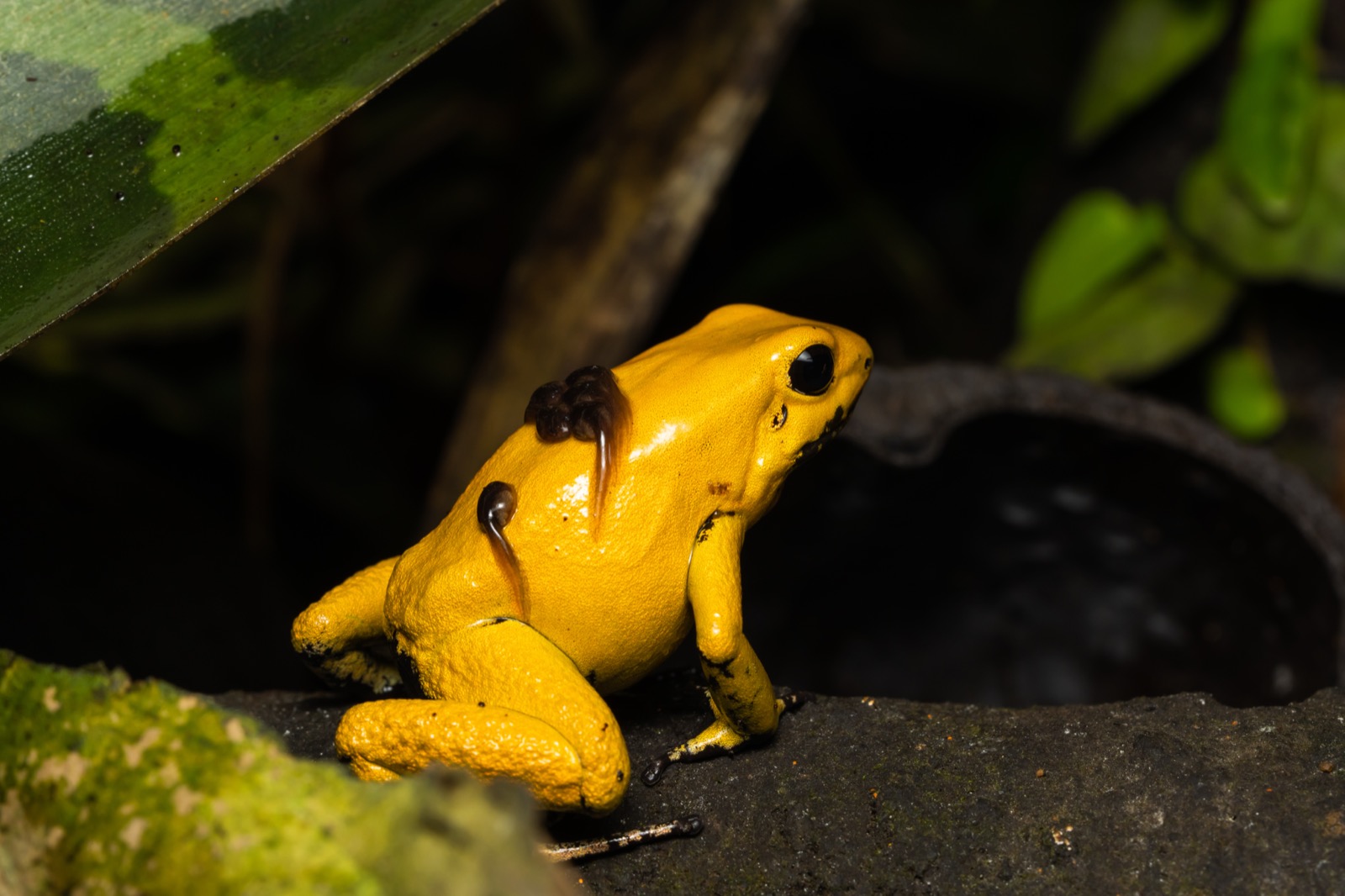
Transportation: Some animals physically move their offspring to safer locations. Poison frog fathers carry newly hatched tadpoles on their backs from the forest floor to small pools of water high in plants where they are less likely to be eaten. Without this transportation, the tadpoles would not survive.
Social Support: Some species rely on entire communities. Elephants, meerkats, killer whales, and humans all benefit from helpers beyond the biological parents. Grandparents, older siblings, and other group members may contribute protection, teaching, food gathering, or babysitting.
Why care is important in human evolution
Many animals rely on more than one caregiver. Paper wasps, for example, begin with a single mother caring for her young. As her daughters mature, they stay to help raise the next generation. Over time, the family grows into a cooperative colony where many individuals work together to care for the group.
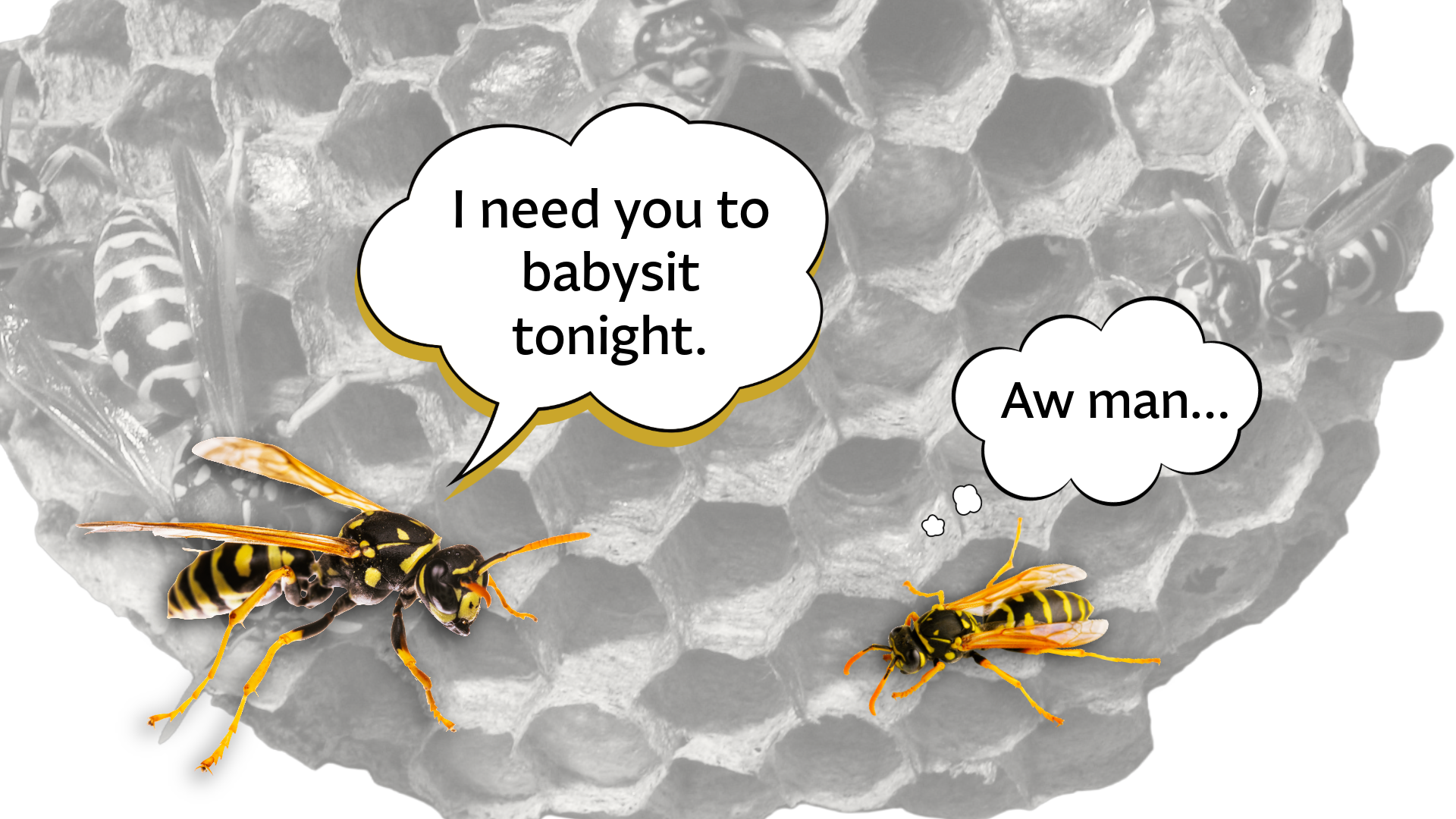
Some scientists think that our own ancestors may have followed a similar path. Rather than raising children alone, parents, older siblings, grandparents, and other community members likely shared the work of childcare. This cooperation may have allowed early humans to spend more time learning, hunting, creating tools, and, eventually, developing the large brains and complex societies that define our species today.
Try This! What counts as care?
Can you predict how nature solves its care problems? In this game, you’ll decide how your animal spends its limited energy before revealing the real strategy used by that species.
Materials:
- Printable card deck with 6 Animal cards and 6 Challenge Cards
- 12 Care Tokens (paper squares, coins, beans, building bricks, or other small objects)
- Paper or cardstock
- Pencil
- Scissors
- The Cost of Caring Game Handout
Printing: To prepare the game cards, either print the double-sided version onto cardstock and cut along the lines. If double-sided printing is not available, you can print the single-sided version, cut along the lines and match the cards front and back. We suggest attaching the fronts and backs to cardstock. If you prefer, use the fold-over version in which you cut along solid lines to create a strip with the front and back of the card, then fold along the dotted line and glue the two sides together. The cards should be prepared by someone who doesn’t plan to play the game.
Goal:
Every parent has a limited amount of energy to invest in their offspring. Your challenge is to develop a caregiving strategy for your animal. You have 12 Care Tokens to use on parenting challenges that come up in the wild.
How to play:
- Choose an Animal Card, but do not flip it over to reveal the back. Based only on what you know about your animal’s habitat and offspring, decide how your animal should invest its limited energy to help its offspring survive.
- Build your caregiving strategy by placing your 12 Care Tokens on the Care Budget Board, or make your own board. Divide the tokens among the four types of parental care.
– Food
– Protection
– Transportation
– Social support - You cannot place more than four tokens on any category. You do not need to place any tokens on a category if you choose not to.
- Once your Care Budget is complete, shuffle the Challenge Cards and draw one card at a time. Read the challenge and spend the required Care Tokens to overcome it. You cannot ignore a Challenge Card. You must spend the required Care Tokens. To spend your tokens, just move them off the board.
- Continue drawing Challenge Cards until:
– All Challenge Cards have been completed. Congratulations! All your offspring have survived. OR
– You do not have enough Care Tokens to complete a challenge. Place that Challenge Card next to your Animal Card. Your offspring were unable to overcome that obstacle. - Now compare your strategy with nature’s. Flip over your Animal Card to reveal how that species actually invests its energy in caring for its offspring. How did you do?
Ask yourself:
- Which types of care did your animal invest in the most?
- How similar or different were your choices as compared to reality?
- What form of care is the most important for your species? Why do you think that type of care is so important for that species?
- How may an animal’s habitat and lifestyle influence the way it cares for its young?
- Based on what you learned, how would you change your strategy if you played again?
Make your own cards
Now that you’ve learned about the trade-offs animal parents face to protect their young, research the life cycle of another animal. For example, the golden dart frog (above) carries tadpoles on its back to protect them. What animal would you like to learn more about?
Create additional cards—Animal Cards, Challenge Cards or both—to add to the deck. Find a friend and have them play “The Cost of Caring” game using your new cards.
Why are scientists interested in caregiving?
By studying how animals care for their young, scientists can better understand how different species survive, reproduce, and evolve.
Researchers compare caregiving behaviors across the animal kingdom to investigate questions such as: How does an animal’s habitat influence the way it raises its young? Why do some species rely on parents alone while others depend on grandparents, siblings, or entire communities? And what are the advantages and disadvantages of investing heavily in just a few offspring versus producing many with little parental care?
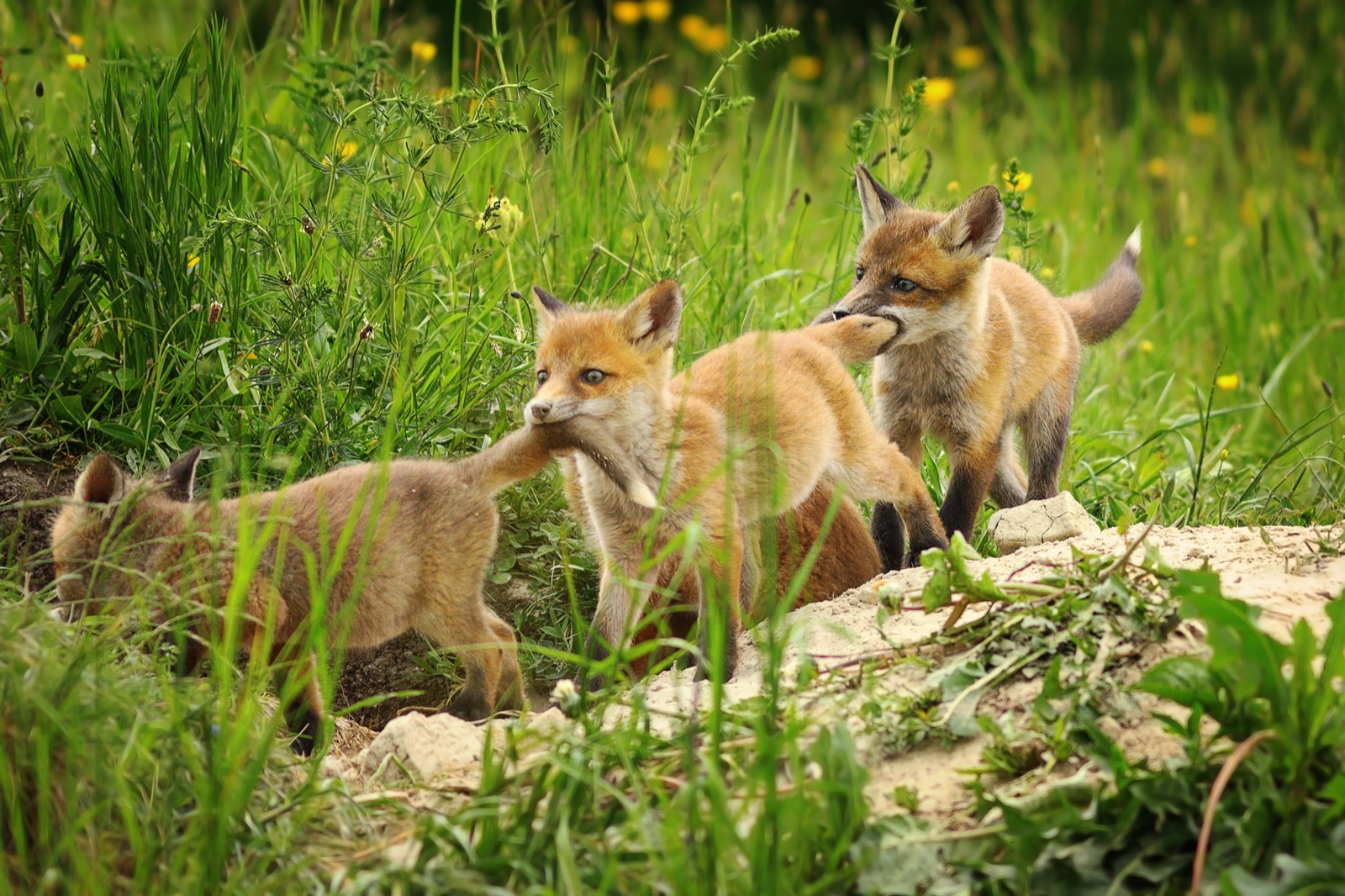
By comparing these strategies, scientists have discovered that there is no single “best” way to raise the next generation. Different environments create different challenges, and over millions of years, evolution has produced many successful solutions. Studying these behaviors also helps scientists better understand our own species and how cooperative caregiving may have helped shape human societies.
Parenting tips from the animal kingdom
Keep Learning
- Observe! Get outside and look for local animals caring for their young in your neighborhood or local park.
- Read (or have read to you) “The Creatures’ Guide to Caring” by Elizabeth Preston.
- Read “In the World of Whales” by Michelle Cusolito.
- Watch how birds feed their young.
- Listen to “TheDADventure: Wild Animal Dads From Owl Monkeys to Seahorses.”
- Watch Wild Babies of America’s National Parks!
Our evolutionary path to parenting—and sharing the load
NGSS standards
- LS1.B: Growth and Development of Organisms
– MS: Animals engage in characteristic behaviors that increase the odds of successful reproduction and the survival of offspring. - LS2.D: Social Interactions and Group Behavior
– MS: Group behavior has evolved because it increases the chances of survival for individuals and their genetic relatives. - LS4.C: Adaptation
– MS: Adaption by natural selection over generations is an important process where species change over time as a response to changes in environmental conditions. Traits that support successful survival and offspring become more common in a population.
Credits:
Lesson by Cybele Tamulonis
Copyediting by Erica Williams
Developmental editing by Sandy Roberts
Digital production by Sandy Roberts
Get new activities delivered to your inbox every month with Science Friday Educate newsletter!
Educator's Toolbox
Meet the Writer
About Cybele Tamulonis
Cybele Tamulonis is a writer, apiarist, and entomology enthusiast.