Has there ever been a time when things turned out differently than you expected? That happens in science too! In fact, sometimes an unexpected scientific discovery can lead to a massive breakthrough.
For example, in 1928 Alexander Fleming found that mold accidentally growing on a Petri dish stopped bacteria from spreading. When purified, that mold makes the medicine penicillin, which we use today to treat strep throat and other infections.
Now, Dr. Susie Dai from the University of Missouri has made a similar scientific breakthrough that may help people combat water pollution.
Key ideas
Microplastics are one of the most common forms of pollution. They can be found everywhere from the deepest ocean depths to the peak of Mt. Everest. Microplastics are difficult to remove from water because they are very, very small and lightweight. You can’t scoop them up or filter them out. However, Dr. Susie Dai, a professor in the Department of Chemical and Biomedical Engineering at the University of Missouri, accidentally discovered that bioengineered algae can remove microplastics from water sources.
How did she figure that out? Well, several different pieces of research came together in a remarkable way.
Algae are photosynthetic organisms, similar to plants, that make oxygen and chemical energy from sunlight, water, and carbon dioxide. The algae used in Dr. Dai’s lab were genetically modified. Their DNA was altered to add, remove, or change particular traits.
The team noticed that these altered algae exhibited hydrophobic properties. They had a natural tendency to repel water molecules, separating from water a bit as oil does in salad dressing. That made Dr. Dai think, “What can we do with it?”
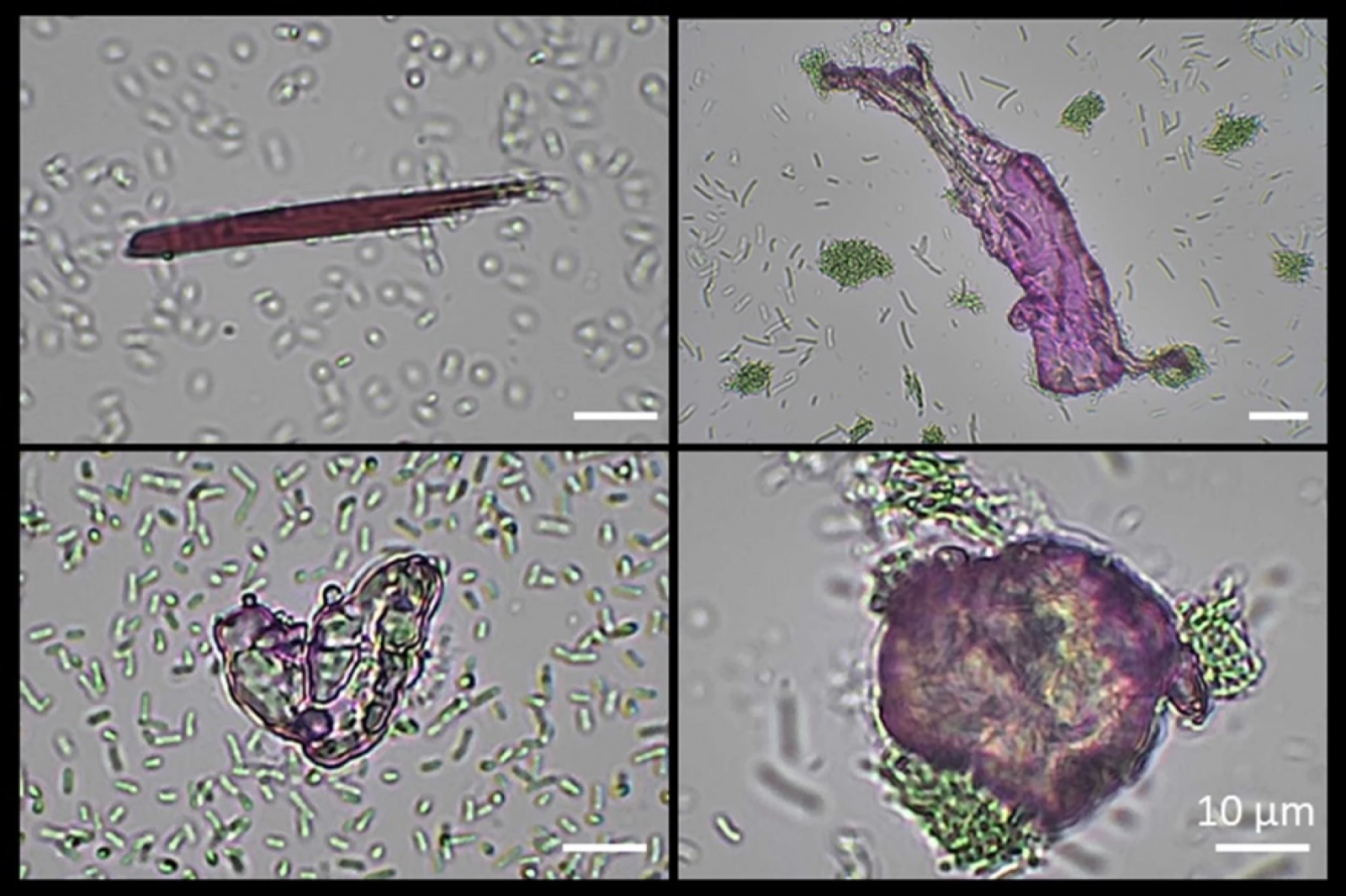
At the time, the researchers were also studying microplastics—super small particles of plastic waste. The tiny plastic pieces were drawn to the algae cells and formed small clusters. The microplastics and the algae formed a sludge that sank to the bottom and was easy to clean up, removing the plastic from the water source.
This discovery is significant. The research team is now focused on scaling up the process to evaluate its performance at water treatment centers. They hope the algae can remove pollutants from water, purifying it before it returns to the tap.
Can algae help pull microplastics out of our water supply?
Think Big!
After you’ve watched the video, answer these questions:
- Plastic pollution is found everywhere on the planet. Microplastics and nanoplastics may cause health problems for people. Why may this discovery be important to solving water pollution problems?
- Have you ever had an experiment or experience that had unexpected results? What did you learn from it?
- Water treatment facilities clean water from residential and commercial areas, removing pollutants to ensure the water is safe to drink. They use a multistep process that involves chemically treating and filtering the water to clean it. How could this new process using algae improve water treatment?
Meet the scientist
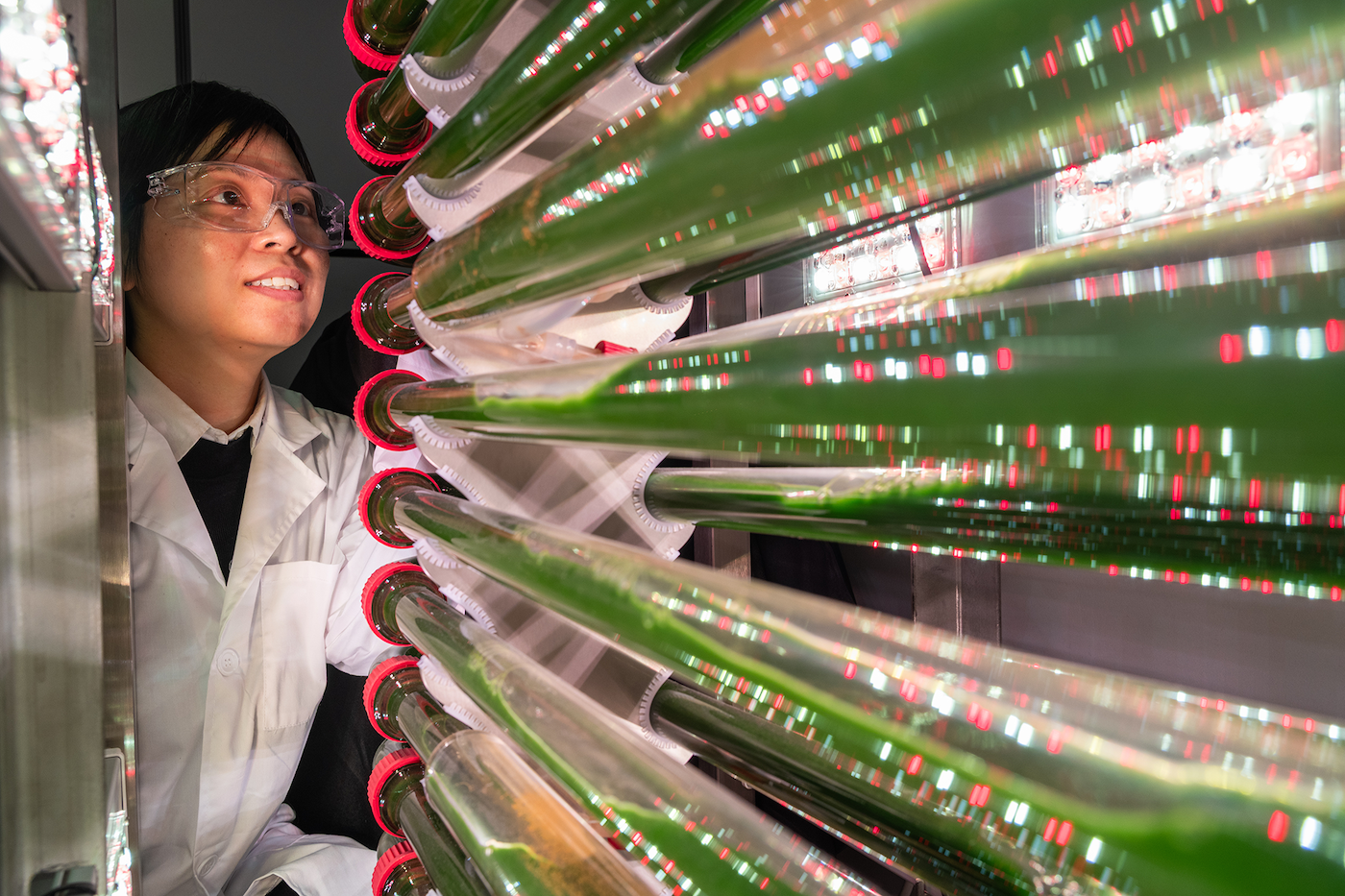
Dr. Susie Dai is a professor in the Department of Chemical and Biomedical Engineering at the University of Missouri. She has worked in environmental protection, environmental health, food safety, and regulatory science, publishing more than 60 journal papers on her research. Her lab works to discover new ideas that advance science and serve the local community.
Keep learning
Learn more about microplastics and how they affect our world with the Science Friday stories below:
- How do you figure out if microplastics are affecting pregnancy? – Microplastic researchers are trying to find answers about pressing health concerns while navigating the challenges of a new field of science.
- How do you study microplastics in a plastic-filled lab? – Measuring microplastics can be hard, partly because they’re everywhere—including the lab. One researcher is working on solutions.
- Can algae help pull microplastics out of our water supply? – Microplastics are everywhere, including in our water. One scientist wants wastewater plants to put bioengineered algae to work for a cleanup.
- Ask An Expert: What The Heck Are Microplastics? – We create them, we eat them, we breathe them in. But what effect do microplastics have on our bodies and our planet?
- Study Finds A Staggering Amount Of Plastic In Human Brains – A new study measuring microplastics in organs of the recently deceased found that about two dozen brain samples were 0.5% plastic by weight.
NGSS Standards
- LS1.A: Structure and Function – All living things are made up of cells, which are the smallest unit that can be said to be alive. An organism may consist of one single cell (unicellular) or many different numbers and types of cells (multicellular). Within cells, special structures are responsible for particular functions, and the cell membrane forms the boundary that controls what enters and leaves the cell.
- LS2.C: Ecosystem Dynamics, Functioning, and Resilience – Ecosystems are dynamic in nature; their characteristics can vary over time. Disruptions to any physical or biological component of an ecosystem can lead to shifts in all its populations.
- LS4.D: Biodiversity and Humans – Changes in biodiversity can influence humans’ resources, such as food, energy, and medicines, as well as ecosystem services that humans rely on—for example, water purification and recycling.
- ESS3.C: Human Impacts on Earth Systems – Human activities have significantly altered the biosphere, sometimes damaging or destroying natural habitats and causing the extinction of other species. But changes to Earth’s environments can have different impacts (negative and positive) for different living things.
- ETS1.B: Developing Possible Solutions – There are systematic processes for evaluating solutions with respect to how well they meet the criteria and constraints of a problem.
Credits:
Lesson by Svea Andersen
Developmental editing by Sandy Roberts
Copyediting by Erica Williams
Digital production by Sandy Roberts
Featured artwork for the activity by Fai Kosciolek
Video by Sukee Bennet
Host and Producer Kathleen Davis
Educator's Toolbox
Meet the Writer
About Svea Anderson
Svea Anderson is a twenty-year veteran educator who embraces challenges and consistently seeks opportunities for new learning.