Subscribe to Science Friday
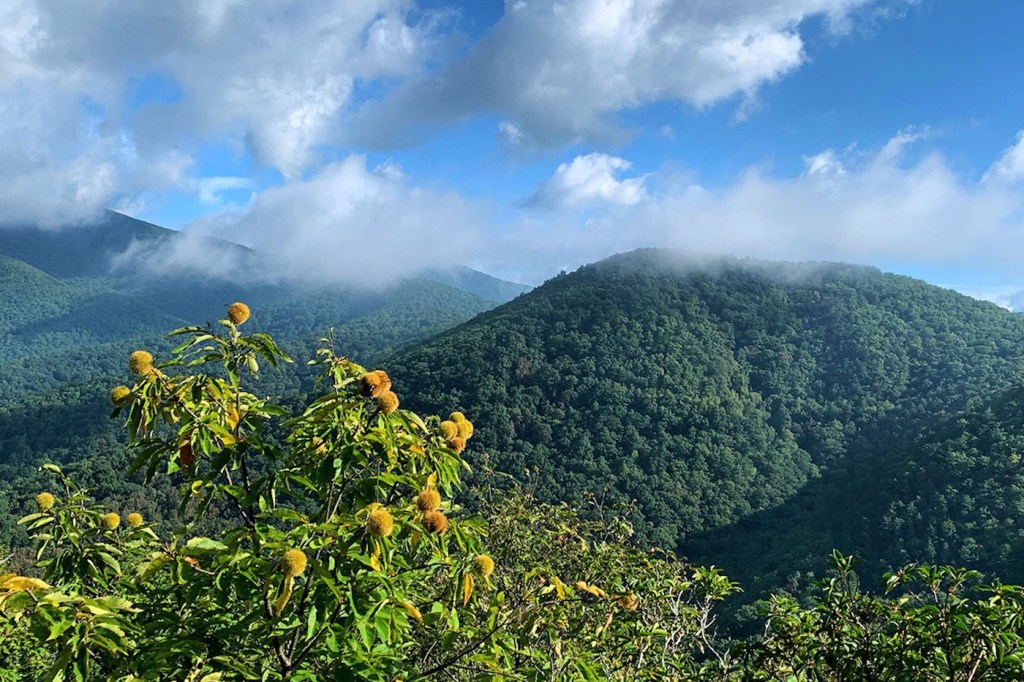
American chestnut trees once towered over the landscape, dominating forests in parts of the eastern United States. But in the late 1800s, a fungal blight virtually wiped them out across the country.
In February 2026, chestnut restoration scientist Jared Westbrook joined Host Ira Flatow to talk about how new genetic work could speed up efforts to breed fungal resistance into hybrid chestnuts and create a heartier chestnut population.
Donate To Science Friday
Invest in quality science journalism by making a donation to Science Friday.
Segment Guests
Jared Westbrook
Dr. Jared Westbrook is Director of Science for the American Chestnut Foundation in Asheville, North Carolina.
Segment Transcript
IRA FLATOW: This is Science Friday, I’m Ira Flatow. Later in the hour, when humans finally land on Mars, what should they do? A plan from the National Academies lays out the science objectives for a crewed Mars mission. Plus, is there any truth to the idea of a nervous system reset? We’ll talk about the mysteries of the vagus nerve.
But first, an update on efforts to restore the American chestnut, these trees once towered over the landscape, dominating forests and parts of the Eastern US. They provided food for people and animals, and they were a hugely valuable source of lumber.
But in the late 1800s, a fungal blight in the US virtually wiped out the American Chestnut plants across the country. Streets, once lined with beautiful trees, went bare. And due to the blight, the species now exists mainly as a shrubby plant, not as a towering tree. But new genetic work could help speed up breeding efforts to add fungal resistance to create a hardier chestnut population.
Joining me now is Jared Westbrook. He’s director of Science for the American Chestnut Foundation. Welcome to Science Friday.
JARED WESTBROOK: Hello, Ira.
IRA FLATOW: Nice to have you. We’ve talked about chestnut restoration efforts. How long has it been going on? Where does the project now stand?
JARED WESTBROOK: So Chestnut restoration in the US has been going on since the 1920s, and people have tried a lot of different things. First, the trees got the blight originally from imported Chinese and Japanese chestnuts that were brought over, and they had the blight pathogen on these trees.
And the Japanese and the Chinese chestnuts actually are interfertile when you cross them and breed them with American chestnuts. So the early efforts were in hybridization between the Asian species and the American species. With the American Chestnut Foundation breeding program, we’ve been doing this for 40 years, and we have been doing this program called backcrossing, where we take the Chinese and the American hybrids and we cross them back to a lot of different surviving wild trees.
People tell us, oh, there’s a flowering tree near the side of the road. And we then give them pollen from some of our hybrid trees that we’ve selected for having improved blight resistance. And then they have bred those hybrids with diverse American chestnut trees all across the range. So we now have hundreds of orchards, all up and down the East Coast of the US.
And some of the things that we’ve done recently is just look at all those trees. They’ve been growing, and they’ve been living with the blight for the last 15 years. And we’ve sequenced their genomes. We’ve looked at how resistant they are.
And so now what we’re doing is breeding those best trees together. And we can speed up this process of doing the breeding and selection by way of doing DNA testing on their kids and being able to sort out which of the kids have improved resistance relative to parents. So then we can ratchet up the resistance levels over multiple generations of breeding.
IRA FLATOW: Are you doing that breeding by hand pollinating? Or how is that happening?
JARED WESTBROOK: Yeah, so we have 16 state chapters, and these are folks that have been doing this breeding for decades. And they care for each individual orchard and mow the grass and keep the trees alive. And so we then exchange pollen, so we tell them, OK, this tree is likely to have resistance. And they send us the pollen, and then we coordinate shipping that pollen to the location where we want to do the breeding. So it’s a very decentralized effort.
IRA FLATOW: So you’re never going to have a purebred American chestnut again.
JARED WESTBROOK: There are actually some rare surviving American chestnuts, and we have bred some of those trees together. When we look at their kids, actually some of their kids also have partially enhanced resistance. So we are continuing to do breeding with those trees.
There’s relatively few number of those trees. When we actually looked at all of these surviving American chestnuts and we looked at their kids, like only seven trees, I would say, out of hundreds that we assessed have appreciable improvement in resistance. So the hybrids help us capture more of the diversity because the American chestnuts that we breed with don’t have to have the resistance.
IRA FLATOW: Well, let’s talk about that because I’d like to how a Chinese chestnut differs.
JARED WESTBROOK: Yeah, so the Chinese chestnuts, they’ve been bred in China for orchard production of chestnuts. So they tend to have a shorter stature. The American Chestnut grows more like a forest tree. The Chinese chestnut tends to grow more like an orchard tree. And what we’re trying to do is combine the tall growth of the American Chestnut with the blight resistance of the Chinese chestnut.
IRA FLATOW: If you know the genetics involved, could you just engineer the trait into the American chestnut and say, we’ll get a giant tree and have the resistance?
JARED WESTBROOK: Yeah, so one of the mistakes that we’ve made over time with this project is we assumed simplicity. With our backcross program, we assumed two to three genes contribute to resistance. And what we learned when we were doing the DNA sequencing of our hybrids is that actually hundreds of different parts of the genome contributes to that resistance.
So it’s a complex trait. And when you do– for complex traits, like the standard, the global standard for improving those traits, like let’s say, milk yield in cows, growth in trees, you want to use recurrent selection, which is basically select the best parents, select better kids, keep going over multiple generations.
With genetic engineering, it can be kind of challenging because we put in a gene from wheat that seemed to have some improvements in resistance when you looked at the seedlings, and we inoculated the little baby chestnuts. But then when we put them out in the field and we looked at the resistance over time, it didn’t hold up very well. And the genetically modified trees tended to grow slower. So it’s a complex system, and using this breeding strategy of multiple generations of breeding for improved blight resistance and growth is for sure going to work.
IRA FLATOW: Yeah, so you’re going back to the future on this.
JARED WESTBROOK: Going back to the future. And one of the things I just want to mention is that we can make this go a lot faster. Trees are very slow. Doing multiple generations of breeding in trees is a multidecade long process.
And with genomic tools, Basically. what that enables us to do is we can do this crossing between these best trees and then do some genotyping on their kids and be able to maybe plant the 10% best together from our DNA test without even having to do the inoculations on the trees. We plant those trees together. They start to breed with each other. And then we can have a lot of seed for forest restoration.
IRA FLATOW: So then how long do you think it’s going to take for this restoration?
JARED WESTBROOK: So there were estimated four billion trees, so planting four billion trees is a huge task. But I think in the next decade, with doing this faster selection, we can have the next generation of trees– it takes about seven years for the chestnuts in an orchard to start producing flowers and nuts.
So in the next seven years, from the crosses that we’re making now, we should start to have seed available for some of this forest restoration trials. And I think that with the improved breeding techniques that we’re using, we should be able to double the level of resistance that we have now to the next generation.
IRA FLATOW: So tell me, then, what success looks like to you.
JARED WESTBROOK: Success looks trees that have mostly American chestnut genetics, that are blight resistant, that grow tall, that are competitive, that capture the diversity that remains in the wild population. We want to put maybe a few hundred to 1,000 together in sites like in the forest where there’s been a clear cut or there’s been a fire in a disturbance area.
We plant these trees together. And maybe we plant a few hundred to 1000, and 20% of those trees maybe carry enough resistance to where they will survive long term and start to fruit on their own. And if we get a critical mass in all of these smaller planting locations distributed across the East Coast, now what we want is the tree to start to reproduce on its own in the forest.
So we don’t have to have perfection for that. We need to have some subset of the population, like 10% or 20% of the trees that we plant, have resistance, and they grow to the canopy. Then that enables the population to continue to self perpetuate on its own in the forest.
IRA FLATOW: Our listeners are going to be listening and say, gee, I wonder if there’s something I can do to help. Is there something an individual can do to help you?
JARED WESTBROOK: Yeah, so we have already a large network of people that have been planting and maintaining these orchards, and going forward, we need sites for doing some of our field testing. So we want to be able to plant like 200 trees at a site, and over time, we will give them the chestnut blight fungus. We’ll inoculate them, and we’ll evaluate their resistance and make selections and continue the breeding.
So that’s one way to help. Of course, we’re a nonprofit organization. And so just becoming a member of the American Chestnut Foundation can help sustain the effort. We need to continue this effort over decades.
IRA FLATOW: I hear you saying money-based support.
JARED WESTBROOK: Money, money or land.
IRA FLATOW: Well, if you have land, how much land– seriously, how many acres do I want to give you? What do I need to give you? And how do I give it to you?
JARED WESTBROOK: Well, some of these plantings are anywhere from a half acre up to multiple acres. The key is to maintain the orchard over time. So we partner with all these people, and they put up deer fences or mow around the trees.
So it is a commitment to do that. And then we go in, and we inoculate. So just understand that this is research and breeding, so we are going to give them the disease. And then we’re going to make selections from there.
IRA FLATOW: This is multigenerational, it sounds like.
JARED WESTBROOK: Yeah. I’m in the third generation of scientists working on this, and we need to continue to bring younger people into this effort.
IRA FLATOW: Well, Jared, this sounds really interesting. I think you’re going to get some response. Thank you for being with us today.
JARED WESTBROOK: Thank you, Ira. Appreciate it.
IRA FLATOW: Doctor Jared Westbrook is director of Science for the American Chestnut Foundation in Asheville, North Carolina.
[MUSIC PLAYING]
Copyright © 2026 Science Friday Initiative. All rights reserved. Science Friday transcripts are produced on a tight deadline by 3Play Media. Fidelity to the original aired/published audio or video file might vary, and text might be updated or amended in the future. For the authoritative record of Science Friday’s programming, please visit the original aired/published recording. For terms of use and more information, visit our policies pages at http://www.sciencefriday.com/about/policies/
Meet the Producers and Host
About Ira Flatow
Ira Flatow is the founder and host of Science Friday. His green thumb has revived many an office plant at death’s door.
About Charles Bergquist
As Science Friday’s director and senior producer, Charles Bergquist channels the chaos of a live production studio into something sounding like a radio program. Favorite topics include planetary sciences, chemistry, materials, and shiny things with blinking lights.