Subscribe to Science Friday
The modern economy relies on a menu of “critical minerals,” like the lithium used in batteries and the rare earth metals in powerful magnets. Obtaining those materials involves both economic and geopolitical risks. But a recent study found that much of the critical mineral material we need is already here, in unprocessed byproducts and waste from existing mines.
Mining engineer Elizabeth Holley joins Ira to explain the different options for accessing these critical minerals, and how recovering even a small percentage of the material already mined could reduce the need for certain mineral imports.
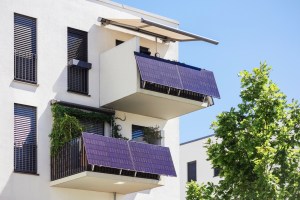
Then, Lacey Shaver joins to discuss solar power, and how changing state regulations are allowing the growth of “balcony solar” or “plug-in solar,” small solar power systems that can be connected to a home electrical outlet.
Donate To Science Friday
Invest in quality science journalism by making a donation to Science Friday.
Segment Guests
Elizabeth Holley
Dr. Elizabeth Holley is a professor of mining engineering at the Colorado School of Mines in Golden, Colorado.
Lacey Shaver
Lacey Shaver is director of U.S. City Clean Energy Transition at the World Resources Institute.
Segment Transcript
IRA FLATOW: This is Science Friday. I’m Ira Flatow. Our modern economy relies on a lot of exotic metals. You’ve got lithium for batteries, rare earths for magnets, catalysts, electronic devices. And getting access to those metals is fraught with geopolitical gymnastics. But there is good news. A recent study found that much of the material we need is already here in the US, literally under our noses. It’s in unprocessed byproducts and waste from existing mines.
Joining me now is one of the authors of that study, Dr. Elizabeth Holley. She’s professor of mining engineering at the Colorado School of Mines in Golden, Colorado. Welcome to Science Friday.
ELIZABETH HOLLEY: Thanks for having me.
IRA FLATOW: Nice to have you. Do we really have all these critical materials just sitting around, waiting to be extracted?
ELIZABETH HOLLEY: We have what we need. But getting it out is complicated. So what I mean by critical minerals are the 60 elements that the US Geological Survey has deemed both essential to the economy and also vulnerable to supply chain disruption. So that’s, like, half the periodic table. I think if we’re going to apply one approach to getting half the periodic table, we’re not going to be successful. So for me, it helps to really add some nuance by thinking about the six different supply options that we have, and then thinking across the periodic table, which blend of which options make sense for an individual element?
IRA FLATOW: All right. So take us through some of those, especially telling us where these materials are hiding.
ELIZABETH HOLLEY: So if we wanted to obtain something simple like copper, you can import copper, and we do, from countries like Chile, where a lot of copper is mined. You can also recycle copper. We could also develop new domestic copper mines. Then thinking about where our work sits, byproduct and mine waste recovery– and then I lastly we want to point out that we shouldn’t forget that reducing demand is also an option, either through substitution or, for example, in the case of copper, energy efficiency.
IRA FLATOW: Let’s talk about what you just said, mine product versus mine waste. Where can we recycle this stuff or get it out?
ELIZABETH HOLLEY: The way that I think of byproducts is getting more out of what we’re mining today. So the analogy that I like to use is you might be in your kitchen and you decide you’re going to have lemon juice in your salad dressing. So you squeeze the lemon a little bit. And then you think, well, that’s enough. I got the easy stuff out. Now I’m going to throw the lemon away.
If you wanted to recover more while you’re cooking, you could squeeze more out of the lemon. You could macerate it for a cocktail. You could cut it up and make bread out of the lemon rind. Doing it in your kitchen in process is byproduct recovery, getting more out of what we’re mining today.
Or you could throw it away. And then you could go into the accumulated mine waste. So think about this as the landfill. And you could start remining the landfills for lemons. Going back into accumulated mining waste of the past is what we call mine waste reprocessing.
IRA FLATOW: And how efficient would that be? Could we recover lots of these metals by this mine waste recovery?
ELIZABETH HOLLEY: We certainly could. And I think I’d actually like to start by talking about byproducts because I think it’s nearer term. There are opportunities to add additional infrastructure that might enable you to capture a wider suite of elements in your process since you’re excavating the rock, anyway.
We could certainly do better at recovering a little bit more of a broader suite of elements. There are about 15 elements where if we only recovered 1% of what we mine already, we could actually eliminate our need for imports. So that’s low-hanging fruit right there.
IRA FLATOW: Is it cost-efficient enough to do that?
ELIZABETH HOLLEY: That’s such a great question. And I would reframe that as cost to whom, because one of the reasons that the USGS put together this critical minerals list is that for some elements on the list, even things that you’ve never really heard of or thought about, like samarium, the cost to the economy of not having that mineral is incredibly high.
However, the market value of that mineral might not be high enough to motivate one of our domestic mining operations to add that infrastructure and add the ongoing operational costs of recovering. Taking a step back and thinking, what are critical minerals, why do we have a critical minerals problem, it’s a problem that the market isn’t really solving for us. There are things that we need that the market doesn’t justify recovery.
So that’s where we see the federal government stepping in to provide support for adding additional infrastructure or doing additional R&D to make recovery of byproducts more efficient. I think we’re going to need that for many of these elements because most mining companies are publicly traded. And the shareholders are investing in that company because the company is good at producing one thing, like gold or copper or zinc. And so it doesn’t necessarily benefit the shareholder for the company to spend money on these other elements that may have low market value, but are necessary for our way of living.
IRA FLATOW: Do you actually see this happening on a large enough scale to satisfy that demand?
ELIZABETH HOLLEY: That’s why I want to go back to the six different supply options and the 60 minerals. It’s a really complicated optimization problem to think about which knobs and levers we can turn quickly that will make a difference, what our longer term strategies will be. And from the research that we’ve done, we think that enabling a small percentage of byproduct recovery, particularly for those elements that we don’t need a lot of, is the fastest way to move the needle.
For other elements, I’m thinking about things where demand is a moderate amount. There’s certainly enough to recover from byproducts. However, you’d have to be really good at doing it. Again, to do so efficiently, it’s certainly a doable thing. But it’s going to take more detailed R&D.
IRA FLATOW: What is the research? You talked about we need research and development for this to work. What exactly are you talking about?
ELIZABETH HOLLEY: Well, that’s where I would say we need to extend beyond the national-scale statistical exercise that my group did in the paper that you’re referring to and then start to look at specific sites. Which sites are most interesting or most prospective for which elements? And then we need to go to those sites and start to characterize the material all the way down to the atomic scale to understand where these elements are sitting, in which minerals, and how those minerals behave when you start applying recovery processes.
I’m thinking about an element like germanium that hasn’t been studied in detail in the past. And so your zinc miner, for example, may know they have germanium in their ore body. But they don’t know what minerals it’s sitting in or how those minerals are behaving in the processing and extractive metallurgy.
And so that’s where research really needs to lean in and figure out exactly what minerals these different elements are sitting in and how they behave when you apply different processes. For some elements, we don’t have to be very good at recovering. We can just recover a fraction. And that would be maybe all we need.
IRA FLATOW: So we don’t understand that well enough is what you’re saying?
ELIZABETH HOLLEY: I think that it’s– that’s a complicated answer because if we only need to recover 1% of a particular element to get all we need, then no, we actually don’t need to understand that very well because we don’t have to be very good at recovery to only get 1% of something. If those recovery targets are higher– for example, an element that we need more of or that might be less abundant in a particular ore body or in the waste– then we are going to have to be cleaner, leaner, greener, and more effective in our processing and think about all of the detailed science that underpins that.
IRA FLATOW: That’s surprising to hear, that in some cases here, we only need to recover 1% to satisfy our demand.
ELIZABETH HOLLEY: Yes, it’s a big opportunity.
IRA FLATOW: Thank you for taking time to be with us today.
ELIZABETH HOLLEY: Thank you, Ira. This was fun.
IRA FLATOW: Dr. Elizabeth Holley, professor of mining engineering at the Colorado School of Mines in Golden, Colorado. Turning from mining the earth to harvesting solar energy, would you love to install solar panels in your home, but you just don’t have the roof available? How about this? People around the world who can’t put solar panels on their roofs are adopting a new creative alternative called balcony solar.
Just like the name says, these are small, portable solar panels that you can drape over your balcony, let’s say. A component called a microinverter converts that solar into alternating current, which lets you plug them right into your electric outlet.
It’s a growing worldwide trend and just beginning to catch on here in the US. For example, last year, Utah became the first state to allow balcony solar. This spring, other states are following. Maine has now approved some types of balcony solar. And Virginia and Colorado are close to approval.
Joining me now for an update is Lacey Shaver. She’s director of the US City Clean Energy Transition at the World Resources Institute. Welcome to Science Friday.
LACEY SHAVER: Well, thank you. I’m excited to be here today.
IRA FLATOW: Nice to have you. Did I get that right?
LACEY SHAVER: Yeah, you sure did. It has been an exciting last couple of months for balcony solar and excited to talk to you a little bit more about what’s been going on and what it means for the US.
IRA FLATOW: All right, give me your pitch.
LACEY SHAVER: Well, sure. Balcony solar is also known as plug-in solar. And these are small, portable solar systems that, as you said, can be plugged into a standard outlet. You can really just think of the standard solar panels you might see on a rooftop, but fewer of them, and not requiring the kind of permitting, installation, and interconnection that a traditional rooftop system actually requires.
IRA FLATOW: So how much of my home can I power from balcony solar?
LACEY SHAVER: Well, these are much smaller systems than a traditional rooftop system. So you could really think two to three solar panels. These are typically sized at 800 to 1,200 watts. They typically could power a large fridge or several smaller appliances.
IRA FLATOW: And this has taken off in Europe, right?
LACEY SHAVER: Yeah, it sure has, especially in Germany. In just a couple of years, they’ve gone to over 1 million registered systems. And that’s only registered systems. There are plenty of more that are unregistered. And so I’ve seen that there are up to 4 million of these systems in Germany in just several years.
IRA FLATOW: Wow. And let’s talk about bringing that technology here. What are the technical, the political hurdles to overcome here in the US?
LACEY SHAVER: So it’s less of a technical problem because these are pretty simple systems. And they just plug directly into your standard wall outlet. The real thing that we’re missing in the US is that we currently have a regulatory mismatch.
Currently in most states in the United States, plug-in solar is regulated the exact same way as rooftop solar, which means that it requires installation by an electrician. It requires permits. And it requires your electrical utility to come and do interconnection.
For these smaller systems, they don’t really require all of that. And so what you’re seeing now is in states like Utah, you’re seeing state legislatures actually defining plug-in solar as a distinct category apart from rooftop solar. And then that allows it to create specific rules that really meet the needs of the plug-in solar systems.
Typically, that means installing a size cap. Generally, we see up to 1,200 watts– so making sure that these systems are small, and then defining safety standards on the technology, just the same as you might see with other appliances. Provided that those two standards are met, then plug-in solar systems are exempted from typical utility approval and interconnection processes.
IRA FLATOW: Now, let’s say that it gets passed in other places. How soon could I walk into my big-box store and just plunk down some cash and get the solar panel?
LACEY SHAVER: Well, the market still is gearing up. You can buy them in several places in Utah. But I think as we see other states start to adopt them, you’re going to have a lot more choices in the panels and systems. But like you said, these are just sold in big-box stores. We see in Germany that folks go to IKEA or Lidl and just pick them up alongside their groceries.
IRA FLATOW: And how much would these panels cost each, let’s say?
LACEY SHAVER: So right now, the panels are somewhere between $500 and $1,500. And we expect these prices to come down as we have more vendors entering the market. But this is way cheaper than a rooftop system, which in the US we generally see those more in the $20,000 to $30,000 range. So really, these– at $500, you can go out, and a lot of homeowners will be able to afford these just from the get-go.
IRA FLATOW: Wow. And now I’m wondering how the power companies are reacting to this. Is there resistance, or are they just happy to see this happen– take some load off their grid, maybe?
LACEY SHAVER: Well, I think I’ve seen a little resistance. But it’s generally been pretty popular. The resistance that we’ve seen from utility companies has really been around safety concerns that perhaps if the grid goes down, some of these systems could still be exporting power to the grid.
However, these systems are so small. They’re much, much smaller than rooftop systems. And all of that power is likely being consumed on-site. And there are safety standards that are being put in existence, things like emergency shut-off triggers so that if the power does go out, the system will shut off. And so as long as these things are in place, hopefully the electric utilities won’t have as much to worry about in terms of safety.
IRA FLATOW: Now, I know that you focus on energy transitions in the cities. So I’m guessing this is a real possibility for urban folks or apartment dwellers where a rooftop panel might not be an option.
LACEY SHAVER: Exactly. That’s really what gets me excited about balcony solar– is that it really has the potential to unlock a whole new solar market. Renters and condo owners have largely been locked out of the solar market to date unless they have access to something like a community solar program, which would not be located on their building. And in the US, that’s a lot of Americans. Roughly a third of Americans currently rent and have just had no access to solar.
There’s also a real equity component at play here, too. Lower income and households of color in the US are more likely to rent. So if we can expand balcony solar to these households, we’re really going to level the playing field and expand equitable access to clean energy in a way we haven’t been able to do in the US before.
IRA FLATOW: I mentioned the list of states– first Utah, now Maine, Virginia, Colorado looking. Do you think this will snowball once people start seeing the possibilities here?
LACEY SHAVER: I sure do. And it has been a really exciting state legislative session. I think most folks I work with thought maybe we’d see 10 states start proposing this legislation. And at the peak of the spring legislative session, we had over half of the states in America considering bills.
Some of those have punted the decision to next year. But I think we will still get a couple more this year– not sure exactly which ones. But I’d be watching states like Illinois, New York, or New Jersey, who are still in session and have aggressive clean energy goals and might be interested in this kind of technology.
IRA FLATOW: So what are you keeping your eye on in the future here? What’s a good sign that you’re looking for?
LACEY SHAVER: I think the thing that I’m really going to be interested to track is how quickly this takes off. There’s a really interesting behavioral science component that we could see with this technology. There have been long-standing studies about what’s called the solar contagion effect that’s been shown that if one home gets solar, the homes around it are much more likely to also install solar. And so I am just really excited to see how the solar contagion effect really applies with this newer technology. And then what could be the impact on other technologies as well? Does this make people more likely to consider an EV or a heat pump?
IRA FLATOW: I’ve watched this contagion happen in my neighborhood. So I’ll be looking very eagerly at that with you, Lacey. So thank you for taking time to be with us today.
LACEY SHAVER: Oh, you’re welcome.
IRA FLATOW: Lacey Shaver, director of US City Clean Energy Transition at the World Resources Institute.
Copyright © 2026 Science Friday Initiative. All rights reserved. Science Friday transcripts are produced on a tight deadline by 3Play Media. Fidelity to the original aired/published audio or video file might vary, and text might be updated or amended in the future. For the authoritative record of Science Friday’s programming, please visit the original aired/published recording. For terms of use and more information, visit our policies pages at http://www.sciencefriday.com/about/policies/
Meet the Producers and Host
About Ira Flatow
Ira Flatow is the founder and host of Science Friday. His green thumb has revived many an office plant at death’s door.
About Charles Bergquist
As Science Friday’s director and senior producer, Charles Bergquist channels the chaos of a live production studio into something sounding like a radio program. Favorite topics include planetary sciences, chemistry, materials, and shiny things with blinking lights.