Subscribe to Science Friday
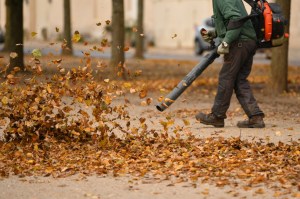
We recently asked you, dear listeners, to call us with your noise complaints, and whew, did you have them. We received over 100 messages about the sounds you detest the most: leaf blowers, your neighbor’s annoying dog, hand dryers, the works. And it got us thinking, are these sounds just annoying? Or dangerous to our hearing?
We called up audiologist Tina Penman to wade through some of your grievances and find out how loud is too loud.
Donate To Science Friday
Invest in quality science journalism by making a donation to Science Friday.
Segment Guests
Tina Penman
Dr. Tina Penman is an audiologist in Sacramento, California.
Segment Transcript
FLORA LICHTMAN: Have you found yourself wincing at a movie theater recently?
[AUDIO PLAYBACK]
– What’s funny is you’ve changed. You have. You’re much more confident– kept those eyebrows, though, didn’t you?
[END PLAYBACK]
FLORA LICHTMAN: At the risk of sounding like a Larry David parody, why are movies so loud? Do we need a full sonic boom for The Devil Wears Prada 2 trailer? Look, I know I’m not alone with my sound sensitivity because our phone lines lit up when I asked you listeners to call with your noisy gripes. And it makes me wonder, how loud is too loud? And what’s it doing to our hearing?
Here to answer those questions is audiologist Dr. Tina Penman, based in Sacramento, California. Hey, Tina.
TINA PENMAN: Hi.
FLORA LICHTMAN: When you hear me complain about movies, am I just being whiny, Tina, or can this loudness actually hurt my ears?
TINA PENMAN: No, it absolutely can hurt ears. And here’s the other thing. Some people have tough ears. Some people have tender ears. And I’m not saying that you have tender ears. What I’m saying–
FLORA LICHTMAN: I’m fine with having tender ears. I do have tender ears.
TINA PENMAN: What it comes down to is that noise and sound is in the ear of the beholder. And what could be irritating to one person could be totally fine to someone else. And when we’re in the movies, we’re already sitting on the edge of our seats. And then if there were to be a sudden sound and it’s too loud, it’s very understandable that it could be irritating to anyone.
FLORA LICHTMAN: So Science Friday producer Dee Peterschmidt went to a few movie theaters last week with a decibel app. They found peaks around 100 to 110 dBs. Is that too loud?
TINA PENMAN: So 100 to 110 is loud. It is startling. But that said, it would really have to be– using the Occupational Safety and Health Administration guidelines, it would have to be 115 dB straight for 15 minutes.
FLORA LICHTMAN: Do we know exactly how loud sound damages hearing? What’s the biology of that?
TINA PENMAN: That’s a great question. So if you think about the cochlea, which is the organ for hearing, it’s sort of like a water slide, a very curvy water slide. And at the top of the water slide, that’s where you have all of your higher frequencies. And as you get closer and closer down to the pool, you hit the lower frequencies.
And as you come down the first curve of the cochlea, that, actually, is the curve that tends to experience a lot of noise damage. And in a sense, our hearing starts going the day we’re born, really, because babies have the ability to hear higher frequency sounds than we do as we get older and older.
FLORA LICHTMAN: Why do we lose hearing in that curve first? Is it that that part of your ear is getting blasted with more powerful sounds? What do you mean by that?
TINA PENMAN: Exactly. So if you think about the hair cells, the hair cells are sort of like seaweed on the ocean floor. And when we have a loud sound, like a very, very sudden loud sound, or continuous ongoing sound, it’s going to be like that seaweed gets ripped up or it gets beat up. And that’s like our hair cells.
FLORA LICHTMAN: That’s fascinating. So it’s actually like those cells are getting damaged because they’re the first in line, it sounds like?
TINA PENMAN: Exactly, exactly.
FLORA LICHTMAN: We did a little of our own data collection here. And I wanted your perspective on our findings. We asked listeners to call us with the sounds that bothered them most. And I got to say, within moments, more than 100 people had left us passionate messages.
But interestingly, our data, Tina, wasn’t really noisy. This very clear trend emerged. There was a most reviled sound. And I’m going to let Miriam from Atlanta give you a little hint.
MIRIAM: –one of the worst things that was ever invented by humankind. I can’t stand them. I’m surrounded by them. And I just think the world would be a much better place for a million reasons without [BLEEP].
FLORA LICHTMAN: Can you guess what Miriam is talking about?
TINA PENMAN: Leaf blowers?
FLORA LICHTMAN: Absolutely, you guessed it.
MIRIAM: Two words– leaf blowers.
CALLER 1: The leaf blower.
CALLER 2: Leaf blowers are at the top of my list.
CALLER 3: –especially the gasoline-powered ones.
CALLER 4: A few years ago, I went as a anti-leaf blower activist for Halloween. And I made a tiny, little rake and a tiny, little broom and did raking and sweeping demonstrations for anyone who cared to watch.
FLORA LICHTMAN: [LAUGHING]
Tina, I know this is a trope. It’s a meme on social media. But in your professional opinion, as an audiologist, what is it about leaf blowers that makes them so annoying for people?
TINA PENMAN: I think that there’s an emotional tie to that, possibly. And maybe it’s a Saturday morning and you’re trying to sleep in and all of a sudden, you hear it go off. And you just want to sleep. There are some HOAs that, of course, have noise restrictions and guidelines. Sometimes, there are even city guidelines. Even when these are followed, it can still be very, very, very irritating.
And sometimes, I’ll even see leaf blowers or people who are operating leaf blowers, and they’re wearing just the foam earplugs rather than the actual earmuffs that sit over the ears. And foam earplugs aren’t bad. But what’s bad is when you can still see them hanging out of your ears. If they’re hanging out of the ears, they’re not protecting your hearing. They need to be inserted all the way in, to the point where it almost feels uncomfortable to wear them.
FLORA LICHTMAN: That’s a hot tip. That’s good to know. Dr. Tina Penman is an audiologist in Sacramento. Tina, thanks for joining us today.
TINA PENMAN: Thank you for having me.
Copyright © 2026 Science Friday Initiative. All rights reserved. Science Friday transcripts are produced on a tight deadline by 3Play Media. Fidelity to the original aired/published audio or video file might vary, and text might be updated or amended in the future. For the authoritative record of Science Friday’s programming, please visit the original aired/published recording. For terms of use and more information, visit our policies pages at http://www.sciencefriday.com/about/policies/
Meet the Producers and Host
About Rasha Aridi
Rasha Aridi is a producer for Science Friday and the inaugural Outrider/Burroughs Wellcome Fund Fellow. She loves stories about weird critters, science adventures, and the intersection of science and history.
About Dee Peterschmidt
Dee Peterschmidt is Science Friday’s audio production manager, hosted the podcast Universe of Art, and composes music for Science Friday’s podcasts. Their D&D character is a clumsy bard named Chip Chap Chopman.
About Flora Lichtman
Flora Lichtman is a host of Science Friday. In a previous life, she lived on a research ship where apertivi were served on the top deck, hoisted there via pulley by the ship’s chef.