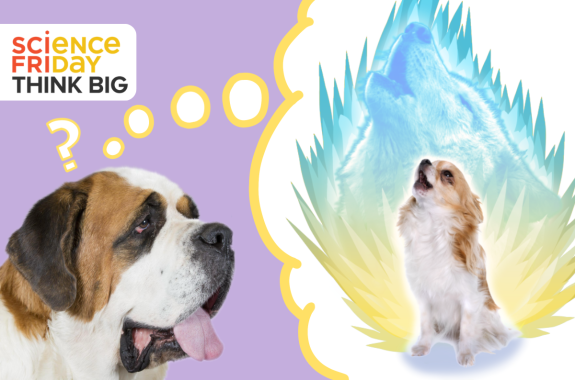
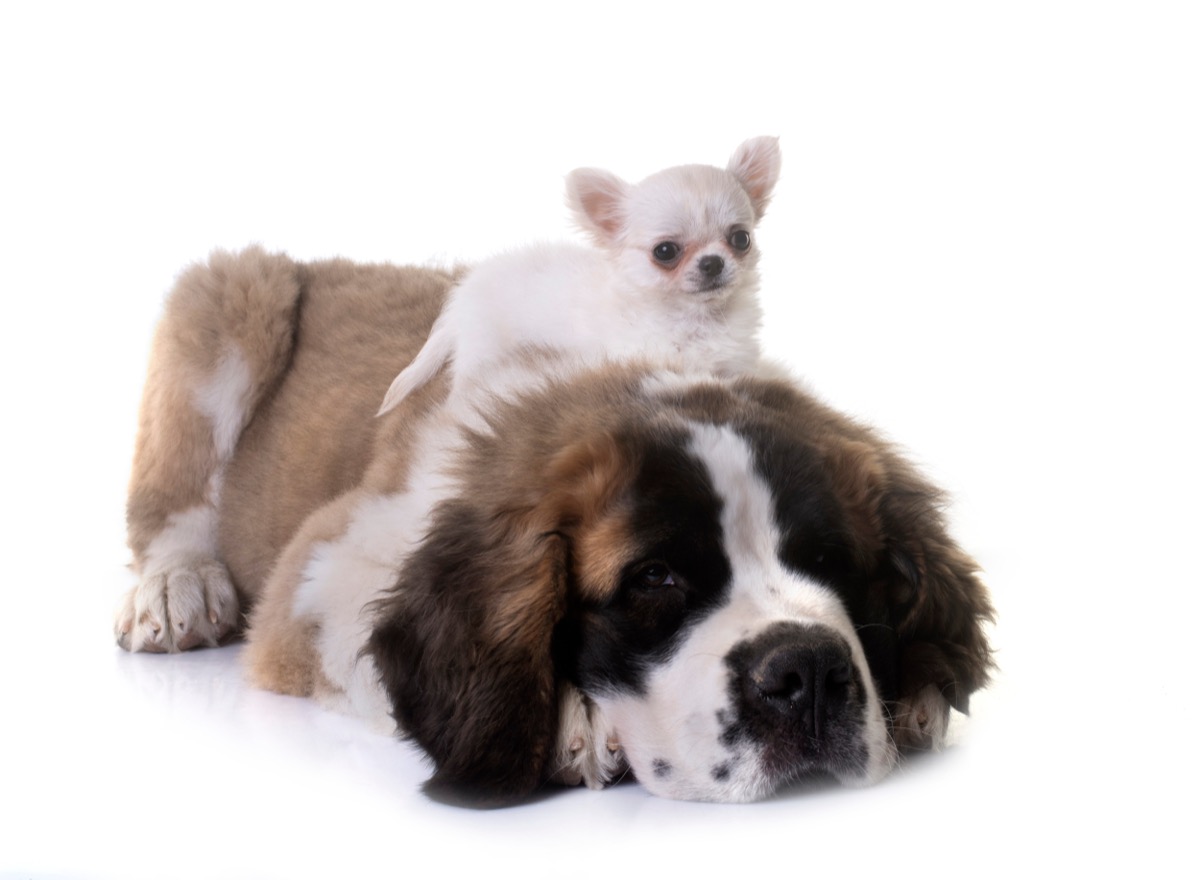
Imagine winning tickets to the Westminster Kennel Club Dog Show, one of the world’s most prestigious and well-known canine events! You’d see 2,500 different dogs, from tiny teacup Chihuahuas to massive Saint Bernards. But what if there was an unexpected new entry: a gray wolf competing for Best in Show? A wolf may seem really out of place, but it turns out that both dogs and wolves have a lot in common. And surprisingly, a Chihuahua is more genetically similar to a wolf than a Saint Bernard is to a wolf! How is that possible?
Untangling The History Of Dog Domestication
Key Ideas
The transition from wolves to the familiar domesticated dogs is a long-standing mystery that scientists are actively working to solve. Why is it important to understand the history of dog domestication? It’s a mirror that reflects valuable insights into human history, our ancestors’ movements, and their interactions with animals.
The domestication of dogs began approximately 30,000-50,000 years ago with Eurasian gray wolves, marking the first time any animal species began to transition from a completely wild existence to one reliant on humans. Modern dogs and wolves share the gray wolf as their common ancestor, so their genetic similarity is remarkable, with their DNA being 98.8% to 99.9% identical.
Although the exact moment of the split between dogs and wolves remains unknown, researchers like Dr. Carly Ameen are using scientific methods to pinpoint it. Deoxyribonucleic Acid (DNA) is the molecule in all living organisms that stores and passes genetic information from one generation to the next. By studying the genomes (an organism’s complete set of DNA) of both wolves and dogs, researchers are working to determine when dogs first branched off from wolves on the phylogenetic tree of evolutionary history.
As they analyze wolf DNA, scientists also gather genetic information on dogs, gaining a better understanding of dog traits, behaviors, and adaptations. The work provides important clues to the biological evolution and diversity of the dog breeds we know and love today.
Recent evidence suggests that early humans began selectively breeding dogs for desirable traits about 11,000 years ago to reduce their “wild” wolf-like tendencies. More recently, during the Victorian era of the 1800s and early 1900s, people focused intensely on breeding for specific traits, characteristics, and behaviors. This practice led to genetic isolation, the restriction of genetic mixing between populations due to geographic, ecological, or reproductive barriers.
So, why is a Chihuahua’s DNA more recently linked to a wolf’s than a Saint Bernard’s DNA is? Genetic isolation! Saint Bernards have lost a significant portion of their wolf DNA as they were bred for traits such as friendliness and large size, while Chihuahuas have retained many wild genetic characteristics.
How Did Dogs Evolve To Be Domesticated?
Think Big!
After you’ve watched the video about Dr. Carly Ameen’s research, think about the following questions:
- Why is it important for scientists to know the timing of the split between dogs and wolves?
- Dr. Ameen discusses how her research has been complicated by wolf culling and why these practices eliminate genetic information that is helpful to science. Why is genetic information and genetic diversity (but not genetic isolation) important for wild populations?
- Is there a modern-day species that you would like to compare to its ancient ancestor? Perhaps a Siberian tiger with a saber-tooth cat? Or an African savanna elephant and a woolly mammoth? Why would you choose those species? What would you hope to learn through the investigation?
Meet the Scientists
Dr. Carly Ameen is a bioarchaeologist and lecturer at the University of Exeter in the UK. Dr. Ameen specializes in two main areas. Her primary research focus is anthropogenic evolution, the examination of rapid evolutionary changes that impact the ecosystems of our closest domestic animals, specifically dogs and horses. Dr. Ameen also uses digital technologies, including X-ray and CT scanning to study archaeological, historical, and cultural materials. She used these skills to conduct the research featured in this Science Friday episode.
Dr. Anders Bergstrom’s research is focussed on understanding the evolutionary history of organisms, primarily animals. By studying genetic diversity within and between species, he explores the evolutionary processes that have shaped that diversity. Dr. Greger Larson studies evolutionary genomics. His work centers on on the use of ancient DNA to understand the pattern and process of domestication, collaborating with geneticists and archaeologists to determine when dogs arose from the gray wolf.
Keep Learning
If this is interesting to you, check out these other resources from Science Friday.
- How Did Dogs Evolve To Be Domesticated? – Using 11,000-year old dog genomes, scientists have traced the evolution of the domesticated dog. 16 minutes
- Untangling The History Of Dog Domestication – A new study suggests dogs began to diversify about 11,000 years earlier than we thought. Plus, a long-running experiment to domesticate foxes. 18 minutes
- Your Dog’s Breed Doesn’t Always Determine How They’ll Behave – Though some types of dogs come with a reputation, new genetic analysis finds that breed is a poor predictor of behavior. 12 minutes
- A Famous Sled Dog’s Genome Holds Evolutionary Surprises – By looking at 240 mammals’ genomes, including the heroic sled dog Balto, a project called Zoonomia offers a new view of evolutionary history. 17 minutes
NGSS Standards
- LS3.B: Variation of Traits – HS-LS3-1 – Develop and use a model to describe why structural changes to genes (mutations) located on chromosomes may affect proteins and may result in harmful, beneficial, or neutral effects to the structure and function of the organism.
- LS1.A: Structure and Function – HS-LS1-1 All cells contain genetic information in the form of DNA molecules. Genes are regions in the DNA that contain the instructions for code for the formation of proteins.
Sign up for our educational newsletters
Get great educational resources for your classroom, home, and beyond to your inbox each month.
K-12 Education Beyond The Classroom
Credits:
Lesson by Svea Andersen
Copyediting by Erica Williams
Developmental editing by Sandy Roberts
Digital production by Sandy Roberts
Featured artwork for the activity by Fai Kosciolek
Original audio production by Charles Bergquist
Host Flora Lichtman
Producers Rasha Aridi and Alex Lim
Educator's Toolbox
Meet the Writer
About Svea Anderson
Svea Anderson is a twenty-year veteran educator who embraces challenges and consistently seeks opportunities for new learning.