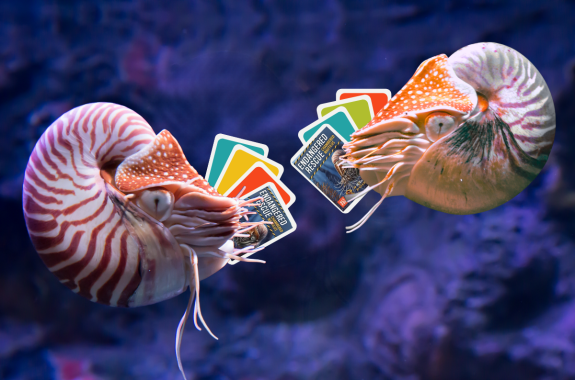
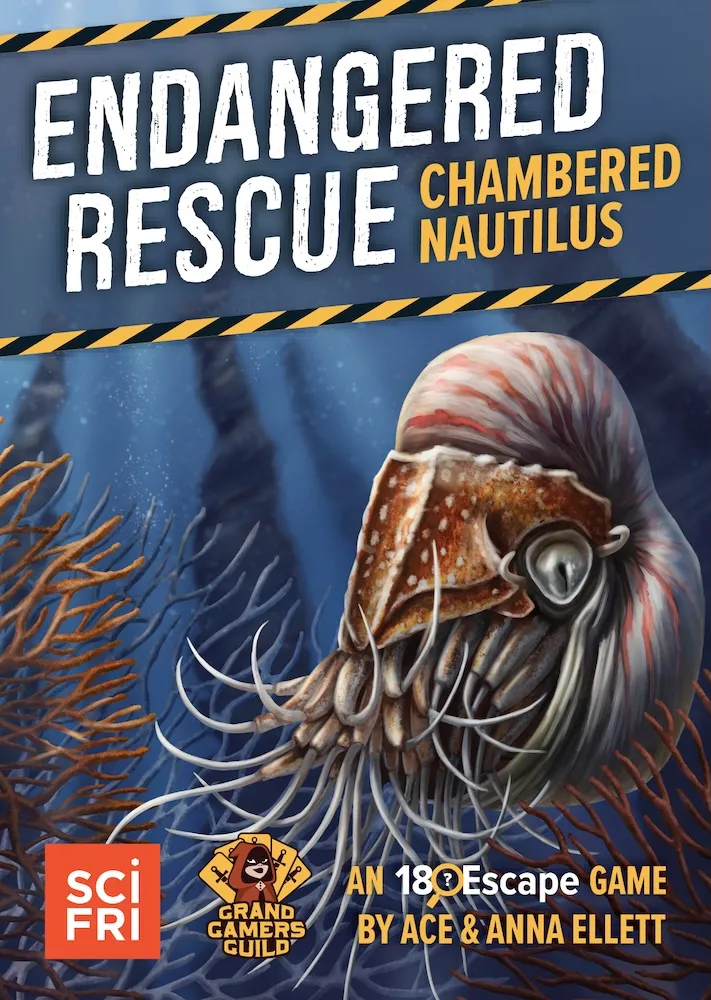
Games can be an exciting way to engage students’ curiosity as they learn. That’s one reason Science Friday partnered with the Grand Gamers Guild to create Endangered Rescue: Chambered Nautilus, a compact, escape room-style puzzle game that pairs an 18-card deck with a companion website. Players take on the role of science journalists hosting a symposium about the chambered nautilus. Along the way, they’ll solve puzzles, search an aquarium for clues, and discover the extraordinary science behind one of the ocean’s most mysterious cephalopods.
This guide offers practical ways to introduce the game to learners, support players throughout, and adapt play for different ages. It also includes an optional read-aloud introduction, a glossary to use alongside the game’s own instructions and companion website, and even trivia to test your knowledge when you’re done.
Don’t worry; this guide doesn’t contain any puzzle answers or spoilers. However, it does contain lots of great tips for sharing games with learners!
Solve a cephalopod puzzle to win this escape room-style game
Getting started
Prepare a shared space
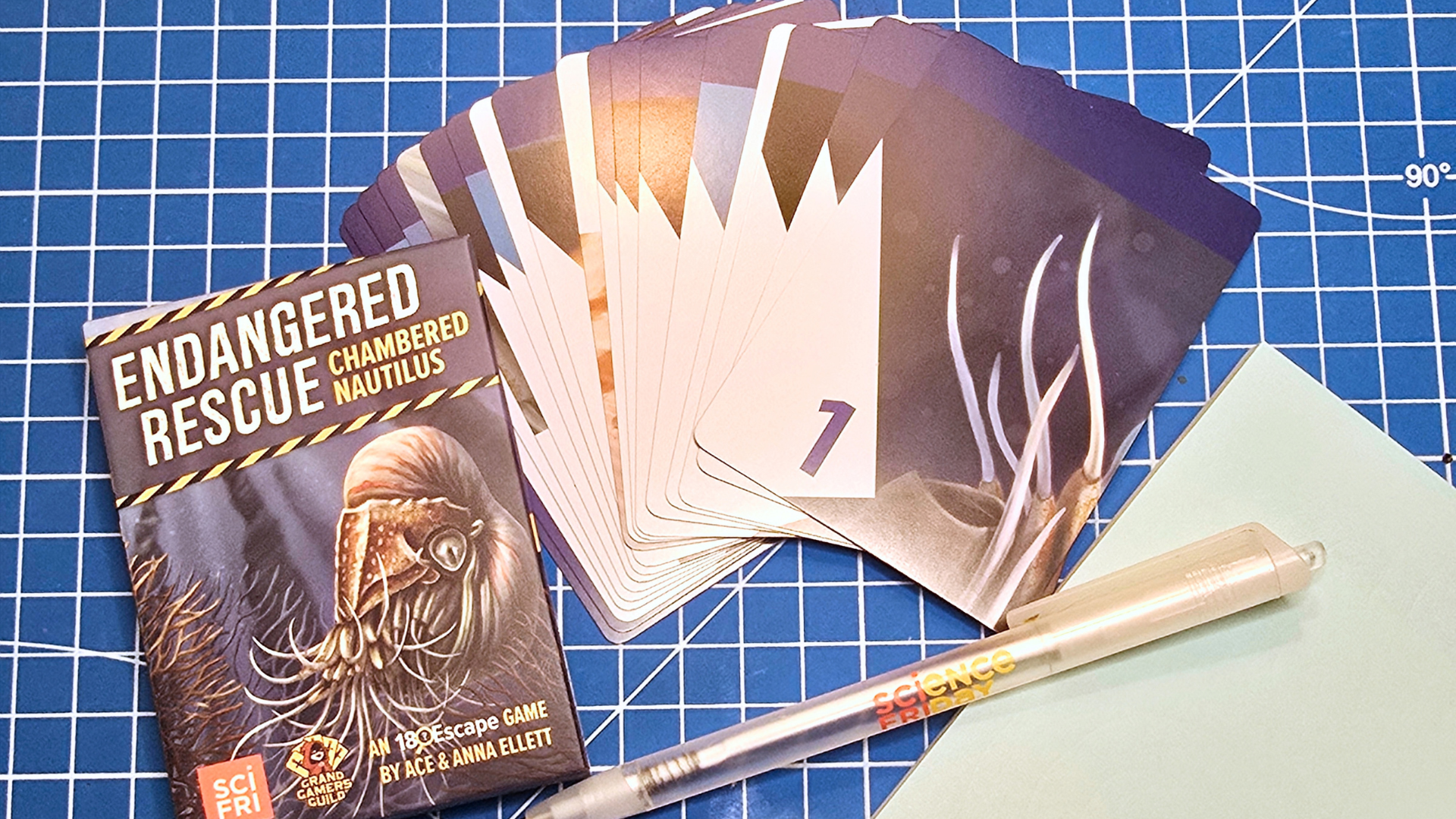
Choose a flat surface with room to lay out cards and take notes. Arrange the group so everyone can see and reach the cards. Keep the deck face down, with the large card numbers showing, and remind players to wait until instructed before turning cards over; do not shuffle the cards. The game’s companion website works on a phone, tablet, or computer, though a larger screen makes shared reading easier, especially for larger groups. Check that everyone can follow both the cards and the screen with relative ease.
Have several sheets of scrap paper and writing tools available. Keep notes where everyone can see and contribute: on the table, on a clipboard passed around, or on a whiteboard. Keep previously used cards organized and accessible throughout play, as you may need them again. If card orientation is ever confusing, point out that the side with the large number is the back. On the flip side, each card’s number is also printed in small type somewhere on the front.
Set expectations
Explain that players share the role of science journalists hosting a nautilus symposium at an aquarium. You may use the “Set the scene” section below to do so, if you find it helpful. Players will solve puzzles as they prepare for and host the symposium. Explain that it won’t always be obvious what to do right away, but sometimes working out where to start is part of the fun. Plus, there are hints if they need help.
The companion website includes a timer that can be paused as needed. Use it if your group enjoys a challenge, or skip it to encourage players to focus on figuring things out together rather than finishing quickly. You may not even want to mention the timer, as that can sour the experience for some players.
Discover the chambered nautilus with Dr. Gregory J. Barord
Introduce the companion website
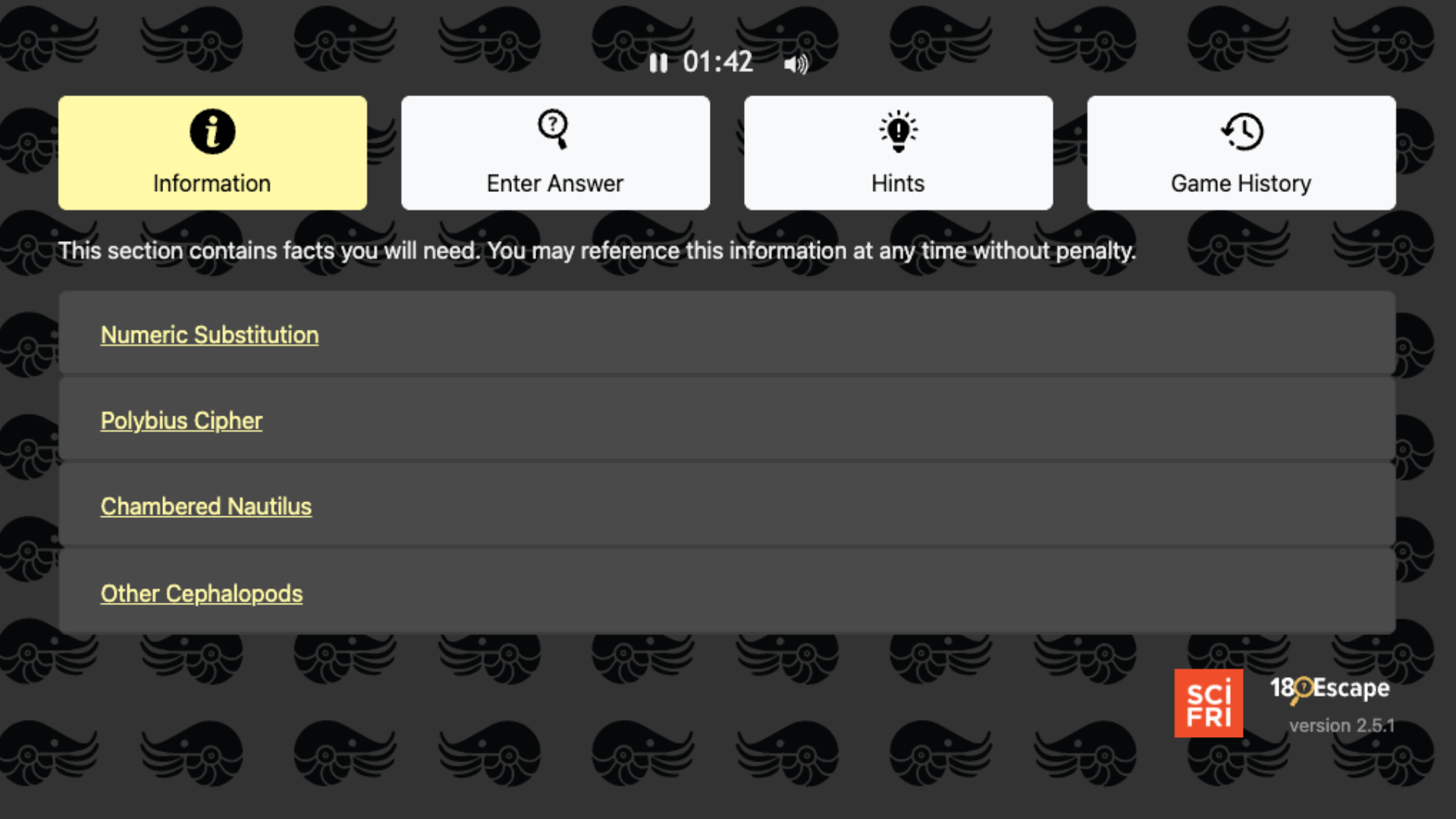
Familiarize the group with the website’s four tabs:
- Information: This tab is an essential resource for solving some of the puzzles. It includes facts and reference materials. Players should read through this tab closely and carefully, and refer back here when needed. Remind them that the information is there to be used, and they can check this tab as often as they like without losing any points. Often, a card might display the symbol of an “i” inside of a circle when referencing “Information” would be particularly useful.
- Enter Answer: A magnifying glass with a question mark on a card marks a puzzle to solve. Players submit their answer in this tab for the website to check. Correct answers reveal more of the story as well as instructions on how to continue the game.
- Hints: This tab offers general strategies for getting unstuck, followed by hints relating to specific puzzles organized by card number. Opening it doesn’t immediately reveal an answer; players can choose individual hints to gradually uncover more guidance for each puzzle. Encourage the group to reveal one hint, then discuss it, reanalyze the cards with the hint in mind, jot down notes, and brainstorm ways to proceed before requesting another. Sometimes a small nudge is all that’s needed to get going again, and it’s important to reassure players that needing a hint now and then is part of playing the game.
- Game History: This tab is a place to revisit earlier story updates and instructions, which can be especially helpful if you need to take a break in the middle of play. You can also reference previous information or a part of the story from earlier in your session. Note: Be careful; closing the website may or may not save your progress.
Can a living fossil learn new tricks? Meet the nautilus!
Set the scene (optional)
To help players understand the premise of the game, read this short script aloud or adapt it with your own words:
“Welcome to the aquarium! Within the many glass tanks that line these halls, colorful fish dart between the corals and many-legged crabs scuttle across sandy bottoms. However, today is not just any old day and you’re not just any old visitor; you have an important job to do! People from all around are coming to hear experts talk about the chambered nautilus at today’s symposium, and you’re the science journalists in charge of hosting the event!
The audience is arriving, the speakers are preparing, and you’ve got a few things to sort out before taking the stage. But even a carefully planned event can hold a few surprises…
We’ll tackle the day as a team, sharing discoveries and working through challenges together. Keep your eyes open and your notes handy. It’s almost time for the symposium to begin!”

Myth or math? Is the nautilus shell’s golden ratio real?
Support players throughout the game
Encourage observation and conversation
Give learners time to examine the cards. Details that initially seem decorative or superfluous may be useful, so encourage players to inspect cards closely. Clarify unfamiliar words, objects, or situations when they prevent players from understanding the task. You may want to have them list everything they can see on a card, encouraging them to identify oddities or patterns as they list what they see. If working with players with low vision, encourage others to share their observations aloud.
Make sure that players have opportunities to share ideas, make suggestions, and explain their reasoning. Try asking broad questions that can help the group reflect without giving away what to do next. Some examples include:
- What have we noticed?
- What haven’t we looked at yet?
- What have we tried, and where did it take us?
- Would anyone like to share a different idea?
It’s important to leave room for developing or partial ideas and unsuccessful attempts. When a player proposes an answer, invite them to share their reasoning, even if you know that it is not the route to solving the puzzle. An idea doesn’t have to be right to help the group; saying it out loud might help someone notice a detail or come up with another idea.
Offer help in small steps
Normalize asking for help as an ordinary part of play. Start by encouraging your players, if you have more than one, to consult each other and share what they see, what they know, and what they wonder.
If players still seem stuck, the website provides hints. Let the group agree on requesting support, then uncover one hint. See where that takes the group before considering revealing another. A little help can make a tricky puzzle feel less overwhelming and get ideas flowing again.

Support players through frustration
Keep an eye out for players who seem frustrated or who are losing interest or focus. Here are some suggestions for how to help with that:
- Suggest a change of roles. Perhaps the person who has been taking notes might try analyzing the cards, while another player rereads the text on the website aloud. A new perspective can help the group notice something they missed and give drifting players an opportunity to rejoin the discussion.
- Sometimes several puzzles are available at once. If the group is stuck on one, encourage them to give the other a try and come back to the first one later.
- It’s okay to pause for a snack, a bathroom trip, or a bit of a stretch. Sometimes a puzzle makes more sense after a little time away.
Getting stuck is a normal part of playing, and sometimes a little support or a change of pace is all players need to feel ready to try again.
Make space for different strengths
Different puzzles give different players a chance to shine; a puzzle that stumps one player might click easily for another. Just because a player struggles with one puzzle doesn’t mean they won’t absolutely excel at the next. Encourage contributions from everyone, and ask enthusiastic solvers to give time for others to look, think, and speak.
Some players may need help reading, understanding unfamiliar words, or writing down ideas. Encourage players to interact with the game in a way that works for them. Remind the group that they are working as a team and should support one another.
Give older or more experienced players more time to explore puzzles before offering them assistance. When they arrive at an idea, ask them to share their line of thought with the group. Talking through an idea can help the whole group make connections and notice things they might have missed, while also giving less experienced players a chance to follow along and learn from their teammates.
When playing with different ages, take turns reading, handling cards, taking notes, and entering answers. Try to avoid assuming that the oldest players will have the best insights; good ideas can come from anyone. Invite quieter participants to contribute without putting them on the spot by asking low-stakes questions, encouraging them to write their ideas down first, or using “turn and talk” strategies.
Submit an answer
Encourage players to make space for everyone to contribute and agree on an answer before submitting it. After an answer is accepted, read the website response together before moving on. These passages develop the story and introduce science that can be missed in the excitement of reaching the next puzzle. Leave room for questions, a brief discussion, and celebrating what the group accomplished.

Go beyond the game
Once you’ve finished the game, wrap up by asking:
- What is one new thing you learned about nautiluses and other cephalopods today?
- What was the biggest challenge your group faced, and how did you fix it?
- What was your favorite part about working with your team?
- Which puzzle was your favorite?
If time allows, give players a chance to share something surprising they learned and a moment when someone else’s idea helped them. Encourage players to share what they learned with friends or caregivers, too!
Check your knowledge
The game’s website companion shared lots of interesting information about the chambered nautilus and other cephalopods. If you want to keep the fun going, challenge your learners with some trivia. Grab our 15-question slide deck to use with a group, mix and match to adapt it for your learners, or import the questions into a platform like Kahoot!
If your learners are excited about games (or cephalopods), share Science Friday’s Design a Game Challenge with them. Let them use what they’ve learned about cooperative play to invent something new. You might also enjoy the Hack Your Brain series of games and puzzles that teach learners about neuroscience.
Transform play into action
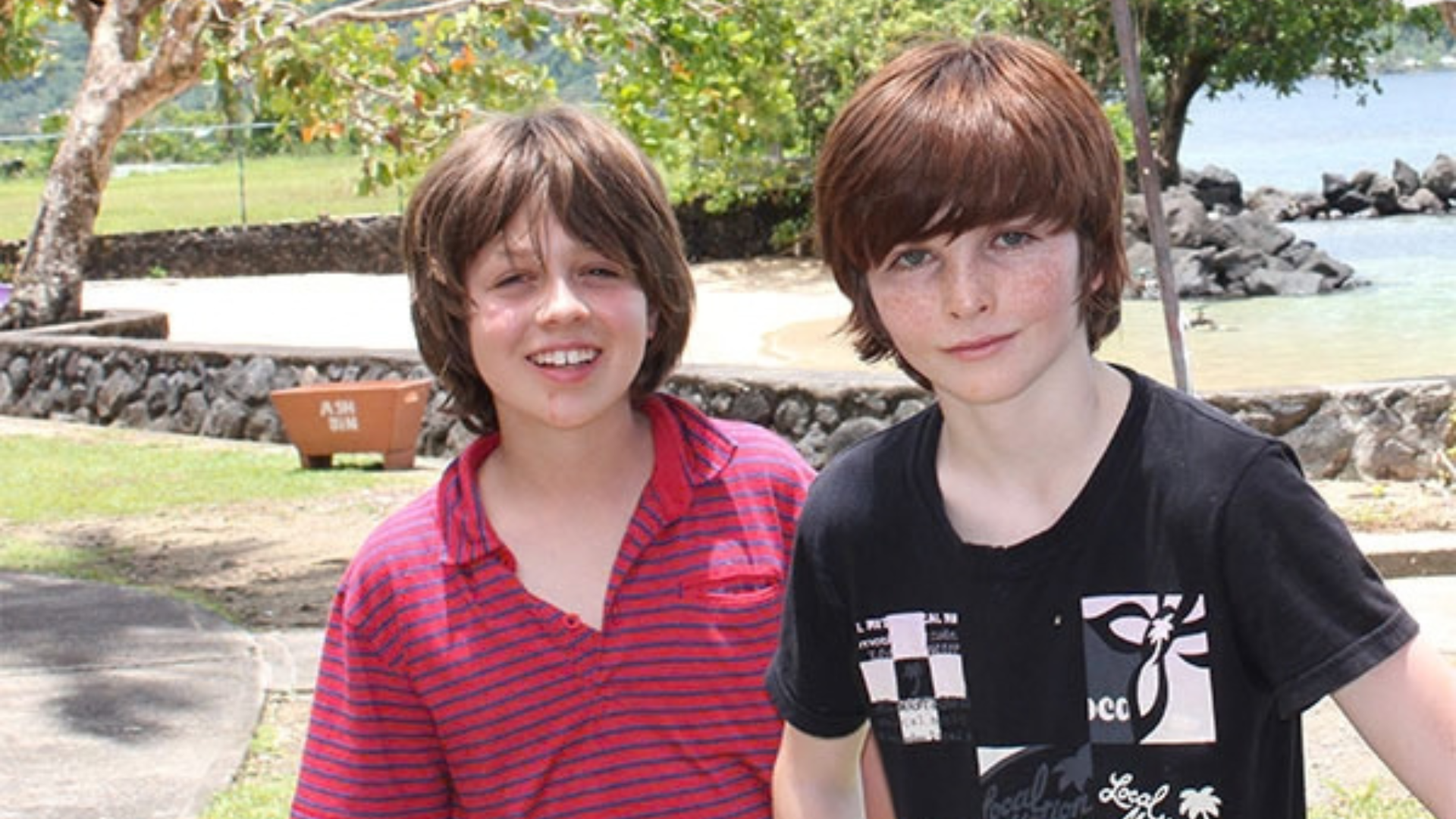
As players learned while playing the game, the chambered nautilus is endangered. Save the Nautilus is a nonprofit conservation organization dedicated to protecting them. Started by 11-year-old Josiah Utsch and his friend Ridgely Kelly, the charity’s mission is to raise awareness about the nautilus and fund research to better understand this 500-million-year-old creature.
One of the biggest threats to the nautilus is overfishing. People often use the shells for jewelry, clothing, and home decor. Chambered nautiluses grow slowly and reproduce infrequently, so widespread fishing can significantly damage their populations. Despite international protections, thousands are still sold each year.
Learners who want to help protect the nautilus can take action. Save the Nautilus encourages people to write letters to retailers like eBay, Amazon, and Etsy, asking them to stop selling nautilus shells. More information and a sample letter are available on the Save the Nautilus website. Help players craft their messages using persuasive writing tips for young students and older learners.
Keep learning
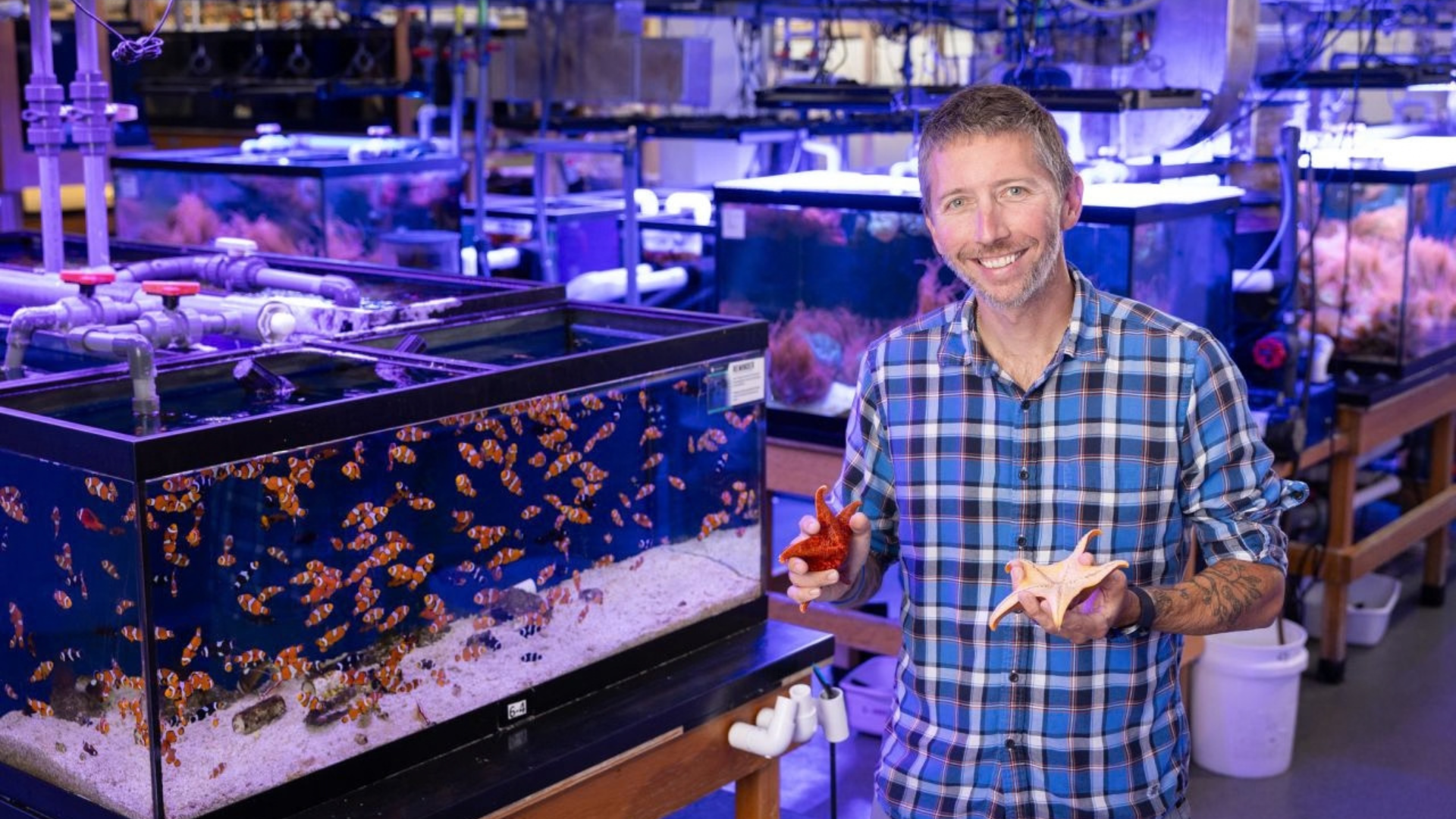
- Join Science Friday as we meet with Dr. Gregory J. Barord, the marine biologist who consulted on the game, for a livestreamed Ask a Scientist event on Thursday, October 8 at 1 pm ET / 10 am PT.
- Think big! With poor eyesight, the chambered nautilus hunts by smell. Explore how a blue-light experiment revealed the mysteries of this cephalopod’s memory.
- Try this! Grab a ruler, crunch the length-to-height ratios, and use the Fibonacci sequence to test whether the nautilus’s famous spiral follows the golden ratio.
- Can’t get enough of cephalopods? Check out our Cephalopod Week spotlight for more activities, stories, and science.
- Discover cephalopod-themed books, fun videos, hands-on activities, and more in The Ink-Credible STEAM Adventure Toolkit.
Glossary
Use these definitions when a word is unfamiliar. No puzzle answers are included as glossary entries. Download a printable copy for easy reference during the game.
| Word | Meaning |
|---|---|
| Anatomy | The parts of a living thing’s body and how they fit together. |
| Cephalopod | A type of ocean animal that has arms or tentacles around its mouth, such as an octopus, squid, cuttlefish, or nautilus. |
| Cipher | A set of rules for writing and reading a message in secret code. |
| Configure | To adjust something’s settings so it works the way you need it to. |
| Impromptu | Done without being planned or prepared beforehand. |
| Lineage | A line of ancestors and their descendants stretching through time. |
| Mature | To reach adulthood; here, to become able to reproduce. |
| Moderate | To guide a discussion and help speakers take turns. |
| Molt | To shed hair, feathers, skin, or an outer layer periodically, or the outer covering shed during molting. |
| Overfishing | Catching animals from the water faster than their populations can replace them. |
| Panelist | A member of a group invited to discuss a topic and answer audience questions. |
| Physiology | How a living thing’s body and its parts work. |
| Population | Members of the same species living in a particular area. |
| Registration | The process of signing up or checking in for an event. |
| Rhinophore | A body part that helps a nautilus sense chemicals in the water, much like smelling, so it can find food. |
| Science journalist | Someone who investigates science topics and explains them through stories, articles, or other media. |
| Spatial memory | Remembering where things are and how to move through a place. |
| Symposium | A gathering where people share ideas and research about a particular topic. |
| Transmitter | A device that sends a signal to another device. A microphone transmitter sends sound information. |
Standards
NGSS
- LS2.C: Ecosystem Dynamics, Functioning, and Resilience – Biodiversity describes the variety of species found in Earth’s terrestrial and oceanic ecosystems. The completeness or integrity of an ecosystem’s biodiversity is often used as a measure of its health.
- LS4.D: Biodiversity and Humans – Biodiversity is the wide range of existing life forms that have adapted to the variety of conditions on Earth, from terrestrial to marine ecosystems. Biodiversity includes genetic variation within a species, in addition to species variation in different habitats and ecosystem types (e.g., forests, grasslands, wetlands).
- ESS3.C: Human Impacts on Earth Systems – Human activities have significantly altered the biosphere, sometimes damaging or destroying natural habitats and causing the extinction of other species. But changes to Earth’s environments can have different impacts (negative and positive) for different living things.
CCSS
- CCSS.Math.Practice.MP1– Make sense of problems and persevere in solving them.
- CCSS.Math.Practice.MP3 – Construct viable arguments and critique the reasoning of others.
- CCSS.Math.Practice.MP7 – Look for and make use of structure
Credits:
Lesson by Taylor Walders
Developmental editing by Sandy Roberts
Digital production by Sandy Roberts
Educator's Toolbox
Meet the Writer
About Taylor Walders
Taylor Walders (they/them) is a science communicator based in New York.