The Artemis II mission successfully launched on April 1, 2026, for a 10-day adventure, slingshotting around the moon and back. But almost as soon as the Orion spacecraft left the launchpad, the astronauts encountered a problem with an important piece of equipment: the toilet.
Artemis II test flight heads toward the moon
Key ideas
NASA’s Artemis II mission carried a crew of four astronauts whose job was to make sure the spacecraft’s systems operated as designed in the harsh environment of deep space. The mission set many records, including the farthest human spaceflight, the first astronaut of color, the first woman astronaut, and the first non-American astronaut on a lunar spaceflight, and the first…toilet?
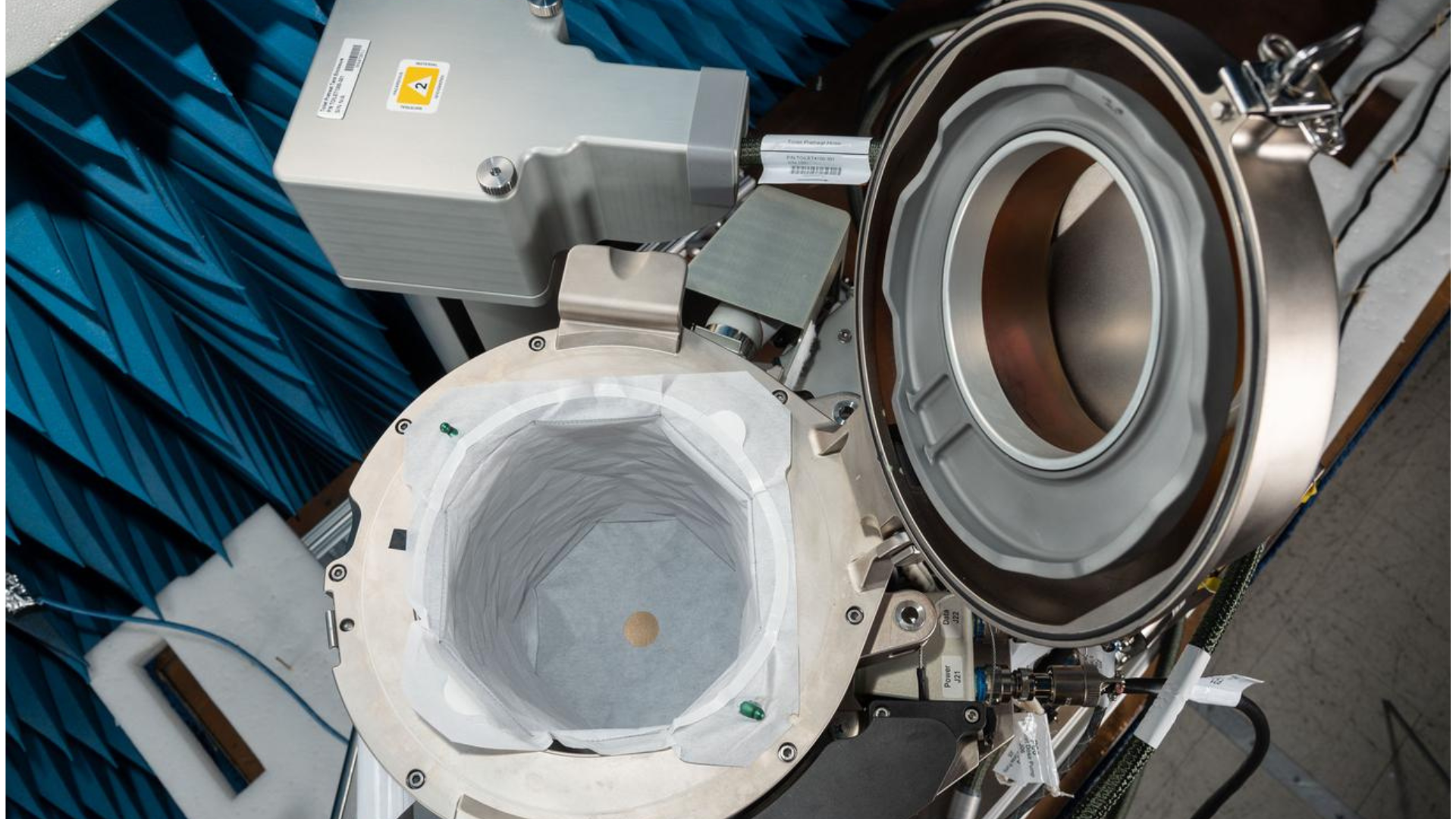
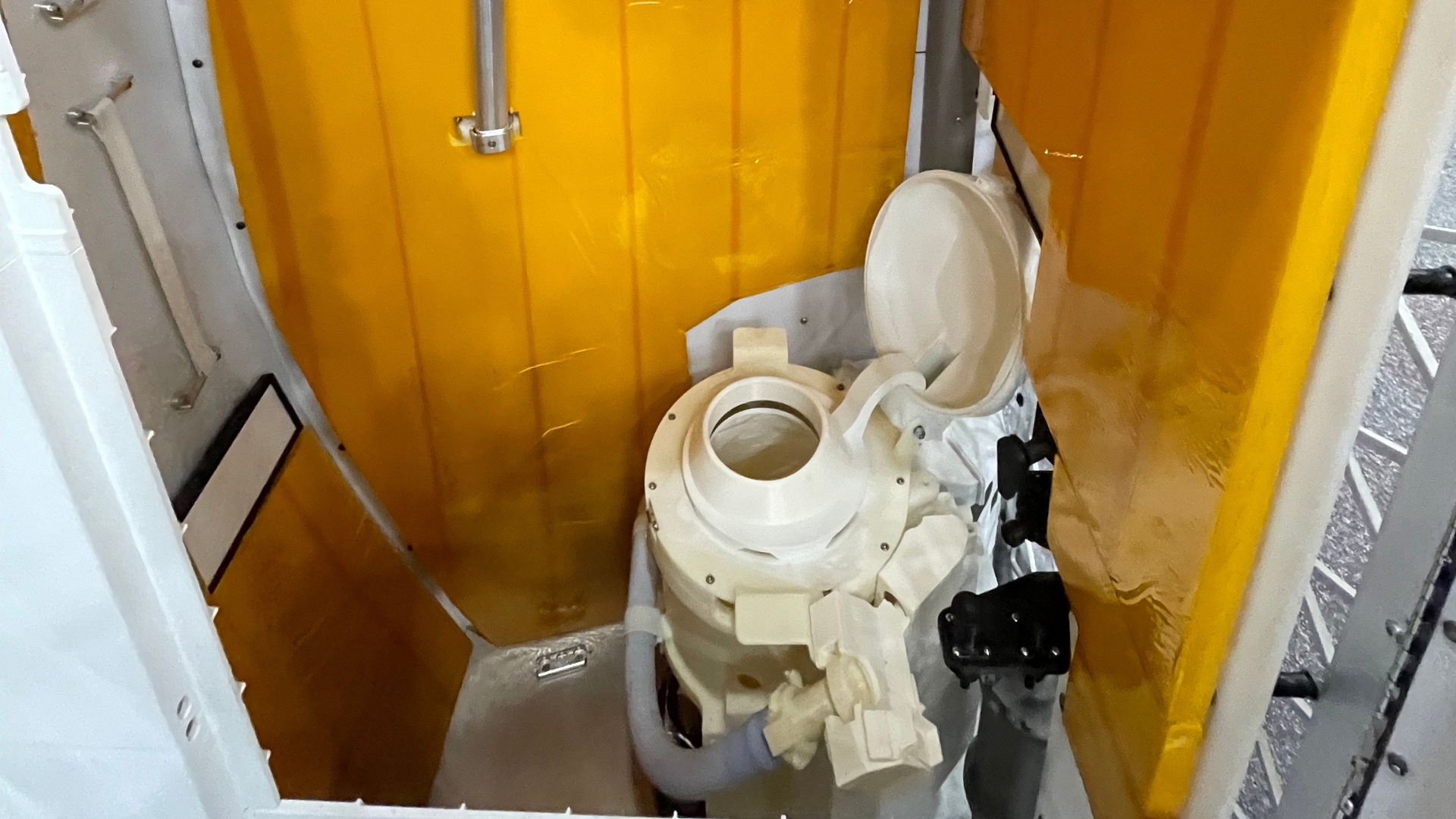
The Universal Waste Management System, or UWMS, is a $30 million 3D-printed toilet designed to operate in microgravity. Like one on the International Space Station (ISS), the unit is roughly the size of a bean bag chair and has handholds and foot restraints to keep astronauts from floating away while taking care of business. It uses an airflow similar to a vacuum to safely suction human waste away.
“Houston, we have a problem.”
Imagine what would happen if there were no toilet in a small space occupied by four astronauts traveling at approximately 25,000 miles/hr (40,233 km/hr). Shortly after the launch, the high-tech UWMS stopped working. Thankfully, the crew was up to the task.
Mission specialist and engineer Christina Koch explained, “I am the space plumber. I am proud to call myself the space plumber […] and it’s the most important piece of equipment on board.” Soon, the problems were resolved, and UWMS was working again.
Houston’s response? “Go for toilet.”
You might wonder, if this was the first time a mobile spacecraft had a toilet, how did earlier astronauts deal with their waste? Apollo lunar missions from 1969 to 1972 left ninety-six bags of waste—filled with urine (pee), feces (poop), and vomit (puke)—on the moon. And the bags remain there today! While that might sound gross, those bags represent a fascinating long-term science experiment on how microbes survive zero gravity and the brutal lunar environment. A future Artemis mission might even bring them back for study.
Artemis II tackles a minor plumbing issue on its way to the moon
Think Big!
After you’ve watched the video, think about these questions:
- Engineering new inventions is awesome! What equipment would you engineer for astronauts on spacecraft like Orion during missions?
- Ninety-six bags of human waste have been left on the moon. What is your prediction about what scientists might discover when the bags are finally retrieved and studied?
- Christina Koch is an electrical engineer and physicist. In a pinch, she was also the “space plumber.” What other unexpected roles do you think might be needed for the next Artemis mission?
Sample answers provided in the Teacher’s Guide of the worksheet for this resource.
Meet the scientists
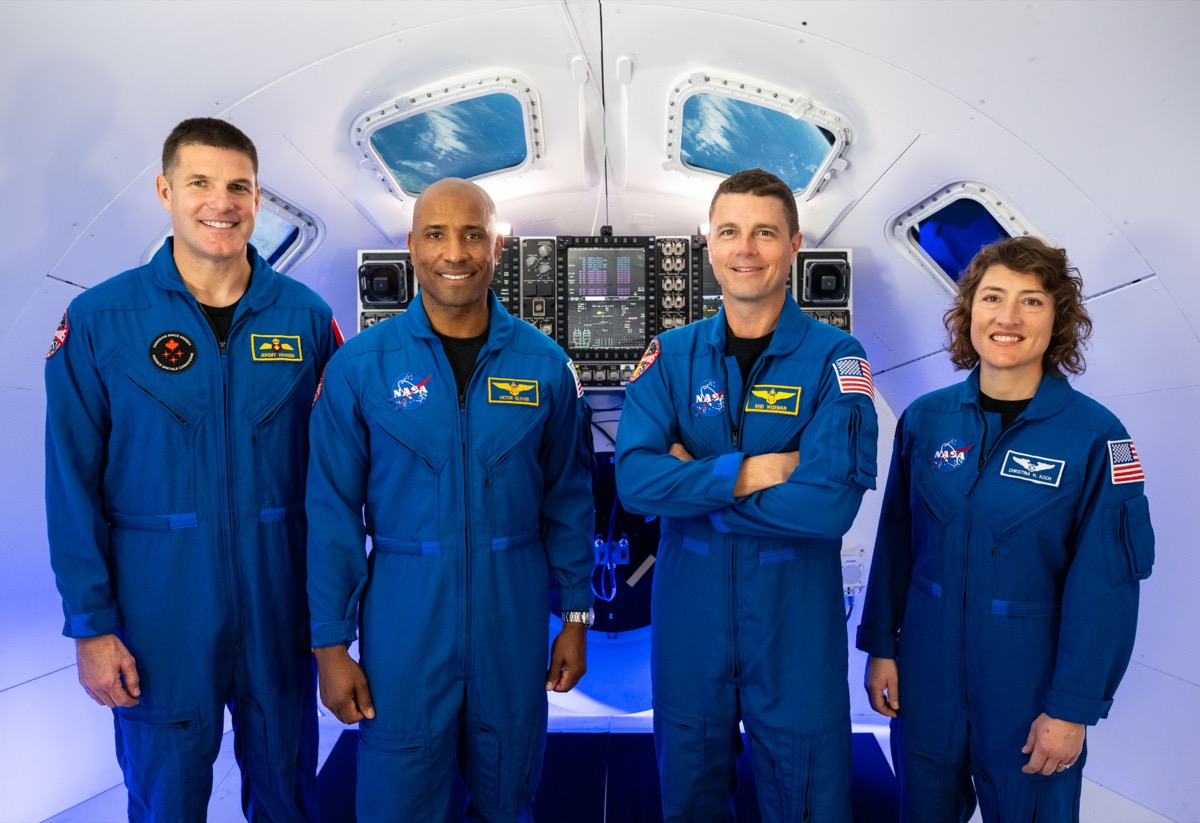
As a mission specialist, Christina Koch made history as the first woman to serve on a lunar mission. Previously, she served on the ISS, spending 328 consecutive days in space. Prior to becoming an astronaut, she worked in the development of science mission instruments and in remote scientific field engineering in the Antarctic and Arctic.
Commander Reid Wiseman, a 27-year Navy veteran, pilot, and engineer, led the four-person crew. Pilot Victor J. Glover Jr. is an engineer and has accumulated 3,500 flight hours in more than 40 aircraft, including spacecraft such as Resilience which flew to the ISS. Mission specialist Jeremy Hansen of the Canadian Space Agency is a physicist and space scientist who also lived on the ocean floor in the Aquarius habitat for seven days!
Keep learning!
- The Artemis II crew took photos of the far side of the moon with handheld cameras. Learn how the science team chose their shot list and what researchers are learning from the images in “Planning your photo ops for a trip around the moon.“
- Use science and innovation from the International Space Station and beyond to solve real-world environmental challenges in your community with SciFri’s Down to Earth collection of activities.
- Learn about NASA’s upcoming Artemis III and Artemis IV missions, plus discover ways to “Join Artemis.”
NGSS Standards
- ETS1.A: Defining and Delimiting and Engineering Problem
– MS-ETS1-1 – Define the criteria and constraints of a design problem with sufficient precision to ensure a successful solution, taking into account relevant scientific principles and potential impacts on people and the natural environment that may limit possible.
– 3-5-ETS1-1 – Define a simple design problem reflecting a need or a want that includes specified criteria for success and constraints on materials, time, or cost. - ETS1.B: Developing Possible Solutions
– MS-ETS1-3 – Analyze data from tests to determine similarities and differences among several design solutions to identify the best characteristics of each that can be combined into a new solution to better meet the criteria for success.
– 3-5-ETS1-2 – Generate and compare multiple possible solutions to a problem based on how well each is likely to meet the criteria and constraints of the problem. - ESS3.C: Human Impacts on Earth Systems
– MS-ESS3-3. Apply scientific principles to design a method for monitoring and minimizing a human impact on the environment.
– 5-ESS3-1 – Obtain and combine information about ways individual communities use science ideas to protect the Earth’s resources and environment.
Sign up for our educational newsletters
Get great educational resources for your classroom, home, and beyond to your inbox each month.
K-12 Education Beyond The Classroom
Credits:
Lesson by Svea Andersen
Developmental editing by Sandy Roberts
Copyediting by Erica Williams
Digital production by Sandy Roberts
Featured artwork for the activity by Fai Kosciolek
Hosts Kathleen Davis and Ira Flatow
Producers Charles Bergquist and Dee Peterschmidt
Educator's Toolbox
Meet the Writer
About Svea Anderson
Svea Anderson is a twenty-year veteran educator who embraces challenges and consistently seeks opportunities for new learning.