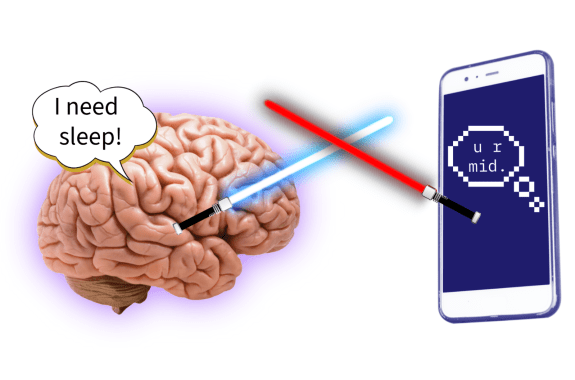
Your phone buzzes, and you check it—just for a second—and suddenly you’ve forgotten what you were doing. This happens to us all. Every time we swipe, scroll, or switch apps, our brains are making rapid decisions about what to pay attention to and what to ignore.
Scientists are studying how moments like this affect attention, memory, and sleep. While screens can be useful tools for learning and connection, researchers are still working to understand how different types of screen time influence how our brains function.
What happens in your brain when you use screens?
Your brain is constantly deciding what to pay attention to. When you focus on a task, like reading or solving a problem, different parts of your brain work together to process information and ignore distractions.
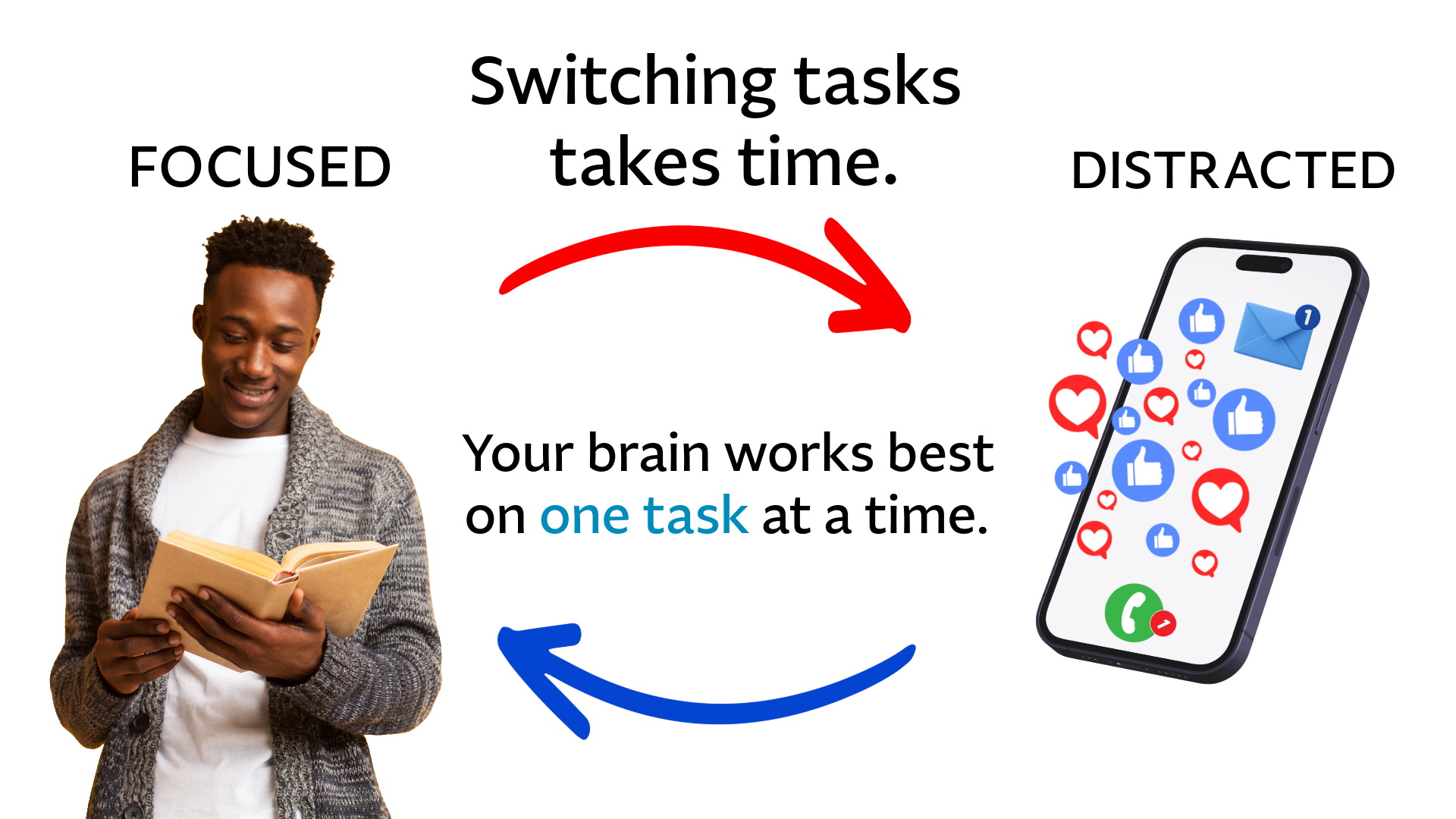
But when you switch between tasks, like checking your phone while doing homework, your brain has to shift its attention back and forth. Scientists call this task switching. Even though it can feel like you’re multitasking, your brain is actually rapidly changing focus from one thing to another. Each time you switch, your brain needs a moment to refocus. This can make tasks take longer and increase the chance of mistakes.
“[S]hort form media is often engineered to really get your attention very quickly. […] [To] tap into your automatic ways of thinking.” —Dr. Jenny Radesky, developmental behavioral pediatrician
How Is Screen Time Affecting My Kid?
Try This!
Materials
- Timer or stopwatch (Yes, you can use your phone!)
- Notebook or this printable data sheet
- Pencil or pen
- Access to a device with screen time tracking* (optional)
* Screen time trackers are sometimes built into digital devices like phones and tablets to allow the user to keep track of how much time they spend on different apps and websites.
Does multitasking with screens affect how well you concentrate? In this experiment, you will read two short passages on a similar subject, once with distractions and once without distractions, and compare your performance.
🦺 Safety note: Do not try this activity while walking, driving, or any other activity where you could be harmed by being distracted.
Procedure
- Read or listen to passage #1 with distractions.
– Have someone sing, ring a bell, or ask you questions while you try to read the passage.
– If you are doing this experiment on your own, turn on talk radio, the TV, or a song with lyrics. - Record your data.
– Time to complete
– Number of correct answers - Now read passage #2 with no distractions and record your results again.
- If possible, have a friend, classmate or family member try the experiment too, but have them read passage #2 first and passage #1 second.
Note: For younger participants, try a memory match game or a spot the difference game instead of reading the passages to test focus.
Sample passage #1
Octopuses are known for their intelligence and problem-solving abilities. They can open jars, escape enclosures, and even use tools. Unlike many animals, octopuses have a decentralized nervous system, meaning much of their processing happens in their arms rather than in a central brain. Each arm can act somewhat independently, allowing the octopus to explore and respond to its environment in complex ways.
Audio version, passage #1
Questions (answer these without referring to the passage):
- What makes octopuses unusual compared to many other animals?
- What is one problem-solving ability mentioned in the passage?
- Where does much of an octopus’s processing occur?
- What does it mean that their arms act independently?
Sample passage #2
Octopuses are incredible camouflage artists. They have thousands of special cells under their skin called chromatophores that allow them to change color very quickly. They can also change the texture of their skin to match their surroundings. They do this using structures called papillae, small cone-shaped projections on their skin that can expand or contract. By changing both color and texture, octopuses can blend into rocks, coral, and the ocean floor to help protect themselves from predators.
Audio version, passage #2
Questions (answer these without referring to the passage):
- What is special about an octopus’s skin?
- What is one way octopuses are able to change their appearance?
- What are papillae?
- Why does an octopus need to camouflage itself?
Ask yourself these questions:
- How many questions did you get right when you had no distractions?
- How many questions did you get right when you were distracted?
- Did distractions affect your performance? In what way? How do you know?
💡In an experiment, the independent variable is the factor the experimenter changes on purpose. In this activity, the independent variable is the level of distraction. The dependent variables are the results being measured, such as how long it takes you to finish reading the passage, or how many questions you answer correctly.
Why are scientists studying screen time and its effects on the brain?
Scientists are studying screen time because screens are a normal part of everyday life, especially for children and teenagers whose brains are still developing. Researchers want to better understand how constant access to phones, videos, games, and social media may affect attention, sleep, learning, and mental health over time.
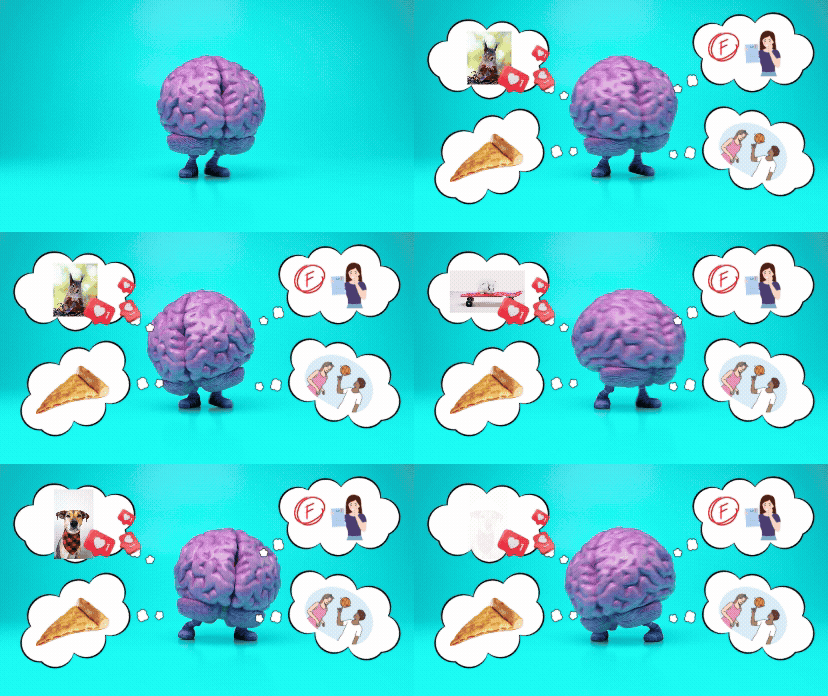
Large studies like the Adolescent Brain Cognitive Development (ABCD) Study, have found links between high levels of screen use and problems like poor sleep, anxiety, depression, and difficulty focusing. But researchers say that not all screen time is the same.
Watching a few episodes of a favorite show while a caregiver cooks dinner is very different from constantly using a device to avoid boredom or uncomfortable feelings. Plus, researchers have found that interactive activities, such as video calls with friends, making digital art, or playing creative games, may affect the brain differently than passively scrolling through short-form videos or social media, because these types of activities affect different pathways in the brain.
Some researchers believe that people, like those with ADHD, may be drawn to highly engaging, fast-paced digital content. At the same time, certain types of fast-paced media may make it harder for anyone to stay focused on slower, more demanding tasks.
None of this means screens are necessarily “bad.” Phones, games, and apps can help people learn, connect, and express themselves. Scientists are trying to understand how to use technology in healthier and more balanced ways.
Tips for healthier screen habits
One thing many researchers agree on is that replacing screen time with physical activity, sleep, time outside, and face-to-face interaction can support mental and physical health.
Small changes in how you use your devices can make a difference. Here are a few strategies researchers and mental health experts recommend:
- Try not to use screens right before bed. Reading, drawing, listening to music, or talking with a friend or family member may help your brain wind down for sleep.
- If notifications constantly interrupt your work, try silencing them or putting your device away during homework time.
- Help balance screen time use by spending time outside, exercising, sleeping well, and seeing friends in person.
Keep learning
- Share “Screen Time and the Developing Brain: Are ‘iPad Kids’ at Risk?” from the University of Rochester with a caregiver, then discuss the recommendations.
- Get “The Social Media Workbook for Teens” by psychologist Goali Saedi Bocci from your local library and learn skills to help manage the stress and anxiety that can come with screen time.
- Learn how to use the settings on your phone to reduce screen time by watching “This Video Will Save You 9+ Years Of Your Life In 6 Minutes.”
- Listen to “How Is Screen Time Affecting My Kid?” with a caregiver and talk about it afterward.
- Explore SciFri’s Hack Your Brain resources, such as “Hack Your Brain To Increase Focus And Attention,” to learn more about the science behind how your brain works.
NGSS Standards
- LS1.A: From Molecules to Organisms: Structures and Processes
– MS: The brain is an organ that processes information from the environment and coordinates behavior, including attention and sleep.
– HS: Systems of specialized cells within the brain and nervous system process information, regulate behavior, and respond to internal and external stimuli. - LS2.D: Social Interactions and Group Behavior
– MS: Changes in behavior, such as how individuals interact with their environment (including digital environments), can affect well-being and functioning.
– HS: Behavioral patterns can influence individual and group outcomes, including decision-making, attention, and interactions with the environment. - LS4.D: Biodiversity and Humans
– MS: Human behavior can influence health and well-being, including how individuals interact with their environments and make decisions about daily habits.
– HS: Humans depend on and interact with their environments in complex ways, including how behavior and technology use affect health and societal outcomes.
Credits:
Lesson by Cybele Tamulonis
Copyediting by Erica Williams
Developmental editing by Sandy Roberts
Digital production by Sandy Roberts
Educator's Toolbox
Meet the Writer
About Cybele Tamulonis
Cybele Tamulonis is a writer, apiarist, and entomology enthusiast.