Subscribe to Science Friday
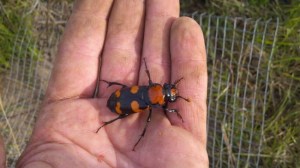
The American burying beetle is 2 inches long, has bright black-and-orange coloration, and provides an important ecological service: recycling carrion. The beetle finds dead bodies of small animals, buries them, mates on them, and then uses their remains to feed and shelter its larvae.
It’s listed as threatened in the U.S., and is found only in a few places around the country. East of the Mississippi, one of the main populations is on Block Island, off the coast of Rhode Island. Researchers are working to reintroduce the beetle to Nantucket, but it’s been a long and challenging process.
Flora sits down with Hannah Petrarca, one of the researchers involved in the conservation effort to breed and release beetles into the wild. They chat about why this species is so special, and what its conservation prospects look like.
Donate To Science Friday
Invest in quality science journalism by making a donation to Science Friday.
Segment Guests
Hannah Petrarca
Hannah Petrarca is a conservation specialist at the Roger Williams Park Zoo in Providence, Rhode Island.
Segment Transcript
The transcript is being processed. It will be available 2-3 days after this story’s publication date.
Meet the Producers and Host
About Flora Lichtman
Flora Lichtman is a host of Science Friday. In a previous life, she lived on a research ship where apertivi were served on the top deck, hoisted there via pulley by the ship’s chef.
About Charles Bergquist
As Science Friday’s director and senior producer, Charles Bergquist channels the chaos of a live production studio into something sounding like a radio program. Favorite topics include planetary sciences, chemistry, materials, and shiny things with blinking lights.