Subscribe to Science Friday
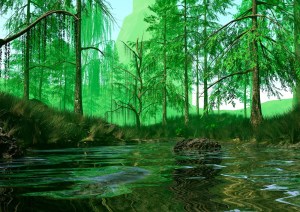
A team of scientists worked for more than 10 years constructing a recreation of a Middle Jurassic soundscape. Using what they know about current-day insect vocalizations, they analyzed fossilized insects, and used AI to extrapolate how their ancient wings might sound if rubbed together.
Flora talks with one of the authors of the study, Fernando Montealegre-Zapata, a professor of sensory biology.
Donate To Science Friday
Invest in quality science journalism by making a donation to Science Friday.
Segment Guests
Fernando Montealegre-Zapata
Dr. Fernando Montealegre-Zapata is a professor of sensory biology at the University of Lincoln in the UK.
Segment Transcript
FLORA LICHTMAN: This is Science Friday. I’m Flora Lichtman. Later in the hour, what new research tells us about the health effects of using cannabis. And we get metaphysical at the intersection of philosophy and physics. But first, if you could go back in time, say, 165-ish million years ago, to the middle Jurassic and take a walk through the woods, what would it sound like? Scientists took a crack at an answer.
[INSECTS CHIRPING]
You’re listening to the reconstructed chirps and cheeps of some of the ancient insects you might hear in a Jurassic forest. By analyzing insect fossils, studying current insect vocalizations, and using AI to extrapolate how ancient wings might sound if they were rubbed together, researchers say they’ve created the most complete paleo acoustic soundscape to date. The findings appeared in the Proceedings of the National Academy of Sciences. Here to tell us how they did it and why is study author Fernando Montealegre-Zapata, a professor of sensory biology at the University of Lincoln in the UK. Fernando, welcome to Science Friday.
FERNANDO MONTEALEGRE-ZAPATA: Thank you, Flora. Thanks for inviting me to your program. It’s a pleasure.
FLORA LICHTMAN: Thanks for coming on. I read that you spent over a decade reconstructing these sounds. What was driving you? Why?
FERNANDO MONTEALEGRE-ZAPATA: I have to tell you, I have to tell the audience first that these animals produce the sound. It’s just like a normal cricket nowadays. And what they do is they rub their wings together. As they do so, the wings vibrate. In response to this, they have specialized wing structures to produce vibrations and amplify the signals. And these features fossilized really well in the fossil record.
FLORA LICHTMAN: The wings fossilized really well?
FERNANDO MONTEALEGRE-ZAPATA: Yeah, because the wings in insects, the wings are part of the exoskeleton. And that has a decent amount of chitin. It’s one of the main components of the cuticle.
FLORA LICHTMAN: They’re chitinous. Yeah.
FERNANDO MONTEALEGRE-ZAPATA: Yeah, they’re chitinous. So, yeah, these features stay. So my colleagues in China– it was 2011– they contacted me with this nicely preserved animal, the fossil, with the two wings open, which is very rare to find. So they asked me if I could reconstruct how these animals think. So they took me back to my PhD. I did my PhD in sound production in katydids and crickets.
FLORA LICHTMAN: So insect sounds are your jam, basically.
FERNANDO MONTEALEGRE-ZAPATA: Yes, yes, that’s right. So basically, the first thing we did is just to investigate the size of the wing and the size of the structures involved in sound production. That’s easy. And after that, you just–
FLORA LICHTMAN: Wait, so basically, you can take the wing. If you have a really good fossil, you know the shape of the wing. And then you can extrapolate what sound it would make if it was rubbed against each other.
FERNANDO MONTEALEGRE-ZAPATA: Yes, this is because in living animals, every species you get, you get a recording of the male singing, and then get the wings and measure the wings. And then with the sound recording, you calculate the frequency the animal was using. And the structure that is the main driver of the oscillation is called a file. It’s a vane modified with a cuticular teeth. I just think like a violin. It’s same idea. So in one wing, they have this vane. It’s a row of teeth, perfectly organized. And the other one has a scraper. They go down the scraper and produce the sound. They open the wings and close the wings, and they produce–
FLORA LICHTMAN: Like a saw. Like a saw?
FERNANDO MONTEALEGRE-ZAPATA: A saw. Like a saw. The teeth are very well-organized. And the organization will tell if the animal was producing a tritone sound, a musical signal, or if the song was kind of noisy. But the thing is, is that file, the length of that file is scaled with the frequency. If they have small files, the frequency tends to be high. If they have large files, the frequency tends to be low. So if you have many species and you put that in a regression line, you can put your fossil there and investigate the frequency the fossil was doing. And after that, it’s just by the number of teeth. If they have, for instance, 100 teeth in the file, they will produce a syllable that has 100 oscillations.
FLORA LICHTMAN: Oh, cool.
FERNANDO MONTEALEGRE-ZAPATA: So based on that, you can reconstruct the basic syllable, that part, the frequency, the syllable fossilizes. What doesn’t fossilize is the rhythm, the repetition of the syllable, because each species has its own repertoire.
FLORA LICHTMAN: Like chirp, chirp, chirp, chirp, or chee.
FERNANDO MONTEALEGRE-ZAPATA: Yeah, you can see here that the crickets, you hear [IMITATING CRICKETS], or you can have crickets that do [IMITATING CRICKETS]. Other species will do [IMITATING CRICKETS] continuously. So we just recreated something very basic. And the paper was big at the time.
FLORA LICHTMAN: [LAUGHS]
FERNANDO MONTEALEGRE-ZAPATA: Yeah, the paper was big.
FLORA LICHTMAN: OK, so the original work on this made a splash. Was that surprising to you as an insect vocalization person?
FERNANDO MONTEALEGRE-ZAPATA: Yes, because I never worked with paleontology. But my colleague told me, I think that we can do much better. If we find more fossils, we can extract the geometry of the wings, put them into this computer model, and we investigate the material properties of the living ones that are closely related to the fossil, we can make these wings to vibrate, and we can have a better reconstruction of everything.
FLORA LICHTMAN: Even the tempo and the–
FERNANDO MONTEALEGRE-ZAPATA: Yeah.
FLORA LICHTMAN: Not just the frequency, but how it sounds–
FERNANDO MONTEALEGRE-ZAPATA: Yeah, but–
FLORA LICHTMAN: –based on its relationship with current insects.
FERNANDO MONTEALEGRE-ZAPATA: But the tempo came at the very end. It took us 10 years. It’s not because of the numerical model. The numerical models are very simple. We can do that in a few weeks. Because we were waiting for a better phylogeny of the modern species of the katydids and the crickets together. Because we needed this phylogeny to correct the equations needed to calculate the frequency. And that took a long time to get.
But the major thing– it was at the very end of my postdoc– he said, if we get information of living animals, the temperature, the morphology of the file, the frequency, how the frequency varies with temperature in an artificial intelligence machine learning model, we can put the fossils there, each species, and investigate the rhythm they are doing. That was the last part we did.
FLORA LICHTMAN: So what kind of insects should I picture? The fossils that you looked at, where are they on the insect family tree?
FERNANDO MONTEALEGRE-ZAPATA: OK. In America, they are called katydids. They are green, large animals, jumping animals, very similar to cricket because they both hear and produce sound in the same way. So the katydids are more related to these fossils.
FLORA LICHTMAN: We’ve talked on this show about the challenges of recreating dinosaur sounds, but it sounds like it’s a different story with insects because they fossilize so well. The wings fossilize so well.
FERNANDO MONTEALEGRE-ZAPATA: Yeah, that’s the question. Unfortunately, of course, what we hear in Jurassic Park is the imagination of people. This big animal, they might have roared this way. And unfortunately, the larynx, the sound box of this animal, these big animals, is usually soft tissue cartilage and doesn’t fossilize. So this is what makes it difficult to reconstruct.
FLORA LICHTMAN: So I want to listen to your clip again. And it’s kind of like a roll call of different insects. But I want to listen with you. And just pop in if there’s something to say about the particular call.
FERNANDO MONTEALEGRE-ZAPATA: OK.
[INSECTS CHIRPING]
That’s the first one we created. Sounds more like a cricket probably singing close to the ground.
[CHIRPING CONTINUES]
That’s beautiful, yeah?
FLORA LICHTMAN: So beautiful.
FERNANDO MONTEALEGRE-ZAPATA: So these were all produced by my postdoc, Dr. M.D. Islam. I was so happy when he began to send me, I got one, I got the other one, I got this one. And then we put them all together.
FLORA LICHTMAN: So, I mean, these calls were from the middle Jurassic, roughly 165 million years ago. Have insect calls evolved? I mean, are these more primitive than katydid calls now?
FERNANDO MONTEALEGRE-ZAPATA: Yes, the general mechanism of the file and the scraper has not changed because it’s very efficient. One file, one scraper to maintain the purity of the signal, and if you maintain the purity of the signal, you make it more difficult to predators to hear you. OK?
But what has changed is the anatomy of the wing when they moved to the ultrasound. In the past, they have many sound radiators in the wings, because they were producing low frequencies. But nowadays, katydids have reduced because they want to go to the ultrasound to avoid predation and to avoid being detected by distant bats. They can still be heard by bats nowadays, but if you produce ultrasound, a distant bat will have problems finding you. So the file has more teeth now because–
FLORA LICHTMAN: More teeth now.
FERNANDO MONTEALEGRE-ZAPATA: –when you have more teeth, you produce more waves, as you already know. So that has changed in relation to the past.
FLORA LICHTMAN: OK, give me the big picture. What does recreating the sound of Jurassic forest, I mean, other than being very cool and exciting our imagination, what does it tell us about that time or about evolution of life on this planet?
FERNANDO MONTEALEGRE-ZAPATA: Well, it’s telling you first that the environment was not quiet. It was a noisy environment, and the insects were probably dominating this. The diversity of species was huge. And they recognized each other by the frequency– you see different frequency channels– and also the repertoire they use. The repertoire we reconstructed might not be accurate, but it’s telling you right away that they were using different repertoires.
It’s also telling you a little bit of the ecology. It might have been that these animals were trying to– the producing of musical tone and evolving to ultrasound. They might have been predated, avoiding predation by early mammals. And that would also tell you that these early mammals were trying to get better to detect the insects.
FLORA LICHTMAN: Yeah, it’s like the acoustic arms race.
FERNANDO MONTEALEGRE-ZAPATA: Yeah, it’s acoustic arms race.
FLORA LICHTMAN: That’s about all the time we have. Fernando Montealegre-Zapata is a professor of sensory biology at the University of Lincoln in the UK. Thank you, Fernando. This was so fascinating.
FERNANDO MONTEALEGRE-ZAPATA: Yeah, thank you. Thank you, Flora.
Copyright © 2026 Science Friday Initiative. All rights reserved. Science Friday transcripts are produced on a tight deadline by 3Play Media. Fidelity to the original aired/published audio or video file might vary, and text might be updated or amended in the future. For the authoritative record of Science Friday’s programming, please visit the original aired/published recording. For terms of use and more information, visit our policies pages at http://www.sciencefriday.com/about/policies/
Meet the Producers and Host
About Flora Lichtman
Flora Lichtman is a host of Science Friday. In a previous life, she lived on a research ship where apertivi were served on the top deck, hoisted there via pulley by the ship’s chef.
About Dee Peterschmidt
Dee Peterschmidt is Science Friday’s audio production manager, hosted the podcast Universe of Art, and composes music for Science Friday’s podcasts. Their D&D character is a clumsy bard named Chip Chap Chopman.