Subscribe to Science Friday
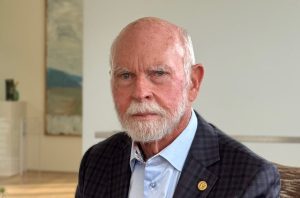
Dr. J. Craig Venter was a pioneer in modern genetics research. In the late 1990s, he led Celera Genomics’ project to sequence the human genome, which was published jointly with the public Human Genome Project in 2001. He continued his work in genetics after that, including expeditions to genetically sample the world’s oceans, and research into synthetic biology. In 2016, he and collaborators published research on creating a “minimal” synthetic cell, a living organism that required just 473 genes to operate.
Science Friday awarded Dr. Venter the Science Friday Accelerator Prize in recognition of his innovations in 2016. In the wake of his death, we’re revisiting a conversation from 2013 when he joined Ira on the show to discuss the future of synthetic biology. He died on April 29, 2026, at the age of 79.
Further Reading
Donate To Science Friday
Invest in quality science journalism by making a donation to Science Friday.
Segment Transcript
FLORA LICHTMAN: This is Science Friday. I’m Flora Lichtman. The sequencing of the human genome and the tools that let us do it cheaply and rapidly has changed biology and medicine. Working with genetics seems commonplace today.
But in the late 1990s, groups were in a race to be the first to build a complete human genome sequence. There was the public, government-led Genome Project and a private project run by the company Celera Genomics, led by J. Craig Venter. The two groups came to an agreement and jointly published a draft sequence in 2001.
Dr. Venter, the head of the private genome effort, died this week at the age of 79. Ira spoke with Craig Venter in 2013 about gene sequencing and the emerging world of synthetic biology, tools that let researchers assemble artificial DNA sequences from scratch.
IRA FLATOW: Craig Venter was the first person to ever create a living thing from scratch– a cell, a bacterium– into which was inserted man-made genetic material– DNA. And for all intents and purposes, it was alive, moving, reproducing. It opened up a whole new world of what he and we now call synthetic biology, creating stuff from genetic code as we need it.
For example, when a pandemic hits, why not just print out a flu vaccine from the comfort of your own home? You have a box attached to your computer that receives the genetic sequence of the latest strain, spits out a syringe with the new vaccine. It’s not possible today, of course.
But with synthetic biology, why not? Just one of the fascinating ideas on my next guest’s book, Life at the Speed of Light, From the Double Helix to the Dawn of Digital Life. Craig Venter is the Chairman and CEO of the J. Craig Venter Institute, CEO of Synthetic Genomics. He joins us from KQED in San Francisco. Welcome back to Science Friday, Dr. Venter.
J. CRAIG VENTER: Thank you very much, Ira. It’s great to be with you and your listeners again.
IRA FLATOW: Thank you. You write in your book that, quote, “Humankind is about to enter a new phase of evolution.” What do you mean by that?
J. CRAIG VENTER: Well, biological evolution to get us where we are has taken 3 and 1/2 to 4 billion years. Social evolution obviously changes much faster, with us adapting to things in a social environment. Now that we can write the genetic code, we have a chance to have biological evolution catch up or even exceed the pace of social evolution.
IRA FLATOW: Mm-hmm. What is the definition of biological evolution in your mind?
J. CRAIG VENTER: Well, it’s the changes that have taken place over these billions of years. But I think our studies have shown they’re very different than what a lot of people thought, of just minute changes leading to new properties and species. We’ve shown in our ability to actually transplant chromosomes and transfer thousands of traits and genes at one time– we find evidence of that happening throughout evolution.
So evolution was much more punctate, in my view, with real big steps due to the addition of major gene sets. So I think it helps explain some of the mysteries of how we got such dramatic changes.
IRA FLATOW: Do you think, with synthetic biology, we can create just about anything we want?
J. CRAIG VENTER: Well, in theory, yes. And none of these ideas are new, going back to the 1800s, even the early 1900s, where one of the authors said, give me a basic protoplast, and I can regenerate all of evolution. This was before they knew about proteins, before they knew about DNA.
So it was clear to people, even early on in science, that we would eventually have these capabilities. We’re at the early stages of this. We’re trying to design, right now, in the computer, the first micro-organism totally to come out of computer design. And it’s going to be the smallest gene set for a self-replicating organism, trying to understand the basic operating system for a living system.
IRA FLATOW: And then how complex an organism can you eventually make? Can it be multicellular? Could it be a small animal? What are we talking about here?
J. CRAIG VENTER: Well, this field is changing very, very rapidly now that we’ve been able to automate the synthesis process. So the problem with design right now is we don’t know enough biology. So we have what I call– we’re still in the empirical phase of biology, where we have to do things, to some extent, by trial and error.
But having the ability to write, for example, 10,000 genomes in a day gives us the ability to actually sort out what all these genes do and improve on design. And I think we’ll see much faster progress now that these tools are becoming available, sort of what happened when we sequenced the human genome. That was very slow, very expensive.
My project cost $100 million, which was a fraction of the government cost. But today, that’s down to about $1,000. So that’s what’s going to happen with writing the genetic code. It’s going to change very dramatically over the next decade.
IRA FLATOW: Are we taking the genes out of the hands of biologists? Are we taking life out of the hands of biologists and putting them into the hands of engineers?
J. CRAIG VENTER: To some extent, that is happening. And I think you’re aware of this iGEM contest, these kids in high school and college trying to design simple circuits. They’re trying to replicate a lot of the electronics world in the biological world. So on and off switches, end gates, even oscillators are all possible with simple genetic circuitry.
So I think it’s hard for me in my late 60s to imagine all the things that the next generation of biologists that have grown up in the digital world will come up with. But I think the new tools will be so dramatic, different from what anybody today has been trained with.
IRA FLATOW: Just so we understand this a little bit more, you’re saying that, instead of using copper wires and things like that, we can ask DNA to do the circuitry for us, sort of to build that kind of stuff.
J. CRAIG VENTER: Well, different kinds of circuits– for example, sensors that could be put in the environment. And the title of the book, Life at the Speed of Light, is all about the rapid interchange now between the biological world and the DNA code of four bases and the digital world of ones and zeros and how we can go rapidly in either direction.
And we have what we call a digital-biological converter that can take the digital signal and convert it back into genetic code, back into proteins, viruses, and bacterial cells at this stage. The next stage will obviously be much more dramatic.
IRA FLATOW: So like the example I used at the beginning, having a box that’s wired to the internet, takes a digital code, and then turns it into your own dose of a vaccine. That seems to be quite feasible according to what you’re saying.
J. CRAIG VENTER: Well, we’re actually doing that now. So we have such a box that does that. And that’s been developed in part with DARPA funding. And we have a collaboration that’s funded in part by BARDA and the government and by Novartis, where we wanted to use our technology to speed up the development of new vaccines for new pandemic strains of flu as a best prototype example.
Because we have to come up with a new flu vaccine every year and, if there’s a new pandemic strain, even faster. So we can now make, just from a digital signal, the flu virus in about 10 hours. And instead of having to physically send the flu isolate around the world, we just send a digital signal and can rebuild it.
And we’ve had a real-life example of that with the H7N9 outbreak in China. A team of Chinese scientists sequenced the virus that was causing the infections there, posted it on the internet at the request of the US government. We downloaded it and, in 10 hours, made the virus.
And for some time, our synthetic virus was the only source that the CDC and the US government and Novartis had for starting to understand the virus and develop a new vaccine towards it. And now we have one of these units in North Carolina, at the Novartis facility, their new vaccine facility. So all that has to be sent there is a digital signal describing the new sequence.
The technology we have there will rapidly make the virus, and it can start into production. So that’s the crude version of what, eventually, as you said and, I describe in my book, could be a box attached to each computer. And if we can do that, we can actually end pandemics before they ever get going.
IRA FLATOW: How much worry goes into this, that thing– I’m going way back into the ’70s, at the beginning of genetic engineering or going to go back to Frankenstein. You know where I’m headed, is that this stuff is going to get out of control and create things, unintended consequences.
J. CRAIG VENTER: Well, I think everybody, including ourselves, worry about that. And we were the first ones to ask for bioethical review back in the ’90s, when we first got these ideas. And a team in Pennsylvania took that on, published the results in science in 1999, saying that we were taking the proper approaches and should proceed.
Since then, there’s been funding from the Sloan Foundation, looking at the security issues. And you can find these reports on jcvi.org, a website. And then when we announced in 2010 the first synthetic cell, President Obama asked his new bioethics commission to take this on as their number one charge.
So it’s getting the proper attention. It’s getting the proper review. There is this category for all technology now called dual-use technology. And we want it to be used for the benefit of humanity, not for its demise.
And so there’s lots of ways that that’s being monitored. And I think most agree that the benefits outweigh by orders of magnitude the potential risks.
IRA FLATOW: You said that you’re outrunning, outpacing the biology here. What kind of biology do you need to know now that you don’t?
J. CRAIG VENTER: Well, for example, if we want to make algae cells that can produce fuel from sunlight and CO2, they need significant genetic engineering. Algae cells did not evolve on this planet to produce large amounts of lipid that could replace oil. So to get them to do that, we have to substantially change the genome, change how they operate.
And so they shift things in a non-natural way into having that CO2 and energy go into these oil molecules. That’s just one example. What we want cells to do for the future of manufacturing, for producing food, medicines, fuel, clean water, et cetera, is to do things well beyond what they have evolved to do. And that’s the power that this new technology brings to the table.
IRA FLATOW: What I found really fascinating right at the beginning of your book, Craig, was your reference to the book everybody, all the scientists seem to read and are incredibly influenced by. And that’s Schrodinger’s What Is Life? Have you answered that question?
J. CRAIG VENTER: Well, I think we’re much closer than Schrodinger was. But he certainly laid the groundwork. And as a physicist, he was just asking questions, does life obey the laws of the physical world? Or is there something special about life?
And so I was asked last summer to give the Schrodinger lecture. And the challenge was to come up with a modern definition. And the simplistic view is we are DNA-software-driven machines. And all life on this planet is DNA-based, software-driven machines. And the DNA codes for the linear protein structures that contains all the information for their folding, their function, their longevity and turnover, I think the most interesting aspect, it gets back to fundamental physics of the observation that Brown made in 1827, looking under the microscope, how pollen molecules bounce around.
75 years later, Einstein proved what now we call Brownian motion was due to the molecules in water vibrating due to heat at a very rapid rate. And that’s what drives all the energy in biology. So I think it’s an exciting amount of progress in the last 70 years.
IRA FLATOW: Tell me about your idea to send a Martian genome back to Earth. What is this? It sounds almost science fictiony.
J. CRAIG VENTER: [LAUGHS] Well, there’s been a sample return project for a long time in NASA. And it got abandoned a few years ago because of the cost and complexity. And the challenge is, if we find a life, which I think there’s a high likelihood or at least evidence for it, on Mars, if we can get samples, instead of having to have a rocket ship to bring them back to Earth, all we need is a simple sequencing device there.
And we can, at the closest point of Mars and Earth, send them back in as little as 4.3 minutes and recreate them using our synthetic genomic techniques in a secure laboratory here. So it solves a lot of problems about sample return.
IRA FLATOW: That’d be by digitizing the DNA and then just recreating it, reassembling the digits back into DNA on this end.
J. CRAIG VENTER: Exactly.
IRA FLATOW: Well, could you send the instructions for a simple organism and then recreate it in your 4D printer?
J. CRAIG VENTER: Well, in fact, that’s what we’ve done. Because what we reported in 2010 was starting, just with the code and the digital world of the computer, four bottles of chemicals, rewriting the chemical code in the DNA chromosome, and then booting that up. So in fact, we’re doing a test coming up in the Mojave Desert with NASA, testing our sending unit.
And we’re going to be taking just, the Mars test site in the Mojave Desert, a sample of dirt, isolating the DNA, sequencing it, and sending it to the cloud in a short period of time. And then with our digital-biological converter at the other end, we can take that information and regenerate the genetic code and then regenerate life. So we’re working both the sending and the receiving units.
But, Ira, as you mentioned, there’s much more practical applications right here on our planet with vaccines and perhaps new antimicrobials. If we can send a new vaccine around the world in less than a second, the implications, at least in theory, are quite high for us.
IRA FLATOW: So what’s your ultimate goal, the next big thing you want to work on?
J. CRAIG VENTER: Well, we’re trying to learn how to truly do life design. And that’s very difficult because, as I mentioned, our lack of complete knowledge of biology. So even in the simplest organism, which would be the smallest genome of a self-replicating organism, once it works, 50 or so of the genes in it are of unknown function.
All we know is, if those genes aren’t present, you don’t get life. So that makes empirical design a little rough when that’s our state of the knowledge of biology. But as I said, through these processes, our goal is to find out what the function of these key elements are. And that will make the next stage of design that much better.
But we actually hope to make these minimal synthetic cells available in a new contest for the iGEM teams to see who can add the best step in evolution to this minimal genetic unit, to seeing how fast we can start to do recapitulation of evolution tens of thousands of times faster than it happened in reality.
IRA FLATOW: Well, thank you for taking time to be with us today.
J. CRAIG VENTER: Thank you, Ira. It’s always nice to be with you.
IRA FLATOW: Thank you. Craig Venter, author of Life at the Speed of Light, From the Double Helix to the Dawn of Digital Life, also Founder, Chairman, and CEO of the J. Craig Venter Institute.
FLORA LICHTMAN: That conversation with Craig Venter was recorded in 2013. Dr. Venter did manage to create that minimal synthetic organism he described to Ira, publishing a paper in 2016. The cell required just 473 genes to function. J. Craig Venter died this week at the age of 79.
Copyright © 2026 Science Friday Initiative. All rights reserved. Science Friday transcripts are produced on a tight deadline by 3Play Media. Fidelity to the original aired/published audio or video file might vary, and text might be updated or amended in the future. For the authoritative record of Science Friday’s programming, please visit the original aired/published recording. For terms of use and more information, visit our policies pages at http://www.sciencefriday.com/about/policies/
Meet the Producers and Host
About Flora Lichtman
Flora Lichtman is a host of Science Friday. In a previous life, she lived on a research ship where apertivi were served on the top deck, hoisted there via pulley by the ship’s chef.
About Charles Bergquist
As Science Friday’s director and senior producer, Charles Bergquist channels the chaos of a live production studio into something sounding like a radio program. Favorite topics include planetary sciences, chemistry, materials, and shiny things with blinking lights.
About Ira Flatow
Ira Flatow is the founder and host of Science Friday. His green thumb has revived many an office plant at death’s door.