On Today's Podcast
The punk rock life of cephalopods
This Cephalopod Week, we’re talking death spirals, cannibalism, and giant squid dissection.
Listen NowOctober 2, 2026
The tiny, three-pound tilcayo is the first cat species to be described in a century, and, yes—it is as cute as you’d think. Are natural history museums going extinct? John Wilson’s latest feature film, “The History of Concrete” is an idiosyncratic journey about more than just concrete. Plus, to prepare for an overseas game, the LA Rams tried a Hail Mary jet lag strategy.

Discover DNA By Making Colorful Chromosomes
Discover how human physical traits are determined by specific segments of genes, then build a simplified model of a pair of chromosomes.
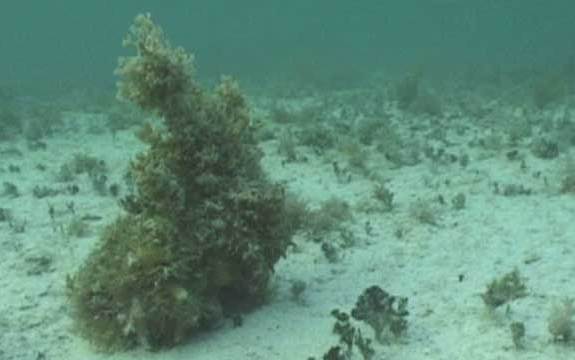
Where’s the Octopus?
When marine biologist Roger Hanlon captured the first scene in this video he started screaming.
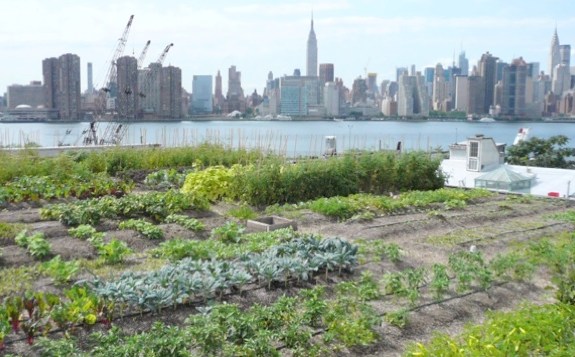
Tending Crops On A Brooklyn Rooftop
A rooftop farm in Brooklyn grows vegetables and doubles as a green roof, insulating the warehouse below.
Creating Reservoirs Under Roads and Parking Lots
Porous pavement allows water to pass down to the water table, rather than run off into storm drains.
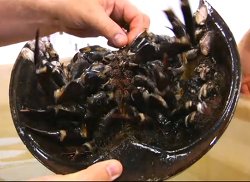
Brine Shrimp: Getting to Know a Salt Water Arthropod
In this activity, students will assemble a small saltwater aquarium to raise and observe brine shrimp. Then students will observe and record the growth of brine shrimp through various stages of their life cycle, and examine their various anatomical features.
Pinhole Viewer
By building their own pinhole camera, students will learn how cameras, telescopes, and their own eyes use light in similar ways.
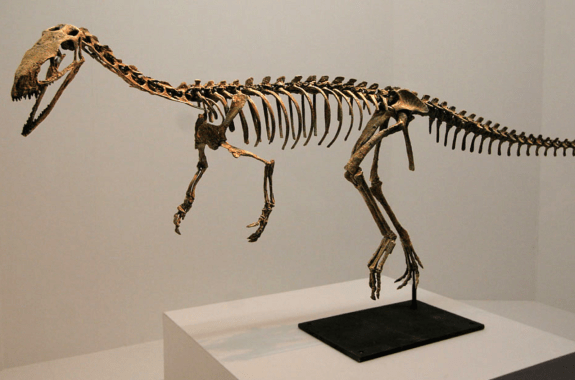
Fossil Detectives: Use Paleontology To Solve Dino Mysteries
Act like a fossil detective—or paleontologist—to observe and examine a set of fossils to classify them as body fossils and trace fossils.
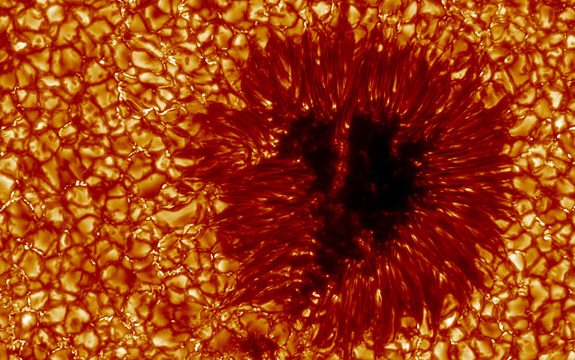
Solar Spotting
Using the Swedish Solar Telescope, a ground-based observatory, Goran Scharmer and colleagues probe the penumbra—that’s the stringy structure around the perimeter of the dark part of the sunspot.
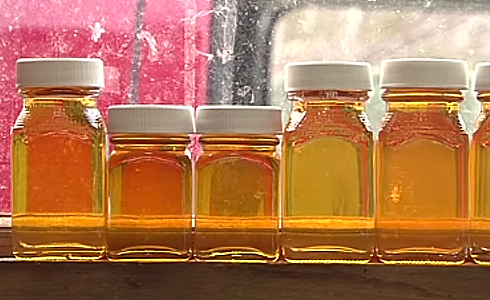
Delicious Smelling Chemistry
Use household materials to investigate and explore your ability to smell an odor, then compare and contrast results to determine if some individuals have a better sense of smell than others. Observe the Maillard reaction and how different odor molecules are released into the air.
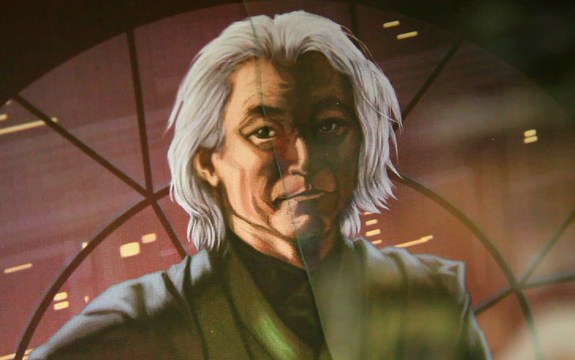
Desktop Diaries: Michio Kaku
Theoretical physicist and futurist Michio Kaku takes us on a tour of his office, where he writes his bestsellers and records his radio shows.
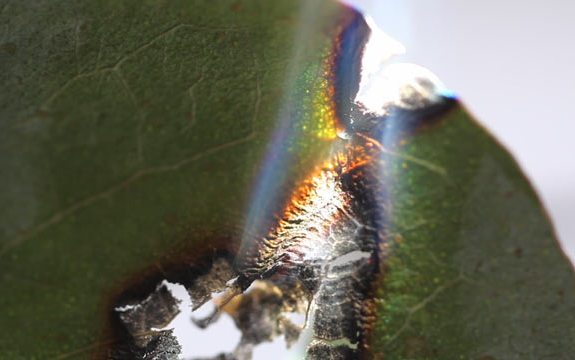
Magnified Sun Burns
At the right angle, a magnifying glass will concentrate sunshine into a burning hot circle.
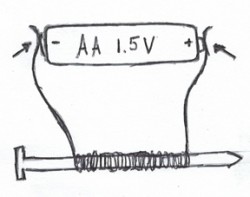
Make a Speaker
In this activity, students will learn how an electromagnet works by making a simple one. Using this knowledge, students will design a diagram to make a working speaker using household materials. Then students will follow instructions on one method of making a speaker, and test their own designs to compare results.
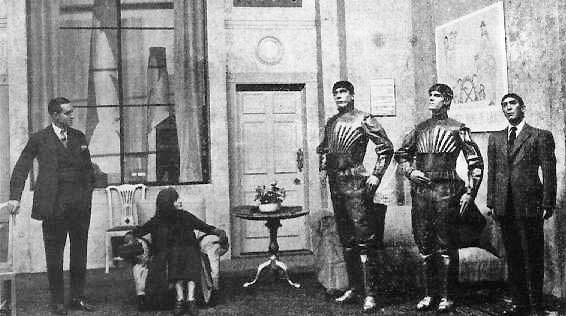
The Origin Of The Word ‘Robot’
‘Robot’ was the brainchild of the Czech playwright Karel Čapek, who introduced it in a 1920 play.
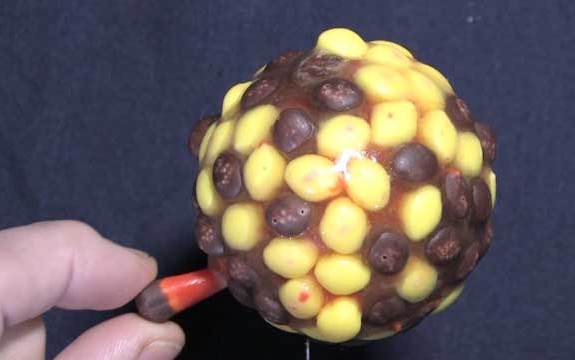
Candy Corn In Space
Astronauts are allowed to bring special “crew preference” items when they go up in space. NASA astronaut Don Pettit chose candy corn.
Glowing in the Dark: Testing Phosphorescence
Learn about phosphorescence and how certain materials can absorb and store energy from a light source. Then discover which type of light gets the brightest glow from a glow-in-the-dark star.
Connecting Science and Art
Cormac McCarthy, Werner Herzog, and Lawrence Krauss discuss science as inspiration for art.
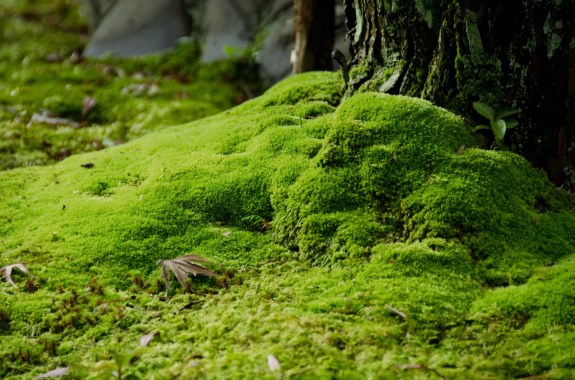
Learn how to cultivate moss in a terrarium
Learn about the biological needs and lifecycle of mosses by cultivating and maintaining your own moss terrarium.
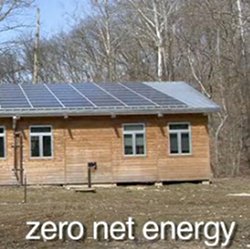
Building A Solar House
Buildings that are called “green” or “environmentally sustainable” are designed to use energy as efficiently as possible. In Missouri, Washington University’s Tyson Living Learning Center achieves sustainability by incorporating green technologies in different ways, including the use of solar panels. In this activity, students will explore how solar panels work by building a simple circuit, a series circuit and a parallel circuit, using a solar panel to light a bulb and comparing which method yields the brightest light. Then students will build a solar-powered house using a shoebox, and test some variables to determine the most efficient way to harness solar energy to power a model home.


Explosive Science
In this activity, students will use household materials to investigate and explore how the release of carbon dioxide gas from a chemical reaction can cause a small-scale explosion. Students then will experiment with variables to determine which factors launch a film canister the highest.