On Today's Podcast
What a trapped antimatter particle could tell us about reality
Researchers have trapped a positron and held it at extremely cold temperatures for months, allowing them to measure its quantum properties.
Listen NowOctober 30, 2026
When, and where, did bats first take to the sky? Online clinics are prescribing GLP-1 microdoses formulated by compounding pharmacies. Are they safe and effective? Terence Tao says mathematics is about understanding, not just right answers, and quick AI solutions are forcing soul-searching in the field. Plus, how chatbots are changing language, and what life was like for T. rex.
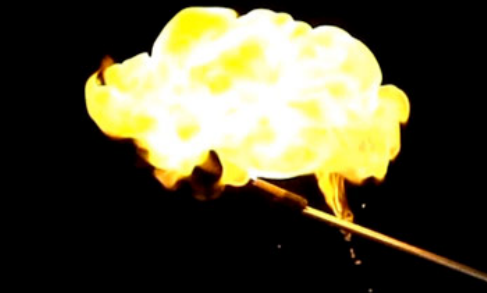
Make a Chemical Clock
In this activity, students will perform three experiments using household ingredients to observe and record color changes, indicators that a chemical reaction has taken place. Students also will observe a chemical clock reaction and explore how reaction times can be sped up or slowed down.
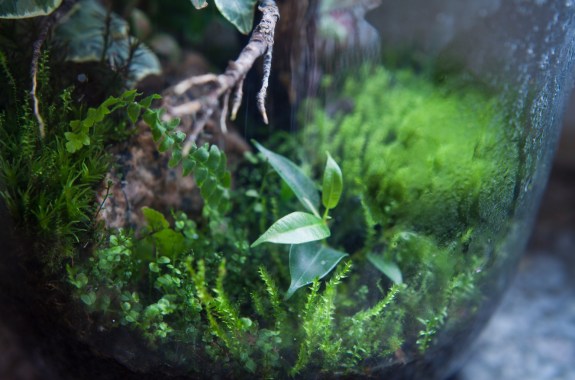
Lilliputian landscaping: creating a sustainable terrarium garden
Investigate what gardeners add to their soil to improve plant growth. Then learn to build a sustainable terrarium featuring live plants.
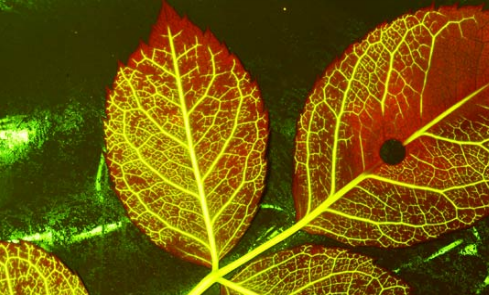
Lighting Up Celery Stalks
In this activity, students will conduct a series of hands-on experiments that will demonstrate how the working of these veins, known as capillary action, enables water to travel throughout the length of a plant. Students will learn how the forces of water cohesion and adhesion contribute to the process of capillary action.
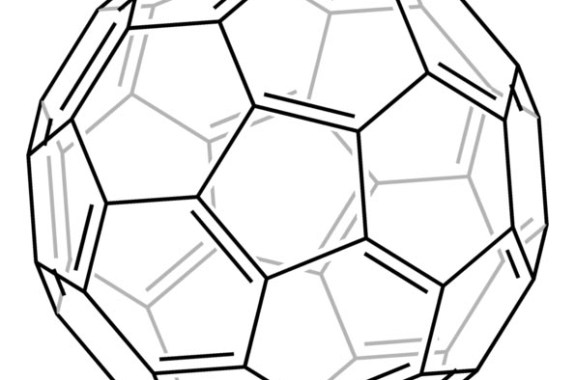
Happy Birthday, Buckyballs!
Twenty-five years ago this month, researchers first identified buckminsterfullerenes — chemical structures shaped like tiny carbon soccer balls.
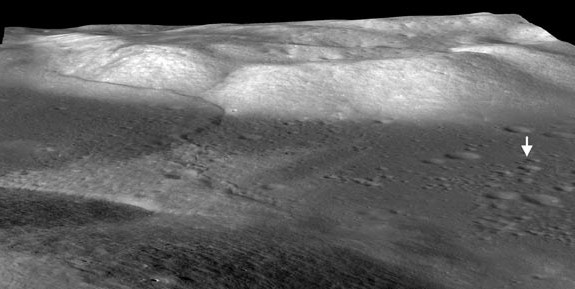
New Views of the Moon
New images of the moon’s surface taken from the Lunar Reconnaissance Orbiter Camera show fault lines with a surprising explanation: The moon may be shrinking.
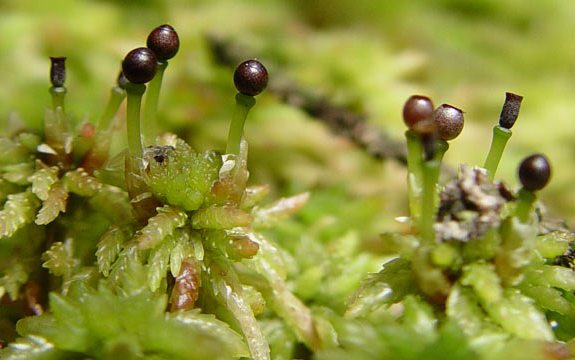
The Secretly Speedy Life Of Plants
Plants have a reputation for staying put. But some plants are moving so quickly, we can’t see their motions.
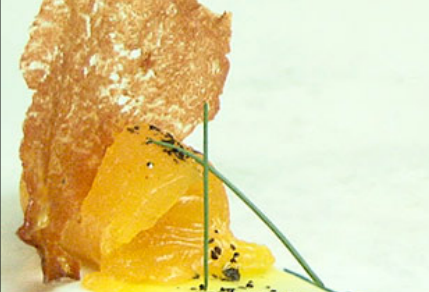
Cooking with Chemistry
Chef Wylie Dufresne, the owner of New York City restaurant wd~50, experiments with food, literally. He has lab notebooks detailing what certain chemicals do to certain dishes. One of his signature dishes is a spin on eggs Benedict: he found that creating the plate’s centerpiece–a cube of fried hollandaise sauce–required a lot of scientific testing. Science Friday stopped in at Dufresne’s kitchen to see how he prepares the dish.
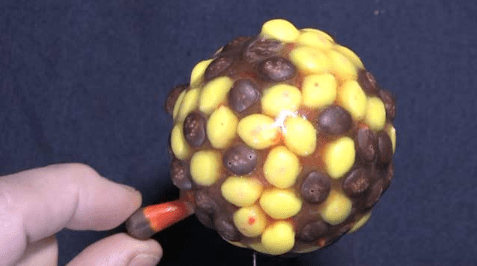
Best Bubbles
Astronauts are allowed to bring special “crew preference” items when they go up in space. NASA astronaut Don Pettit chose candy corn for his five and a half month stint aboard the International Space Station. But these candy corn were more than a snack; Pettit used them for experimentation.

Bad Days For Bats
The white nose syndrome disease affecting bat populations has put one species of bat at risk of “regional extinction” within the next 20 years.

Seeing A Star In A New Light
NASA’s Solar Dynamics Observatory (SDO), launched in February, has started to send back data…
Testing The Waters
Think oysters are good on the half shell? They may be even better whole. Oysters can restore marine habitats by cleaning water, creating homes for other sea life and preventing coastal erosion. But oyster populations around the world have declined, experts say. Find out how scientists in New York are working to replenish oyster populations in the waters around the city.
Capturing Carbon Dioxide
Basalt formations off the East Coast of the U.S. could hold a billion of tons of carbon dioxide, according to a new study in the Proceedings of the National Academy of Sciences. Paul Olsen, of Columbia University’s Lamont-Doherty Earth Observatory, takes us to a basalt quarry in New Jersey and explains what makes the rock ideal for soaking up emissions. Note: Another Teachers TalkingScience lesson, Sublime Sublimation, makes an excellent introduction to Capturing Carbon Dioxide, and to carbon dioxide itself.
Sublime Sublimation
Looking for ways to jazz up your party? Patrick Buckley, co-author of The Hungry Scientist Handbook, demonstrates how to make carbonated fruit. Materials required: fruit (the firmer the better), a pressure cooker and a handful of dry ice cubes. Note: This lesson provides a great introduction to another Teachers TalkingScience lesson, Capturing Carbon Dioxide.

Tiny Dancers Show Rhythm’s Roots
In perhaps the cutest study published in the Proceedings of the National Academy of Sciences, psychologist Marcel Zentner and Tuomas Eerola found that babies will spontaneously boogie.

How To Make A Junk Guitar
So you want to jam like a rock star, but you don’t want to shell out for an electric guitar? Make one yourself.

Can Underwater Parks Protect Coral?
With global threats like ocean warming and acidification, it’s a tough time to be a coral.

How Jane Goodall Got Her Start
Ira talks with primatologist Jane Goodall, 50 years after her first encounters with the chimpanzees of the Gombe.

The Mystery Of The Celibate Rotifer
Bdelloid rotifers haven’t had sex for at least thirty million years and that’s puzzling.

Gassy Microbes
Some microbes produce different types of gases as a byproduct of their metabolic processes. The microbes in this Science Friday Video released an odorless and flammable gas called methane. The type of gas or gases released by a microbe depends on the species and their metabolic characteristics. In this activity, students will conduct an experiment to observe the metabolic process of yeast by using household ingredients. Students will vary conditions in the yeast’s surrounding environment and observe the amount of gas that the yeast releases

What is Nanotechnology?
Nanotechnology is the study of what happens when things get very, very small – only a few atoms in size. The word “nanometer” means one billionth of a meter, perhaps five or six atoms long. At the nanoscale, materials can have very different physical or chemical properties, even though they are the same. In particular, super thin films of material, only a few nanometers thick, can cause interference within light reflecting off them, resulting in beautiful displays of colors.